
🌸 Key Takeaways
- The best skincare products work because they contain proven active ingredients at effective concentrations, not because of expensive packaging or celebrity endorsements
- Dermatologist recommended skin care products consistently include vitamin C serums, retinol, niacinamide, hyaluronic acid, and broad spectrum sunscreen as non-negotiable essentials
- Skincare order matters enormously — applying products in the wrong sequence reduces their effectiveness significantly
- The best moisturizer for your skin depends entirely on your skin type — what works beautifully for dry skin can cause breakouts on oily skin
- Best face sunscreen cream is the single most important anti-aging product you can use daily, more powerful than any serum or treatment
- Anua skincare has earned strong dermatologist approval for its gentle yet effective formulations built on Korean beauty science
- Must have skincare products for any routine include a gentle cleanser, targeted serum, moisturizer, and SPF — everything else is supplementary
- What skincare products you need depends on your specific skin concerns, age, skin type, and budget rather than following a one-size-fits-all approach
If you have ever stood in a beauty aisle or scrolled through skincare recommendations online feeling completely overwhelmed, you are not alone. The skincare industry produces thousands of new products every year, each claiming to be the best skin care product ever created. The reality is that the best skincare products of all time are not necessarily the newest or the most expensive — they are the ones formulated with proven ingredients, recommended by dermatologists, and used consistently as part of a routine that actually suits your specific skin.
This complete guide cuts through the marketing noise to give you the honest, science-backed answer to what skincare products are the best, what skincare products you need, what order skincare goes in, and which specific products and brands consistently earn dermatologist approval year after year.
At Soft Glow Style, beautiful skin is the foundation that makes every other beauty choice — from nail art to fashion — look its absolute best. Explore our complete beauty category and skincare category alongside this guide for a complete head-to-toe beauty approach.
What Is the Best Skin Care Routine?
Before diving into specific products, understanding what a complete skincare routine looks like and why each step matters helps you make smarter product choices. The best skin care routine is not the most complicated one — it is the one you actually follow consistently every single day.
Dermatologists universally agree that a basic four-step routine performed consistently outperforms an elaborate ten-step routine done sporadically. The four non-negotiable steps are cleansing, treating with targeted serums or actives, moisturizing, and protecting with SPF every morning.
Everything beyond these four steps — toners, essences, facial oils, eye creams, masks — is supplementary. These additional steps can provide real benefits but they are not essential for healthy, well-functioning skin the way the core four steps are.
Why Skincare Order Matters So Much
What order skincare goes in is one of the most commonly asked questions in beauty, and for excellent reason. Applying products in the wrong order can render expensive actives completely ineffective, cause irritation from ingredient interactions, and prevent proper absorption of key ingredients.
The fundamental rule of skincare order is to apply products from thinnest to thickest consistency. Thinner, more watery products need to contact skin first because they cannot penetrate through heavier creams or oils applied before them. Heavier products applied last create a seal that locks in the thinner products and prevents moisture loss.
A second critical rule of what order for skincare is that pH-dependent products must be applied before products that alter skin pH. Vitamin C serums and exfoliating acids require an acidic environment to function effectively and should be applied early in your routine before anything that could neutralize or buffer their pH.
For more skincare routine philosophy and the Korean approach to layering products effectively, explore our guides on layer korean skincare and korean skincare sets which cover the K-beauty approach to building an effective routine step by step.
What Order Should Skincare Go In: Morning Routine
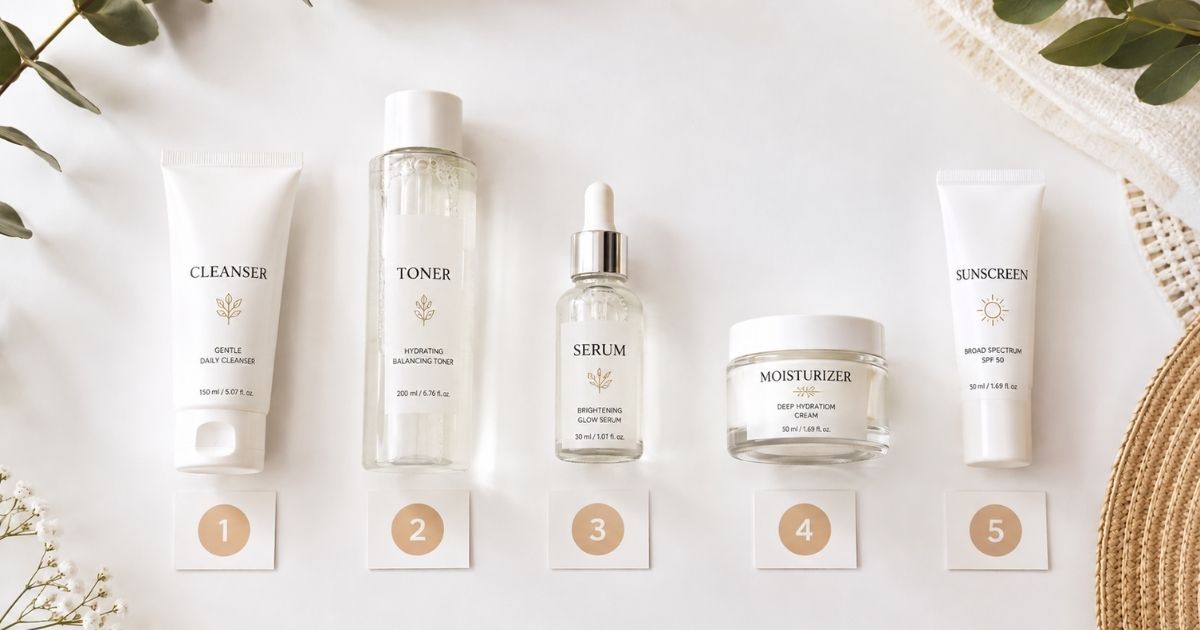
The correct skincare order for a morning routine follows this sequence. Begin with a gentle cleanser to remove overnight product residue, sweat, and skin secretions that accumulate during sleep. Follow with a toner or essence if these are part of your routine — these go on immediately after cleansing while skin is still slightly damp. Apply any targeted serums next, starting with vitamin C if you use it as a morning active. Follow with eye cream if you use one, patting gently around the orbital bone. Apply your moisturizer next to seal in the serums and provide hydration. Finish always with broad spectrum SPF 30 or higher as the absolute final step in your morning routine.
What Order Does Skincare Go In: Evening Routine
The correct skincare order for an evening routine begins with double cleansing if you wear sunscreen or makeup — an oil-based cleanser first to dissolve sunscreen and makeup, followed by a water-based cleanser to clean the skin itself. Apply toner or essence if part of your routine. Use any exfoliating acids like AHAs or BHAs on evenings you exfoliate, typically two to three times per week. Apply retinol or retinoid treatments on alternate evenings to exfoliation nights, since layering these actives causes significant irritation. Follow with targeted serums addressing your specific concerns. Apply eye cream. Finish with your evening moisturizer or a facial oil as the final sealing step.
What Skincare Products Do I Need?
The honest answer to what skincare products you need is far simpler than the beauty industry wants you to believe. Understanding the difference between essential products and optional additions saves money and prevents the product overload that causes more skin problems than it solves.
Must Have Skincare Products for Every Skin Type
Every person regardless of skin type, age, budget, or skin concerns needs four core products. A gentle, effective cleanser appropriate for your skin type. A broad spectrum sunscreen with SPF 30 or higher for every morning without exception. A moisturizer suited to your skin type. At least one targeted treatment addressing your primary skin concern, whether that is hyperpigmentation, acne, dryness, fine lines, or dullness.
Beyond these four essentials, additional products provide incremental benefits and should be added one at a time so you can assess their individual impact on your skin before adding the next.
Skincare Products by Skin Concern
Different skin concerns require different hero ingredients. For hyperpigmentation and uneven skin tone, vitamin C, niacinamide, kojic acid, and alpha arbutin are the most evidence-supported ingredients. For acne-prone skin, salicylic acid, benzoyl peroxide, niacinamide, and retinoids are the most effective treatments. For anti-aging concerns, retinol or retinoids, peptides, vitamin C, and consistent sunscreen use form the most powerful combination available. For dry and dehydrated skin, hyaluronic acid, ceramides, glycerin, and occlusive moisturizers restore barrier function and moisture levels. For sensitive and reactive skin, centella asiatica, oat extract, ceramides, and fragrance-free formulations reduce reactivity and strengthen the barrier.
For more targeted skincare guidance, explore our guides on best korean skincare for acne and what are korean beauty standards for skin-focused beauty philosophy that prioritizes skin health above all else.
Best Skin Care Lines and Brands in 2026
Understanding what is a good skin care brand requires separating marketing from substance. The best skin care lines are those that invest heavily in research and formulation, use proven active ingredients at effective concentrations, publish transparent ingredient lists, and consistently earn dermatologist approval across their product ranges.
What Is the Top Rated Skin Care Line
The top rated skin care lines consistently recommended by dermatologists across all budget levels share specific characteristics. They avoid unnecessary fragrances, dyes, and potentially irritating ingredients in favor of formulations focused entirely on efficacy. They include active ingredients at concentrations proven effective in clinical studies rather than token amounts included for marketing purposes. They conduct genuine stability testing to ensure active ingredients remain potent throughout the product’s shelf life.
CeraVe consistently ranks among the most dermatologist recommended skin care brands globally, combining pharmaceutical-grade ceramide and hyaluronic acid technology with accessible pricing that makes effective skincare available to everyone. Its Moisturizing Cream, Hydrating Cleanser, and PM Facial Moisturizing Lotion with niacinamide are staples in dermatologist recommendations worldwide.
La Roche-Posay earns consistent dermatologist approval for sensitive and reactive skin types. Developed with extensive dermatological research and testing, the brand’s Cicaplast Baume B5, Toleriane Hydrating Gentle Cleanser, and Anthelios sunscreen range are among the most trusted products in professional skin care recommendations.
Skinceuticals occupies the premium end of dermatologist approved skincare with formulations that represent genuine clinical-grade concentrations of actives including vitamin C, retinol, and peptides. Their C E Ferulic vitamin C serum is widely considered the gold standard of vitamin C serums against which all competitors are measured.
Paula’s Choice has built an enormous loyal following through radical ingredient transparency and consistent formulations based purely on scientific evidence. Their BHA Skin Perfecting 2% Liquid Exfoliant is arguably the most famous exfoliating toner in the world, beloved by dermatologists and beauty enthusiasts equally.
Good Skin Care Lines at Every Budget
Good skin care lines exist at every price point, and spending more does not automatically mean better results. The gap between affordable and luxury skincare has narrowed considerably as mass-market brands improve their formulations and premium brands face pressure to justify price premiums with genuine performance differences.
At the affordable end, brands like CeraVe, Neutrogena, and The Ordinary deliver dermatologist-grade ingredients at accessible prices. The Ordinary in particular revolutionized the industry by offering single-ingredient serums at prices that make effective actives accessible to anyone regardless of budget.
At the mid-range level, brands like Paula’s Choice, Naturium, and Anua deliver sophisticated, evidence-based formulations with better aesthetic textures and more complex formulation work than budget brands while remaining accessible to most consumers.
At the luxury level, Skinceuticals, Tatcha, and Augustinus Bader justify premium pricing through proprietary delivery systems, unique ingredient technologies, and extensive clinical validation that mass-market brands rarely invest in.
Is Anua Skincare Good?
Anua skincare has become one of the most discussed skincare brands in the past two years, earning significant attention from both dermatologists and beauty enthusiasts for its gentle, effective approach to Korean-inspired skincare.
Anua’s formulations are built around a philosophy of minimal, effective ingredients that deliver results without overwhelming sensitive skin. Their Heartleaf 77% Soothing Toner has become a cult product for those with reactive, sensitive, or acne-prone skin, containing a very high concentration of heartleaf extract — an ingredient with genuine anti-inflammatory and soothing properties supported by dermatological research.
Dermatologists generally view Anua positively for its clean formulation philosophy, meaningful active ingredient concentrations, and suitability for sensitive skin types that struggle with more aggressive Western skincare approaches. The brand’s approach aligns strongly with the Korean beauty philosophy of prioritizing skin barrier health above all else, which dermatologists increasingly recognize as the correct foundational approach to long-term skin health.
For more on the Korean beauty approach and why it earns such strong dermatologist approval, explore our comprehensive guides on layer korean skincare, korean skincare sets, and what are korean beauty standards.
Best Skin Care Products by Category
Best Moisturizer for Every Skin Type
The best moisturizer for your skin is the one that maintains your skin’s hydration levels without causing breakouts, irritation, or greasiness. Moisturizers work through three main mechanisms: humectants draw water into the skin, emollients smooth and soften the skin surface, and occlusives create a barrier that prevents water from evaporating.
For dry skin, the best moisturizer contains a combination of occlusive ingredients like petrolatum or shea butter alongside humectants like hyaluronic acid and glycerin, providing both intense hydration and barrier protection. CeraVe Moisturizing Cream and La Roche-Posay Toleriane Double Repair Face Moisturizer are consistently the top dermatologist recommendations for dry skin.
For oily and combination skin, the best moisturizer is a lightweight, non-comedogenic gel or gel-cream formulation that provides hydration without adding oil or occluding pores. Oily skin genuinely needs moisturizer — skipping this step signals the skin to produce more oil to compensate for perceived dryness. Lightweight niacinamide-containing moisturizers are particularly effective for oily skin as they hydrate while simultaneously regulating sebum production.
For sensitive skin, the best moisturizer is fragrance-free, contains minimal ingredients, and includes barrier-strengthening ceramides and soothing ingredients like oat extract or centella asiatica. Vanicream Moisturizing Cream is among the most universally tolerated moisturizers for extremely sensitive and reactive skin.
For aging skin, the best moisturizer combines deep hydration with peptides, ceramides, and antioxidants that support collagen production and improve skin resilience over time. Olay Regenerist and Neutrogena Rapid Wrinkle Repair are dermatologist favorites at accessible price points, while Augustinus Bader The Cream represents the luxury end of clinically validated anti-aging moisturizers.
For complete guidance on building a moisturizer and skincare routine that creates the glass skin effect at the heart of Korean beauty philosophy, explore our guide on layer korean skincare.
Best Aging Serum and Anti-Wrinkle Treatments

The best aging serum you can use is retinol or a retinoid, followed closely by a high-quality vitamin C serum. These two ingredients have more clinical evidence supporting their anti-aging efficacy than any other skincare actives currently available.
Retinol works by increasing cell turnover, stimulating collagen production, and reducing the appearance of fine lines, wrinkles, hyperpigmentation, and uneven texture. It is the most extensively studied topical anti-aging ingredient in dermatology with decades of clinical research confirming its efficacy. Begin with a low concentration of 0.025% to 0.05% retinol applied two to three times per week, gradually increasing frequency and concentration as your skin adjusts over 4 to 8 weeks.
What is the best anti wrinkle serum specifically? Dermatologists consistently point to retinol formulations from Neutrogena, RoC, and Paula’s Choice at the accessible end, and prescription tretinoin at the medical end as the most evidence-supported options. Among luxury options, Skinceuticals Retinol 1.0 and Tatcha The Wrinkle Cream Soft Blur Formula earn consistent professional recommendations.
Peptide serums represent an excellent addition to an anti-aging routine for those who find retinol too irritating. Peptides are short chains of amino acids that signal skin cells to produce more collagen and elastin. While less dramatically effective than retinol, peptides are exceptionally gentle and can be used daily without adjustment periods or irritation. The Ordinary Buffet and Drunk Elephant Protini Polypeptide Cream are among the most celebrated peptide formulations.
For lifestyle and wellness habits that support the effectiveness of your anti-aging skincare routine, explore our guide on wellness fridges smart trend which covers nutrition habits that support skin health from the inside out.
Best Face Sunscreen Cream
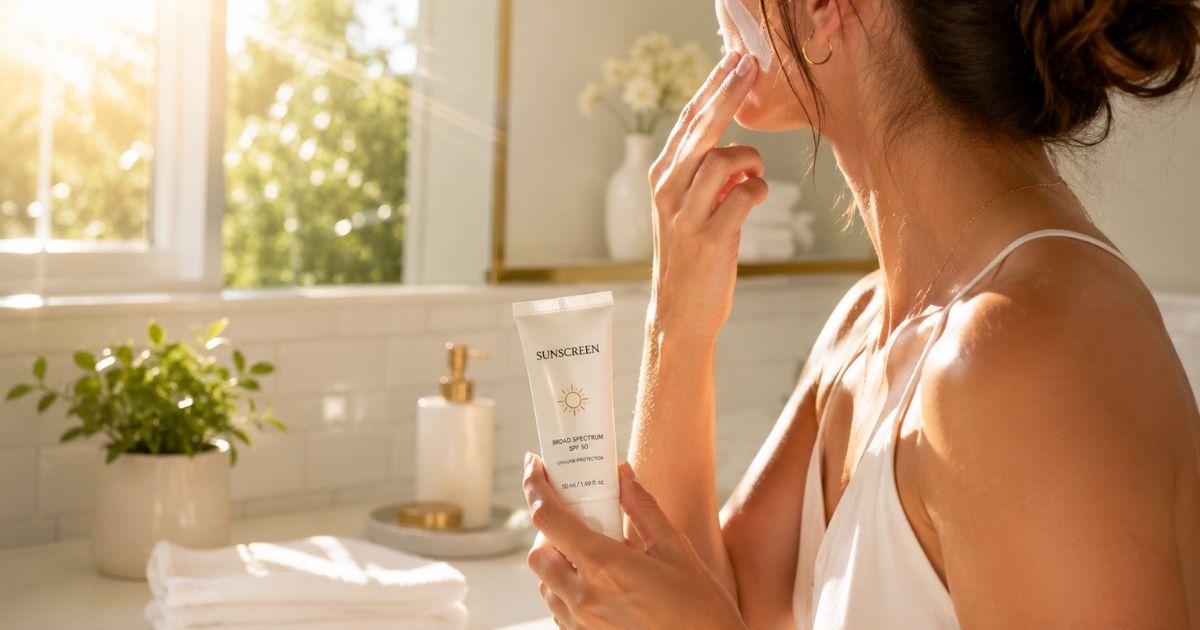
If you use only one skincare product for the rest of your life, make it sunscreen. The best face sunscreen cream does more to prevent premature aging, hyperpigmentation, and skin cancer than any other product in your entire skincare collection combined. Dermatologists are universally and unequivocally agreed on this point — UV protection is the foundation of every effective anti-aging skincare routine.
What is the best brand sunscreen for face depends on your skin type, skin tone, and personal texture preferences, but all effective facial sunscreens share certain characteristics. They offer broad spectrum protection covering both UVA and UVB radiation. They have an SPF of at least 30, though SPF 50 provides meaningfully better protection for everyday use. They have a cosmetically elegant formulation that you will actually be willing to wear every single day without exception.
For fair to medium skin tones, mineral sunscreens containing zinc oxide or titanium dioxide provide excellent broad spectrum protection with minimal chemical exposure and are particularly suitable for sensitive and reactive skin. EltaMD UV Clear Broad-Spectrum SPF 46 is the single most recommended facial sunscreen by dermatologists in the United States, combining zinc oxide protection with niacinamide in a lightweight, non-comedogenic formula suited to acne-prone skin.
For deeper skin tones where traditional mineral sunscreens leave white cast, modern hybrid formulations combining chemical and mineral filters or tinted mineral sunscreens that blend the white cast into the formulation provide excellent protection without the aesthetic drawbacks of older mineral sunscreen technology. La Roche-Posay Anthelios and Supergoop Unseen Sunscreen are widely praised for their elegant cosmetic finish across diverse skin tones.
Chemical sunscreens containing avobenzone, octinoxate, or oxybenzone absorb UV radiation rather than reflecting it and typically apply more sheer and invisibly than mineral options. They require 15 to 20 minutes to activate before sun exposure and are not recommended for sensitive or reactive skin types due to higher irritation potential.
The best sunscreen is ultimately the one you will use every single day, reapply every two hours during active sun exposure, and apply in adequate quantity — most people apply only 25 to 50 percent of the amount needed for full SPF protection. Apply at least a quarter teaspoon specifically to the face for adequate coverage.
Dermatologist Approved Skincare: Vitamin C
Vitamin C is the most researched and most universally recommended antioxidant in skincare, earning consistent dermatologist approval for its ability to brighten skin tone, fade hyperpigmentation, boost collagen synthesis, and neutralize free radical damage from UV radiation and environmental pollution.
The most effective form of vitamin C in skincare is L-ascorbic acid, the pure form of the vitamin that penetrates the skin most effectively. However, L-ascorbic acid is notoriously unstable and oxidizes quickly when exposed to light and air, which is why packaging matters enormously for vitamin C products. Look for dark or opaque packaging that limits light exposure and airless pump dispensers that limit air contact.
Effective concentrations of L-ascorbic acid for genuine brightening and anti-aging benefits range from 10 to 20 percent. Below 10 percent provides antioxidant benefits but limited brightening. Above 20 percent significantly increases irritation risk without proportionally increasing efficacy.
Skinceuticals C E Ferulic is the gold standard vitamin C serum that all others are measured against. Its patented combination of 15 percent L-ascorbic acid, 1 percent vitamin E, and 0.5 percent ferulic acid creates a synergistic antioxidant effect more powerful than any ingredient used alone, and the formulation is stabilized in a way that maintains potency significantly longer than most competing products.
More accessible alternatives include Timeless 20% Vitamin C + E Ferulic Acid Serum which closely replicates the Skinceuticals formula at a fraction of the cost, and Paula’s Choice C15 Super Booster which delivers 15 percent L-ascorbic acid in a stable, well-formulated base.
For dermatologist approved skincare philosophy that underpins effective routine building, explore our guides on visible pores new filter and blurry blush trend for modern beauty techniques that complement excellent skincare.
Dermatologist Skin Care Products: Complete Recommendations

Face Products Dermatologists Actually Use
The most revealing insight into what truly works in skincare is understanding which face products dermatologists themselves use. Dermatologists are uniquely positioned to cut through marketing claims and identify products with genuine clinical backing, making their personal choices the most credible recommendation available.
Consistent themes emerge when dermatologists discuss their personal routines. Almost universally, dermatologists use gentle, fragrance-free cleansers — typically from CeraVe, La Roche-Posay, or similar pharmaceutical-grade brands — because they understand that skin does not need strong cleansers to be clean and that harsh cleansing disrupts the barrier that effective skincare works to maintain.
Dermatologists overwhelmingly prioritize sunscreen as their most important product and often specifically use mineral sunscreens formulated for the face due to their superior safety profile and broad spectrum protection. Many dermatologists prefer tinted mineral sunscreens that combine sun protection with a light coverage effect, simplifying the morning routine.
Retinol or prescription tretinoin appears in nearly every dermatologist’s personal evening routine. The scientific evidence for retinoids is so overwhelming that dermatologists who specialize in cosmetic dermatology and anti-aging consistently cite consistent retinoid use as the single most impactful thing the average person can do for long-term skin health beyond sun protection.
Good face products that dermatologists recommend across skin types include niacinamide serums for their remarkable versatility — niacinamide addresses acne, pores, hyperpigmentation, and barrier function simultaneously with virtually zero irritation risk — and hyaluronic acid serums for universal hydration benefits that suit every skin type.
Dermatologist Recommended Skin Care Products for Specific Concerns
For acne-prone skin, dermatologist recommended products include salicylic acid cleansers or serums that exfoliate inside pores and prevent clogs, benzoyl peroxide treatments that kill acne-causing bacteria, and niacinamide serums that regulate oil production and calm inflammation. Differin Gel, containing the retinoid adapalene at prescription strength now available over-the-counter in many markets, is among the most recommended products for acne because it addresses both active breakouts and post-acne marks simultaneously.
For aging and mature skin, dermatologist recommended products focus on retinoids used consistently over years rather than months, broad spectrum sunscreen applied daily without exception, a high-quality vitamin C serum for antioxidant protection and brightening, and a ceramide-rich moisturizer that supports barrier function which naturally weakens with age.
For sensitive and reactive skin, dermatologist recommended products minimize active ingredients and prioritize barrier restoration and maintenance. Barrier repair moisturizers containing ceramides, fatty acids, and cholesterol in the correct ratio to match skin’s natural composition — CeraVe and Dr. Jart Cicapair are frequently cited examples — form the foundation of dermatologist treatment for sensitized skin.
For hyperpigmentation and uneven skin tone, dermatologist recommended products include consistent sunscreen use which is essential since UV exposure directly triggers melanin production, a vitamin C serum, niacinamide, and either a retinoid or a targeted brightening serum containing kojic acid, alpha arbutin, or tranexamic acid.
For comprehensive Korean-inspired skincare routines that earn dermatologist approval for their gentle yet effective approach, explore our guide on best korean skincare for acne and learn how K-beauty philosophy approaches skin health.
Good Face Products: Building Your Routine by Skin Type
Skincare for Dry Skin
The priority for dry skin is maintaining moisture at every step of the routine. Use a cream cleanser that does not strip natural oils. Follow immediately with a hydrating toner or essence while skin is still damp. Apply a hyaluronic acid serum to damp skin — hyaluronic acid draws water from the environment and the deeper layers of skin to the surface, but requires water to be present to work effectively. Follow with a rich cream moisturizer containing ceramides, shea butter, and squalane. In the morning, finish with a hydrating mineral sunscreen. In the evening, add a facial oil as the final step to seal everything in.
Skincare for Oily and Acne-Prone Skin
The temptation with oily skin is to strip it aggressively with harsh cleansers and skip moisturizer. Both approaches make oily skin worse. Use a gel or foaming cleanser that removes excess oil effectively without over-drying. Apply a niacinamide serum which regulates sebum production and reduces pore appearance. Use a lightweight, oil-free gel moisturizer that provides hydration without heaviness. In the evening, incorporate a salicylic acid exfoliant two to three times per week to prevent congestion, and add a retinol or adapalene treatment as your main active on alternate evenings.
Skincare for Combination Skin
Combination skin benefits from a routine that targets different zones appropriately. Multi-masking — applying different products to different areas — is particularly effective. A balancing toner with niacinamide suits combination skin beautifully, regulating oil in the T-zone while maintaining moisture in drier areas. A lightweight serum layered under a medium-weight moisturizer addresses the needs of both zones simultaneously.
Skincare for Sensitive and Reactive Skin
Sensitive skin requires the most disciplined editing of any skin type. Every new product represents a risk of reaction, making a short, simple routine of proven gentle ingredients the wisest approach. Introduce one new product at a time, waiting at least two weeks before adding the next so you can identify the source of any reaction that occurs. Always patch test new products on the inner arm for 24 to 48 hours before applying to the face.
For more complete beauty guidance that connects skincare to overall lifestyle wellness, explore our lifestyle category and guide on decorate with books for holistic wellness inspiration.
What Skincare Products Should I Use: Complete Shopping Guide
Skin Products Worth the Investment
Some skin products genuinely justify spending more. Vitamin C serums are worth investing in quality because the stability and concentration of the formulation dramatically impacts effectiveness — a cheap, poorly formulated vitamin C serum may be completely oxidized and ineffective before you even open it. Retinol is worth investing in a quality formulation because the delivery system and stabilization significantly impact how much active ingredient reaches the skin cells. Sunscreen is worth investing in a formulation you genuinely enjoy using, because the best sunscreen is the one you apply every day without resentment.
Skin Products You Can Save On
Some skin products deliver equivalent results regardless of price point. Cleansers are washed off the skin within seconds, meaning expensive active ingredients in cleansers have minimal contact time to produce benefit. A gentle, effective cleanser in the most affordable formulation you can find performs essentially as well as a luxury cleanser for the same money. Basic hyaluronic acid serums are commoditized — the ingredient itself is the active, and inexpensive formulations containing a high concentration of hyaluronic acid perform identically to luxury versions at ten times the price. Physical exfoliation tools like konjac sponges and microfiber cloths deliver genuine exfoliation benefits at minimal cost.
Skincare Product Ingredients Worth Knowing
Understanding key ingredients helps you evaluate any skin care product regardless of brand, price, or marketing. Hyaluronic acid provides hydration without oil and suits every skin type. Niacinamide addresses multiple concerns simultaneously and is essentially impossible to over-use or misuse. Vitamin C brightens and protects with decades of evidence. Retinol improves cell turnover and collagen with the strongest anti-aging evidence available. Ceramides restore and maintain barrier function. Peptides signal collagen production gently without irritation. AHAs including glycolic and lactic acid exfoliate the skin surface. BHAs particularly salicylic acid exfoliate inside pores. SPF prevents photoaging and reduces skin cancer risk.
Knowing these ingredients by name allows you to identify effective skin care products regardless of whether they are budget or luxury, new or established, trendy or classic. A skin care product is only as good as its active ingredients and their concentrations — everything else is texture, fragrance, and marketing.
For beauty lifestyle content that connects your skincare choices to broader wellness habits, explore our guides on wellness fridges smart trend and hair grow faster and stronger for a complete inside-out beauty approach.
Frequently Asked Questions
What skincare products are the best overall?
The best skincare products overall are those containing proven active ingredients at effective concentrations, formulated without unnecessary irritants like fragrance and alcohol, and suited to your specific skin type and concerns. Consistently recommended best-in-class products include CeraVe Moisturizing Cream for hydration, Skinceuticals C E Ferulic or Timeless Vitamin C serum for antioxidant protection, any retinol from 0.025% to 1% depending on tolerance for anti-aging, EltaMD UV Clear or La Roche-Posay Anthelios for sun protection, and Paula’s Choice BHA 2% for exfoliation.
What order should skincare go in morning and night?
Morning skincare order is cleanser, toner or essence, vitamin C serum, other targeted serums, eye cream, moisturizer, then sunscreen as the absolute final step. Evening skincare order is oil cleanser if wearing sunscreen or makeup, water-based cleanser, toner or essence, exfoliating acid on exfoliation nights, retinol on alternate nights, targeted serums, eye cream, then moisturizer or facial oil as the final step. The fundamental rule is always thinnest to thickest consistency.
What is the best anti wrinkle serum?
The best anti wrinkle serum backed by the strongest clinical evidence is a retinol or retinoid product. Retinoids increase cell turnover, stimulate collagen production, and visibly reduce fine lines, wrinkles, and uneven texture with consistent use over 3 to 6 months. Prescription tretinoin is the most potent option, while over-the-counter retinol at 0.1% to 1% provides meaningful results with lower irritation risk. Vitamin C serums are the best complementary anti-wrinkle treatment, protecting existing collagen from UV and free radical degradation while brightening skin tone simultaneously.
What is the best brand sunscreen for face?
The best brand sunscreen for face earning consistent dermatologist recommendation is EltaMD UV Clear Broad-Spectrum SPF 46 for acne-prone and sensitive skin, La Roche-Posay Anthelios for comprehensive sensitive skin protection, Supergoop Unseen Sunscreen SPF 40 for those who struggle to wear sunscreen daily because of texture or white cast, and Neutrogena Ultra Sheer Dry-Touch SPF 55 for an affordable option with elegant cosmetic finish. All effective facial sunscreens must be broad spectrum, SPF 30 or higher, and applied every single morning.
Is Anua skincare worth using?
Anua skincare is genuinely worth using, particularly for those with sensitive, reactive, or acne-prone skin. The brand builds its formulations around meaningful concentrations of soothing, effective ingredients with a clean, minimal approach that avoids the common irritants that cause problems for reactive skin types. The Heartleaf 77% Soothing Toner is the standout product earning the most consistent positive feedback from both dermatologists and users, combining genuine anti-inflammatory heartleaf extract at a high concentration with a hydrating, gentle formula that suits even the most reactive skin.
What skincare products do I need as a beginner?
As a skincare beginner, you need exactly four products to start. A gentle, fragrance-free cleanser suited to your skin type. A broad spectrum SPF 30 or higher sunscreen for every morning. A moisturizer appropriate for your skin type. One targeted treatment addressing your primary skin concern — a niacinamide serum is the most universally suitable choice for beginners because it is gentle, addresses multiple concerns, and is impossible to misuse. Master these four products consistently for at least 8 weeks before considering any additions. Consistency with a simple routine always outperforms inconsistency with a complicated one.
Final Thoughts
The best skincare products of all time are not a mystery hidden behind luxury pricing or influencer marketing. They are products built on proven science, formulated with effective concentrations of active ingredients, and used consistently as part of a routine that suits your specific skin. Dermatologist approved skincare philosophy is actually simple: protect from UV damage every single day, support your skin barrier, treat your specific concerns with evidence-based actives, and give every new product enough time — at minimum 8 to 12 weeks — to demonstrate its genuine impact on your skin.
What is the best skin care? It is the routine you actually follow every day without skipping, built around products your skin genuinely responds well to, anchored by non-negotiable sunscreen in the morning and a targeted treatment in the evening. Start simple, stay consistent, and add complexity only when your foundation is solid.
Beautiful skin is the canvas that makes every other beauty choice look better — from the nail art you choose to the fashion aesthetics you explore. For more complete beauty guidance that connects skincare to your overall look, explore our beauty category, skincare category, nail art category, and lifestyle category.
🌸 You Might Also Love
- Korean Skincare Sets — The best K-beauty routine sets for every skin type
- Layer Korean Skincare — How to layer skincare products correctly for maximum results
- Best Korean Skincare for Acne — Dermatologist approved Korean products for acne-prone skin
- What Are Korean Beauty Standards — The beauty philosophy behind the best skin of your life
- Visible Pores New Filter — How to minimize pores and achieve a filtered skin finish
- Blurry Blush Trend — The makeup trend that works best on healthy glowing skin
- Hair Grow Faster and Stronger — Complete hair growth guide for beautiful hair alongside great skin
- Wellness Fridges Smart Trend — Inside-out beauty nutrition habits that transform skin
- Lip Gloss Layers Trend — Complete your beauty look from skincare to makeup
- American Beauty Rose Symbol — Beauty aesthetics and inspiration for modern women


Premier adult platforms offer secure and premium content for adults.
Discover trusted platforms for a quality experience.
My site: BEST ANAL PORN SITE