Korean Beauty Standards Explained – Trends & Ideals | Soft Glow Style
🌸 Key Takeaways
- Korean Beauty Standards often focus on clear skin, soft facial balance, youthful styling, and polished presentation.
- The modern 2026 K-beauty look is moving toward healthy skin, soft makeup, and natural-looking glow.
- Popular beauty ideals include glass skin, soft brows, gentle blush, glossy lips, and clean hair styling.
- Korean skincare is usually more about consistency, hydration, and sun protection than quick fixes.
- Trying Korean makeup trends can be fun, but changing your identity or features should never feel like a requirement.
- Skin bleaching and unsafe whitening products can carry real health risks, so brightening should be handled carefully.
- The best approach is to borrow inspiration from K-beauty while still respecting your own face, skin tone, and style.
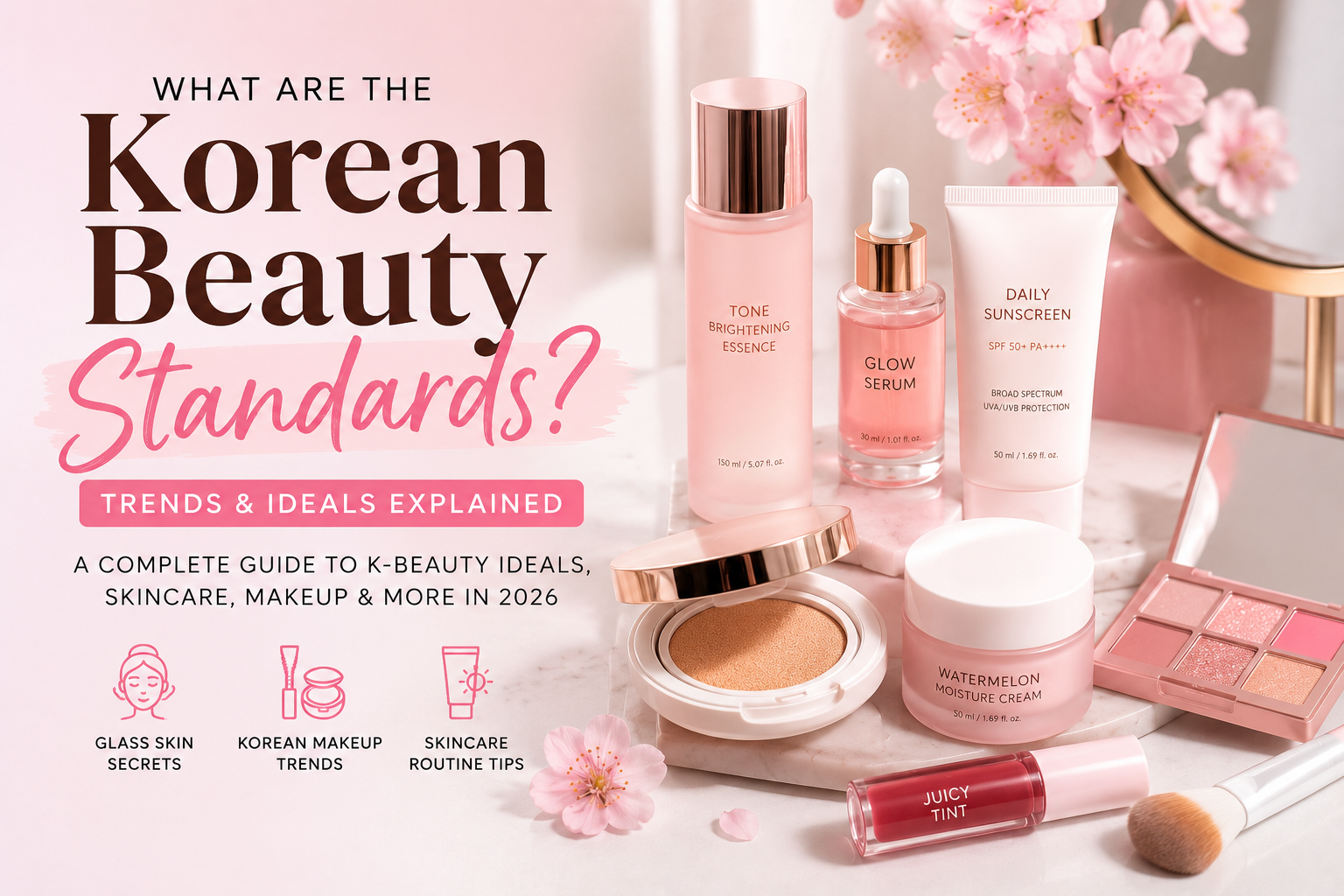
Korean Beauty Standards are a mix of skincare ideals, makeup trends, fashion influence, celebrity culture, and social expectations. In simple words, they often highlight clear skin, balanced features, soft makeup, healthy hair, and a youthful look. But in 2026, the conversation is becoming more personal, more inclusive, and less about copying one exact face.
Korean beauty has a way of pulling you in. Maybe it starts with one glowing idol selfie, a K-drama scene, or a TikTok showing that soft “clean girl but sweeter” makeup look. Then suddenly you are searching for korean essence, korean mascaras, korean face shape, and honestly, maybe even wondering what makes K-beauty feel so polished.
Here’s the thing, though. Beauty standards are never just about beauty. They are shaped by media, culture, history, brands, celebrities, filters, and the everyday pressure women feel when they look in the mirror. So when people ask what is the Korean beauty standards, the answer is not only “pale skin and small face.” That would be too simple, and not completely fair.
In this guide, we’ll break down the real trends and ideals behind Korean Beauty Standards, including skincare, makeup, face shape, hair, anti-aging, and the 2026 shift toward healthier, softer beauty. At Soft Glow Style, we believe beauty inspiration should feel exciting, not stressful.
What Are Korean Beauty Standards?
Korean Beauty Standards usually refer to the beauty traits often admired in South Korean pop culture, media, advertising, and everyday style. These may include smooth skin, a smaller-looking face, delicate makeup, youthful features, neat hair, and a bright, well-groomed appearance.
But these standards are not fixed. They change. A few years ago, everyone talked about ultra-glossy glass skin. Now, in 2026, major beauty editors are noticing a softer move toward bouncy skin, barrier care, soft brows, scalp care, and more wearable skin finishes. Vogue’s 2026 K-beauty trend coverage, for example, highlights plump skin, regenerative ingredients, glass hair, and soft brows as key directions for the year.
That means K-beauty is not frozen in one old idea. It keeps shifting, which is probably why it stays so addictive.
The classic Korean beauty ideal
The classic ideal often includes:
- Clear, smooth, hydrated skin
- A soft V-line or oval-looking face shape
- Big, bright-looking eyes
- Straight or softly arched brows
- A small, defined nose appearance
- Natural-looking lips with tint or gloss
- Healthy, shiny hair
- A youthful, fresh overall style
Some of these ideas overlap with broader asian beauty standard conversations. You will see similar themes in asian beauty makeup, especially soft skin, gentle color placement, and delicate eye definition. But Korean beauty has its own very specific rhythm. It often feels polished but not heavy, sweet but not childish, and trendy without looking too loud.
Why Korean beauty became global
K-beauty became global because it feels practical and aspirational at the same time. You can watch a K-drama and admire the glowing skin, then actually buy a toner, essence, or cushion foundation that helps you create a similar finish. That makes it feel reachable.
If you are new to skincare, start with our guide to Korean skincare sets because it explains how routines are usually built. You can also read our Korean skincare layering guide if you want to understand the order of toner, essence, serum, moisturizer, and SPF.
The global growth also comes from K-pop, K-dramas, Korean cosmetics news today, and online beauty communities. A product can appear in one idol’s routine and become viral overnight. Sometimes that is fun. Sometimes it creates pressure. Both things can be true.
Korean Beauty Standards and Skin Ideals

Skin is probably the biggest part of Korean Beauty Standards. Makeup matters, yes, but the base is everything. Korean beauty culture often treats skincare as the main event rather than something you rush through before foundation.
Clear skin and the glass skin effect
When people talk about korean skin, they often mean skin that looks even, hydrated, smooth, and reflective without seeming greasy. This is where the famous glass skin idea comes from. It is not about wearing a thick layer of highlighter. It is more about hydration, gentle exfoliation, barrier care, and light-reflecting moisture.
We already covered this in more detail in our Korean glass skin guide, but the basic idea is simple: your skin should look healthy before makeup. That is why K-beauty routines often include hydrating toners, essences, ampoules, sheet masks, and SPF.
In 2026, the trend is becoming slightly less “wet glass” and more “healthy bounce.” Allure’s 2026 K-beauty trend reporting mentions ingredients and routines focused on skin health, sunscreen, and newer skin-supporting actives. So, instead of chasing shine only, the newer version is about comfort, repair, and long-term glow.
Bright skin versus skin bleaching
This part needs care. Korean beauty often values bright, even-looking skin. But brightening is not the same as unsafe whitening or bleaching. There is a big difference between using sunscreen, vitamin C, niacinamide, or gentle exfoliation for dark spots, and using risky skin bleaching products.
Some searches around korean skin white or korean skin bleaching can lead people toward unsafe advice. Please be careful here. Cleveland Clinic explains that hydroquinone is a medicated lightening ingredient that should be used according to instructions, and medical literature has also linked some skin-lightening products with harmful ingredients like mercury. So, if you are dealing with melasma, acne marks, or pigmentation, it is smarter to speak with a dermatologist.
A safer brightening routine usually includes:
- Daily broad-spectrum sunscreen
- Niacinamide serum
- Vitamin C if your skin tolerates it
- Gentle exfoliation once or twice weekly
- Barrier-supporting moisturizer
The American Academy of Dermatology recommends SPF 30 or higher because SPF 30 blocks about 97% of UVB rays when used properly. That single habit may do more for an even skin tone than ten random brightening products.
How to achieve Korean skin safely
If you are wondering how to achieve korean skin, start small. You do not need a 10-step routine from day one. Actually, too many products can irritate your skin, especially if you use actives without understanding them.
| Goal | Best K-Beauty Inspired Method | Avoid |
|---|---|---|
| Hydrated glow | Essence, toner pads, hyaluronic acid, barrier cream | Over-exfoliating |
| Even tone | SPF, niacinamide, vitamin C, gentle acids | Unsafe skin bleaching |
| Smooth texture | PHA toner, enzyme cleanser, lightweight moisturizer | Harsh scrubs |
| Glass skin look | Layered hydration and dewy sunscreen | Heavy glitter highlighter |
For acne-prone skin, our best Korean skincare for acne guide is a good next read. If you want product ideas in general, our best skincare products article can help you compare routine basics.
Korean Makeup Trends and the Soft Beauty Look

Korean makeup is usually less about heavy glam and more about balance. It enhances the face in small ways: blurred base, soft brows, gradient lips, lifted lashes, natural blush, and a fresh eye look. That is why korean makeup trends often feel wearable even when they go viral.
The Korean base makeup style
The base is usually thin, fresh, and skin-like. Cushion foundations, tinted sunscreens, tone-up creams, and lightweight concealers are more common than thick full-coverage foundation. Even when coverage is used, the finish still tends to look soft.
The 2026 beauty conversation is also moving toward blurred skin. Vogue recently described blurred skin as a soft-focus finish that sits between matte and dewy. This works beautifully with Korean makeup because it keeps the skin polished without looking flat.
If you like soft-focus skin, you may also enjoy our article on visible pores and filter-like skin. It explains why texture is normal and how to create a smoother look without pretending real skin has no pores.
Korean cute makeup
Korean cute makeup often includes soft blush, puppy eyeliner, glossy lips, natural brows, and a little shimmer under the eyes. It gives a youthful, sweet effect without needing heavy contour. The blush is usually placed high on the cheeks or softly across the center of the face.
This pairs well with trends like blurry blush, where color looks diffused instead of sharply placed. It also works with light lip shine, similar to the effect we discussed in our lip gloss layering guide.
Korean mascaras and eye definition
Korean eye makeup often focuses on definition without heaviness. Instead of thick smoky shadow, you usually see curled lashes, brown liner, soft shimmer, and mascara that separates the lashes cleanly.
Popular korean mascaras usually focus on:
- Holding curl well
- Separating lashes
- Adding length without clumps
- Resisting smudging
- Looking natural in daylight
Brands like Clio, Romand, Etude, Peripera, and Heroine Make are often mentioned in K-beauty spaces. For a soft daily look, brown mascara can feel more natural than black, especially if you like the gentle K-drama makeup style.
Korean Face Shape, Nose Shape, and Feature Ideals
Face shape is a big part of the conversation around Korean Beauty Standards, but it is also one of the most sensitive parts. Many people search korean face shape, korean nose shape, or how to look more korean, often because they admire Korean celebrities. That is understandable. Still, it is important to separate inspiration from self-rejection.
The V-line face ideal
The V-line face shape means a face that looks softly tapered toward the chin. In Korean beauty media, a smaller-looking face is often considered elegant, youthful, or camera-friendly. This is why contour placement, hair framing, and jawline massage tools became so popular.
But not everyone has a naturally V-shaped face. Round, square, heart, long, and oval faces can all look beautiful with Korean-inspired styling. The goal should be harmony, not forcing your face into one template.
Korean nose shape ideals
When people talk about korean noses, they often mean a nose that appears slim, softly lifted, and balanced with the face. Makeup artists may use light contour on the sides of the nose and a small highlight on the bridge or tip.
You can create a softer nose look with makeup, but it should stay subtle. Too much contour can look harsh in daylight. Use a cool beige shade, blend carefully, and stop before it becomes obvious. That tiny restraint is actually what makes Korean-style makeup work.
What do Korean people look like?
This search is common, but the answer should be handled with respect. Korean people do not all look one way. South Korea has its own beauty trends, yes, but real Korean faces vary widely in skin tone, face shape, eye shape, height, hair texture, and personal style.
It is better to ask: what features are commonly highlighted in Korean beauty media? That answer is clearer. Smooth skin, gentle makeup, youthful styling, polished hair, and balanced facial proportions are often emphasized. But real beauty is much broader than the media version.
K-Beauty Skincare Routine: Step-by-Step

A k beauty plan does not have to be complicated. In fact, the best routine is the one you can repeat without feeling annoyed. You can build from four steps, then add extras when your skin actually needs them.
Step 1: Cleanse gently
Start with a gentle cleanser that does not leave your skin tight. If you wear makeup or sunscreen, you may use an oil cleanser or cleansing balm first, then follow with a water-based cleanser. This is the classic double cleanse, but you do not need to do it every morning.
Step 2: Add hydration with toner or essence
Korean essence is one of the most loved K-beauty categories because it adds lightweight hydration. Think of it as a soft drink of water for your skin, not a heavy treatment. Ingredients like glycerin, hyaluronic acid, green tea, snail mucin, rice extract, and centella are common.
If you are curious about routine order, read our complete guide to layering Korean skincare. It makes the whole toner-serum-cream confusion much easier.
Step 3: Treat one concern at a time
Choose one main concern first: acne, dark spots, dryness, redness, or texture. Then pick one serum or ampoule. Do not start five actives at once. That usually ends in irritation, and then you have to fix the barrier before you can enjoy the glow.
Step 4: Moisturize
A moisturizer seals in hydration and supports your skin barrier. Gel creams work well for oily skin. Creams with ceramides, panthenol, or peptides can help dry or sensitive skin. Laneige, Etude SoonJung, COSRX, Beauty of Joseon, Round Lab, and Dr. Jart+ are often used in K-beauty routines.
Step 5: Use sunscreen every morning
Sunscreen is not optional if your goal is even, youthful-looking skin. It helps reduce the look of dark spots, supports anti-aging goals, and protects against UV damage. This is one reason Korean sunscreens became so popular: many feel lightweight, elegant, and easy to wear daily.
Korean Anti Age Beauty and Youthful Styling
Korean anti age routines often focus less on “erasing age” and more on keeping skin hydrated, plump, and protected. That is a healthier way to think about it, honestly. You are not trying to look 16 forever. You are trying to look fresh, rested, and cared for.
Why youthful skin is such a big ideal
Youthful skin is often linked with smooth texture, fewer visible lines, even tone, and bounce. In Korean beauty marketing, you will see terms like elasticity, collagen, firming, and plumping again and again.
In 2026, products with peptides, PDRN-inspired formulas, collagen masks, barrier creams, and scalp care are becoming more visible in K-beauty trend reports. Some trends are worth trying. Some are just marketing dressed up in cute packaging. That is why you should always ask: does my skin actually need this?
Best anti-aging habits inspired by K-beauty
- Wear sunscreen daily.
- Use a gentle cleanser instead of stripping your skin.
- Add hydrating layers before heavy creams.
- Try peptides or retinoids carefully if your skin tolerates them.
- Protect your skin barrier during seasonal changes.
- Do not chase every viral active at once.
You can also explore our Korean skincare sets article if you prefer a ready-made routine instead of mixing random products.
Korean Hair Care and the Glass Hair Trend
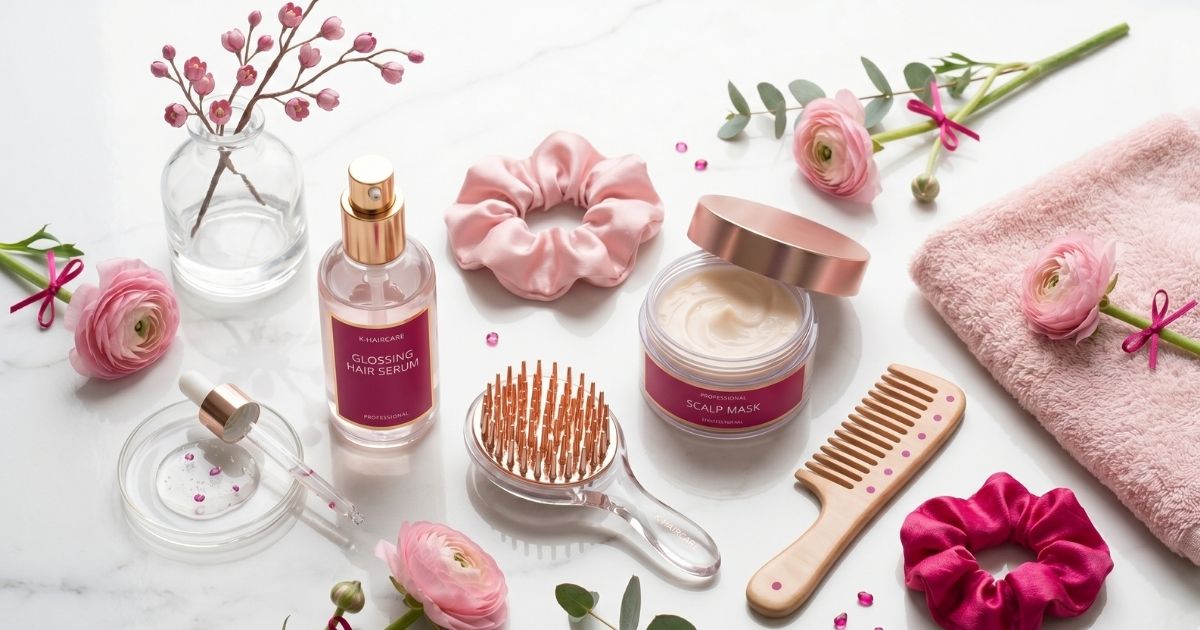
Korean beauty is not only about skin and makeup. Korean hair care is becoming a bigger part of the conversation, especially with “glass hair” and scalp care trends. Hair is treated almost like skincare now: cleanse gently, nourish the scalp, protect the ends, and keep shine controlled.
What is glass hair?
Glass hair means shiny, smooth, reflective hair that looks healthy and polished. It does not have to be pin-straight, but it usually looks sleek and soft. Hair oils, gloss treatments, scalp serums, and lightweight masks can all help.
If your hair is dry, you may also like our guide on how to help hair grow faster. It covers healthy hair habits without promising overnight miracles.
Korean hair styling ideals
Common Korean-inspired hairstyles include soft layers, airy bangs, curtain bangs, glossy long hair, gentle waves, and clean bob cuts. The style usually looks intentional but not overly stiff.
For a softer face-framing effect, ask your stylist for layers that start around the cheekbone or jawline. This can help create the illusion of a smaller face without needing harsh contour.
Korean Beauty Standards Compared With Western Beauty Trends
Beauty standards overlap around the world, but they express themselves differently. Western trends often shift between sculpted glam, clean girl minimalism, bold brows, and bronzed skin. Korean trends tend to lean toward soft color, hydrated skin, youthful details, and lighter base makeup.
| Beauty Area | Korean-Inspired Style | Common Western Style |
|---|---|---|
| Skin | Hydrated, bright, soft-focus, glassy | Bronzed, sculpted, matte or glowy |
| Brows | Soft, straight, natural | Lifted, laminated, arched |
| Lips | Gradient tint, gloss, blurred edges | Lined, fuller, defined shape |
| Eyes | Puppy liner, shimmer, curled lashes | Winged liner, smoky shadow, dramatic lashes |
| Face shape | Soft V-line, small-face effect | Defined cheekbones, lifted contour |
Neither style is “better.” They simply create different moods. You can mix both. A Korean-style glossy lip with a Western-style lifted brow can look gorgeous. A soft K-beauty base with a bold dress from Zara or Mango can feel very modern.
How to Try Korean Beauty Trends Without Losing Yourself
There is a strange pressure online to become the trend instead of just enjoying it. You see a beauty standard, then suddenly it feels like your nose, cheeks, skin tone, and face shape are all problems. They are not.
Use inspiration, not imitation
If you admire jugyeong true beauty style makeup from the drama-inspired beauty world, try the soft blush, glossy lips, and natural lashes. But you do not need to change your whole face. Inspiration should make your routine more fun, not make you feel unfinished.
You can also explore beauty from other angles, like our American Beauty rose symbolism article or our vintage American Beauty rose guide, to see how beauty ideals shift across cultures and eras.
Pick one trend at a time
Try one thing first. Maybe it is a cushion foundation. Maybe it is gradient lips. Maybe it is a Korean essence. Maybe it is soft straight brows. When you test one change at a time, you can actually tell what works for you.
Avoid extreme beauty challenges
A korean beauty challenge can be fun if it means trying skincare for seven days or recreating a makeup look. It becomes unhealthy if it pushes you toward unsafe weight loss, skin bleaching, harsh products, or unrealistic comparisons.
Beauty should not feel like punishment. I know that sounds obvious, but the internet makes people forget it.
Best Products for a Korean Beauty Inspired Routine
You do not need every trending product. Start with categories first, then choose products based on your skin type. Here are a few K-beauty inspired product types that make sense for beginners.
Hydrating essence
A Korean essence is perfect if your skin feels dull or tight. Look for ingredients like hyaluronic acid, fermented extracts, snail mucin, rice, or centella. COSRX Advanced Snail 96 Mucin Power Essence, Missha Time Revolution Essence, and Beauty of Joseon Ginseng Essence Water are common examples.
Gentle sunscreen
Daily sunscreen is one of the most important steps in any K-beauty routine. Beauty of Joseon Relief Sun, Round Lab Birch Juice Sunscreen, and Isntree Hyaluronic Acid Watery Sun Gel are popular because they feel light and comfortable.
Soft lip tint
Romand Juicy Lasting Tint, Peripera Ink Mood Glowy Tint, and Etude Fixing Tint are popular for gradient lips. You can apply a little color in the center of the lips and blur it outward with your finger.
Blush and glow products
Soft blush is a major part of Korean makeup. Cream blush, liquid blush, or cushion blush works well because it melts into the skin. For more ideas, check our blurry blush trend guide.
Product comparison table
| Product Type | Best For | Example Brands | Beginner Tip |
|---|---|---|---|
| Essence | Hydration and glow | COSRX, Missha, Beauty of Joseon | Apply after toner |
| Sunscreen | Even tone and UV protection | Round Lab, Isntree, Beauty of Joseon | Use every morning |
| Lip tint | Soft gradient lips | Romand, Peripera, Etude | Blur edges with finger |
| Mascara | Long, curled lashes | Clio, Etude, Heroine Make | Curl lashes first |
Common Mistakes to Avoid With Korean Beauty Trends
K-beauty is fun, but it is easy to overdo it. The prettiest routines are usually simple, consistent, and realistic.
Mistake 1: Buying too many products at once
A full routine can look tempting, especially when everything comes in pretty pink, white, or pastel packaging. But your skin may not love ten new products in one week. Introduce one product at a time and give your skin a few days to respond.
Mistake 2: Confusing brightening with bleaching
Brightening products can help dullness and uneven tone. Bleaching products can be risky, especially if they contain unsafe ingredients. Do not chase korean skin white searches blindly. Healthy skin matters more than pale skin.
Mistake 3: Copying celebrity features too literally
K-pop idols and K-drama actresses often have professional makeup, lighting, styling, editing, and sometimes cosmetic procedures behind their appearance. Their look is not always a realistic daily standard.
Mistake 4: Ignoring your own skin type
If your skin is oily, you may not enjoy heavy glow creams. If your skin is dry, a matte cushion may cling to texture. If you have acne-prone skin, fragranced products may irritate you. Choose the trend that suits you, not the one with the most views.
Expert Advice: What Korean Beauty Standards Really Mean in 2026
In 2026, Korean Beauty Standards are still influential, but they are also changing. The best version of K-beauty now feels softer, healthier, and more flexible. It is less about perfection and more about looking cared for.
The modern K-beauty direction
Modern K-beauty is moving toward:
- Barrier-first skincare
- Plump, bouncy skin
- Soft-focus makeup
- Scalp and hair care
- Comfortable daily sunscreen
- Minimal but effective routines
- Hybrid skincare-makeup products
This is a nice shift, honestly. Instead of telling you to hide every pore, the newer beauty mood feels more wearable. It still has polish, of course. It is still beauty culture. But it gives you more room to look like yourself.
For more beauty inspiration, explore our beauty category, skincare category, and fashion category. If you love nail trends too, our nail art section has plenty of soft, pretty ideas.
For additional dermatologist-backed sunscreen guidance, you can read the American Academy of Dermatology sunscreen FAQs.
Frequently Asked Questions
What are Korean Beauty Standards?
Korean Beauty Standards usually describe the beauty traits often admired in South Korean media and pop culture. These may include clear skin, a youthful face, soft makeup, healthy hair, slim facial balance, and polished styling. However, they are not rules every person follows. Real Korean people have many different looks, skin tones, face shapes, and personal styles.
How can I achieve Korean skin naturally?
You can achieve a Korean skin-inspired glow by focusing on hydration, gentle cleansing, sunscreen, and barrier care. Start with cleanser, hydrating toner or essence, moisturizer, and SPF. Add actives like niacinamide or vitamin C slowly if you need brightening. Avoid harsh scrubs and unsafe whitening products. Consistency matters more than using many products.
Are Korean Beauty Standards realistic?
Some parts are realistic, like caring for your skin, wearing sunscreen, or trying soft makeup. Other parts can be unrealistic because media images often include lighting, editing, professional makeup, and social pressure. It is healthier to use Korean Beauty Standards as inspiration rather than treating them as a checklist you must complete.
What is the Korean makeup look?
The Korean makeup look usually includes a lightweight base, soft brows, curled lashes, subtle eyeliner, gentle blush, and glossy or gradient lips. It often avoids heavy contour and dramatic eyeshadow. The goal is fresh, youthful, and polished rather than overly sculpted. You can adjust it based on your own face shape and skin tone.
Is Korean skincare good for acne?
Korean skincare can be helpful for acne if you choose the right products. Look for calming ingredients like centella, green tea, panthenol, and lightweight hydration. Avoid using too many rich creams or fragranced products if your skin breaks out easily. A simple routine with cleanser, acne treatment, moisturizer, and sunscreen is often better than a long routine.
How do Korean beauty trends change in 2026?
In 2026, Korean beauty trends are leaning toward healthier skin, bouncy texture, soft-focus makeup, scalp care, and simpler routines. Instead of only chasing glass skin, many people are focusing on barrier repair, comfortable sunscreen, and natural glow. This makes the trend more wearable for everyday life, especially if you prefer beauty that feels polished but not heavy.
Final Thoughts
Korean Beauty Standards can be beautiful, inspiring, and genuinely helpful when they encourage you to care for your skin, try softer makeup, and build a routine that feels good. But they can also become stressful if you treat them like strict rules. You do not need a specific nose, face shape, skin tone, or celebrity-like appearance to enjoy K-beauty.
The best way to approach Korean beauty in 2026 is to take what works and leave what does not. Try the essence. Wear the SPF. Play with gradient lips. Test soft blush. Maybe even recreate a K-drama look for fun. But keep your own features in the story.
Beauty should feel like a little glow-up, not a full rejection of yourself. That is the version worth keeping.
You Might Also Love
- Korean Skincare Sets — A beginner-friendly guide to building a simple K-beauty routine.
- Best Korean Skincare for Acne — Helpful product and routine ideas for breakout-prone skin.
- How to Layer Korean Skincare — Learn the correct order for toner, essence, serum, and moisturizer.
- Korean Skincare for Glass Skin — A full guide to that hydrated, reflective skin look.
- Best Skincare Products — A helpful roundup for everyday skin goals.
- Visible Pores Are the New Filter — A realistic look at skin texture and beauty trends.
- Blurry Blush — A soft makeup trend that pairs beautifully with K-beauty looks.
- Lip Gloss Layers — Learn how to create glossy, soft lips without stickiness.
- How to Help Hair Grow Faster — Healthy hair habits for longer, stronger-looking hair.
- Beauty Tips and Trends — Explore more makeup, skincare, and beauty inspiration.