Routine Shampoo and Conditioner: Is It Worth It? | Soft Glow Style
🌸 Key Takeaways
- Routine shampoo and conditioner is popular for women who want fuller-looking, softer, stronger-feeling hair.
- It may be worth trying if your hair feels dry, fragile, flat, coarse, or prone to breakage.
- Routine Wellness Shampoo includes ingredients like biotin, caffeine, niacinamide, panthenol, pea peptides, saw palmetto, aloe, and oils.
- It is not the same as a medical hair-loss treatment, so serious shedding or bald patches should be checked by a dermatologist.
- The best shampoo and conditioner for women depends on your scalp type, hair texture, styling habits, and budget.
- Drugstore shampoo and conditioner can still be good quality if the formula suits your hair.
- If you are unsure, compare Routine with affordable shampoo and conditioner options before committing to a full routine.
Routine shampoo and conditioner may be worth it if you want a fuller-looking, softer, more manageable hair routine and like formulas with scalp-supporting ingredients. It is best viewed as a cosmetic haircare set, not a guaranteed treatment for hair loss, thinning, or medical shedding.
Introduction
Hair products are tricky because they promise a lot. Softer hair. Fuller hair. Less breakage. More shine. A better scalp. A better life, somehow, if the bottle is pretty enough.
So when people ask, does Routine shampoo and conditioner work, the honest answer is: it depends on what you expect it to do.
If your goal is better-feeling hair, less dryness, more body, smoother ends, and a cleaner haircare routine, Routine may make sense. If your goal is medical hair regrowth from diagnosed hair loss, that is a different conversation and you should involve a dermatologist.
In 2026, haircare is becoming more ingredient-aware. People are not just buying the best smelling shampoo anymore. They are asking what shampoo is healthy for your hair, what is the best natural shampoo, and whether a premium formula is really better than a great drugstore shampoo.
At Soft Glow Style, we like beauty products that feel useful, not just trendy. This guide breaks down Routine Wellness Shampoo and Conditioner, who it may suit, how it compares with drugstore shampoo and conditioner, where to buy it, and how to choose the best shampoo and conditioner for your hair type.
For more beauty and hair support, you may also enjoy our beauty category, our hair grow faster guide, and our roundup of the best skincare products.
What Is Routine Shampoo and Conditioner?

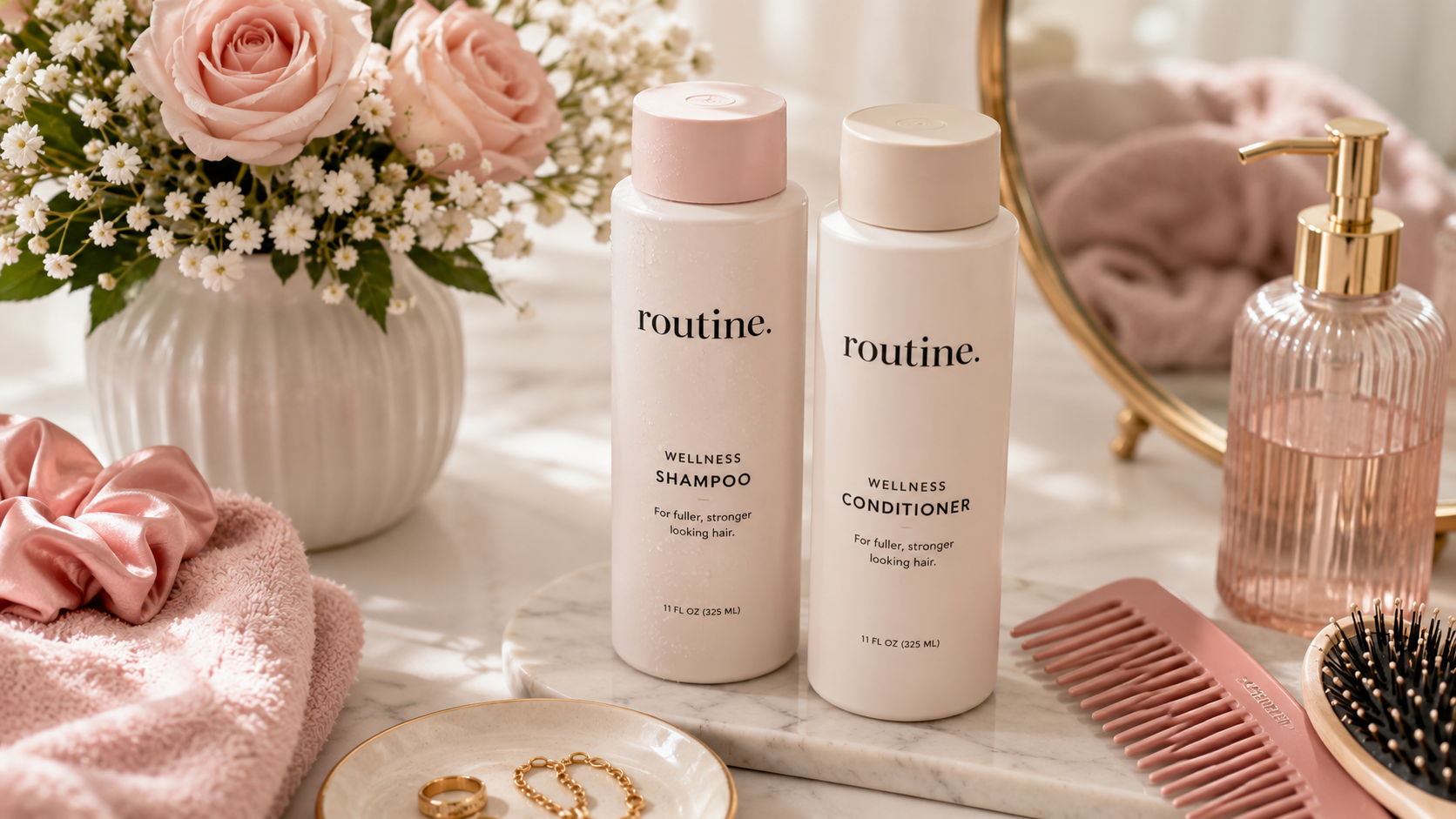
Routine shampoo and conditioner is a haircare duo from Routine Wellness that is marketed toward fuller-looking, healthier-feeling hair. It has become popular with women looking for a shampoo and conditioner that feels more targeted than a basic drugstore bottle.
The brand’s formulas include ingredients often associated with scalp care, hair strength, and moisture support, such as biotin, caffeine, niacinamide, panthenol, aloe vera, pea peptides, oils, and botanical extracts.
That ingredient list is part of the appeal. Many people are no longer satisfied with a shampoo that only smells nice. They want a formula that feels thoughtful.
What Makes Routine Different?
Routine sits in a middle space between salon haircare, wellness beauty, and scalp-focused products. It is not just a basic cleansing shampoo, but it is also not a prescription treatment.
The appeal is that it feels like a more complete routine. You get shampoo to cleanse the scalp and conditioner to soften the lengths. That pairing matters because shampoo and conditioner do different jobs.
The American Academy of Dermatology recommends applying shampoo mainly to the scalp, because shampooing the full length can dry hair too much. It also recommends using conditioner after washing because conditioner moisturizes, detangles, and makes hair easier to manage. For more general hair guidance, see the AAD healthy hair tips.
That basic advice matters no matter which brand you buy.
Who Is Routine Shampoo For?
Routine may be appealing if you have:
- Dry hair
- Coarse hair
- Fine or flat hair
- Fragile strands
- Breakage from styling
- Hair that tangles easily
- Hair that feels dull or rough
- A scalp that needs a more intentional wash routine
It may also interest women who are searching for the best shampoo and conditioner for women but feel overwhelmed by salon brands, drugstore shelves, and viral TikTok recommendations.
If your beauty routine is already becoming more thoughtful, our guide to underconsumption core may help you shop more intentionally instead of buying every trending product.
Who Should Be Careful?
You should be more cautious if your scalp is very sensitive, easily irritated, or reactive to fragrance, essential oils, or stronger cleansing agents.
Also, if you are dealing with sudden shedding, bald patches, scalp pain, scaling, or hair loss after illness, childbirth, medication, stress, or hormonal changes, do not rely on shampoo alone. A shampoo can support your routine, but it cannot diagnose the reason your hair is changing.
Mayo Clinic notes that minoxidil is one over-the-counter option that may help many people regrow hair or slow hair loss, but it usually takes at least six months to judge results and may need continued use. That is very different from expecting a rinse-off shampoo to do everything.
Does Routine Shampoo Really Work?

This is the big question. Routine shampoo and conditioner can work well for some people, especially if their main concerns are softness, shine, body, breakage, dryness, and hair that feels weak.
But if by “work” you mean guaranteed hair regrowth, that is where expectations need to stay realistic.
What Shampoo Can Realistically Do
A good shampoo can:
- Cleanse oil and buildup from the scalp
- Make hair feel lighter and fresher
- Help hair look fuller by reducing heaviness
- Support scalp comfort when the formula suits you
- Improve how hair behaves before styling
A good conditioner can:
- Soften the hair length
- Reduce tangles
- Improve manageability
- Smooth the feel of coarse or dry hair
- Make strands look shinier
- Help reduce breakage from brushing and styling
That is already useful. Sometimes we expect shampoo to do a medical job when its real job is cosmetic support.
What Shampoo Cannot Promise
Even the best conditioning shampoo cannot guarantee new hair growth if the root issue is medical, hormonal, nutritional, genetic, or stress-related.
Hair shedding can happen for many reasons. Low iron, thyroid issues, postpartum changes, scalp conditions, medication, weight loss, illness, and genetics can all play a role. That is why a dermatologist visit matters if shedding is unusual or sudden.
Routine may make hair look and feel better. It may reduce breakage if your old products were drying. It may help your scalp feel cleaner. But it should not be treated as a replacement for medical care.
If your interest in hair growth is broader, our hair grow faster guide is a good next read.
How Long Should You Try It?
Most hair products need several washes before you know whether they suit you. For texture, softness, volume, and shine, you may notice changes quickly. For breakage and fullness, you may need more time.
A fair trial is usually four to eight weeks, unless your scalp reacts badly. If you notice itching, burning, flakes, irritation, extra dryness, or heavy buildup, stop using it and reassess.
Haircare is personal. A product can be loved by thousands of people and still not suit your scalp.
Routine Shampoo Ingredients: What Stands Out?
The ingredient list is one reason people search for whether Routine shampoo and conditioner is worth it. The formula includes a mix of cleansing agents, humectants, conditioning ingredients, botanical oils, and scalp-focused ingredients.
Let’s break down the ingredients people usually care about most.
Biotin
Biotin is one of the most recognizable hair ingredients. It is often marketed for hair, skin, and nails.
Here is the honest part. Biotin is important for the body, but biotin shampoo is rinse-off. That means it does not stay on the scalp long like a leave-on treatment. It may still support the overall formula, but you should not expect shampoo biotin to work like a medical hair-growth treatment.
Caffeine
Caffeine is common in scalp-focused hair products. It is used because of its association with scalp stimulation and hair follicle research.
Still, the effect of caffeine in a shampoo depends on the full formula, contact time, concentration, and the person using it. It is interesting, but not magic.
Niacinamide
Niacinamide is well known in skincare, but it also appears in some scalp and hair formulas. It can support the skin barrier and is often included in products aimed at healthier-looking skin or scalp comfort.
If you already like ingredient-led beauty, you may enjoy our guide to cloud skin, where niacinamide and skin prep also fit into the broader soft beauty trend.
Panthenol
Panthenol, also called provitamin B5, is commonly used in hair products because it can help hair feel smoother and more conditioned. It is one of those ingredients that makes sense in a shampoo and conditioner routine because it supports softness and manageability.
Oils and Botanical Extracts
Routine’s ingredient list includes oils and botanical extracts such as aloe vera, coconut oil, argan oil, black seed oil, tea tree oil, sunflower oil, nettle extract, apple fruit extract, and saw palmetto fruit extract.
These ingredients can make a formula feel more wellness-oriented, but again, your scalp has the final vote. Some people love botanical-rich products. Others find them too fragranced, heavy, or irritating.
If you prefer a softer beauty routine in general, our lip gloss layers and blurry blush guides have the same easy, polished approach.
Routine Shampoo and Conditioner vs Drugstore Options
One fair question is whether Routine is better than drugstore shampoo and conditioner. The answer is not automatic.
Some drugstore formulas are excellent. Some expensive formulas are not right for your hair. Price helps sometimes, but it does not guarantee compatibility.
Comparison Table
| Feature | Routine Shampoo and Conditioner | Drugstore Shampoo and Conditioner |
|---|---|---|
| Main Appeal | Wellness-focused formula for fuller-looking, stronger-feeling hair | Affordable, easy to find, many formulas for different hair needs |
| Best For | Women wanting a more targeted hair routine | Budget-friendly daily haircare |
| Price | Usually higher than basic drugstore options | Usually lower and often available on sale |
| Ingredients | Includes biotin, caffeine, niacinamide, panthenol, botanical extracts | Depends heavily on brand and formula |
| Availability | Best checked through official Routine channels and current retailers | Often available in stores, pharmacies, supermarkets, and online |
| Best Strategy | Try if the claims match your needs and budget | Choose by hair type, scalp type, and ingredient tolerance |
When Routine May Be Worth the Price
Routine may be worth it if:
- You want a more targeted formula than a basic shampoo.
- Your current shampoo leaves your hair dry or rough.
- You like the idea of biotin, caffeine, niacinamide, and botanical ingredients.
- You want fuller-looking hair without switching to a complicated routine.
- You are willing to pay more for a product you enjoy using.
Sometimes the best hair product is the one you use consistently. If the scent, lather, feel, and results make you stick with a healthier wash routine, that has value.
When a Drugstore Shampoo May Be Enough
A drugstore shampoo and conditioner may be enough if:
- Your hair is generally healthy.
- You only need moisture or volume.
- Your budget is tight.
- You wash hair often and use product quickly.
- You prefer simple formulas.
- You want something easy to replace locally.
There are many affordable shampoo and conditioner options that work well for dry hair, straight hair, coarse hair, color-treated hair, and volume. The trick is choosing by hair need, not just by brand hype.
If you like smart shopping and fewer impulse purchases, our underconsumption core article is a useful reset.
Best Shampoo and Conditioner by Hair Type

The best shampoo conditioner combo depends on your actual hair. Not your friend’s hair. Not an influencer’s hair. Yours.
Here is a simple way to choose.
Best Shampoo and Conditioner for Dry Hair
If you are searching for the best shampoo and conditioner dry hair or good shampoo and conditioner for dry hair, look for moisturizing and smoothing formulas.
Helpful terms include:
- Moisturizing
- Hydrating
- Repairing
- Softening
- Frizz control
- For dry or damaged hair
Ingredients that may help include glycerin, panthenol, oils, butters, amino acids, ceramides, and conditioning agents.
Routine may suit dry hair if your strands like richer, conditioning formulas. But if your hair is very fine, use conditioner lightly and focus on the ends.
Best Shampoo and Conditioner for Straight Hair
If you want the best shampoo and conditioner for straight hair, the main issue is often balance. Straight hair can get oily at the roots and dry at the ends.
Try a lightweight shampoo on the scalp and conditioner only from mid-lengths to ends. Avoid applying heavy conditioner near the roots unless your hair is very dry or coarse.
A lightweight volumizing shampoo can help if your straight hair falls flat. For that, search for the best drugstore volumizing shampoo or formulas labeled volume, body, or weightless moisture.
Best Shampoo for Coarse Hair
Coarse hair usually needs more softness and slip. Look for creamy conditioners, smoothing ingredients, oils, and formulas that reduce roughness.
If your coarse hair also feels dry, the best shampoo and conditioner for moisturizing will usually work better than a clarifying or volume formula.
Routine may be helpful if the conditioner gives enough softness. If not, you can pair a gentler shampoo with a richer mask once a week.
Best Shampoo for Fine or Flat Hair
Fine hair needs lift without heaviness. Look for:
- Volumizing shampoo
- Lightweight conditioner
- Root-lifting products
- Clear or gel-texture shampoos
- Conditioner used only on ends
Be careful with heavy oils, butters, or too much conditioner. They may make fine hair look limp.
If you love minimal routines, our 15-piece capsule closet article has a similar beauty lesson: fewer well-chosen pieces often work better than too many options.
How To Use Routine Shampoo and Conditioner Correctly
Even a good formula can disappoint if you use it wrong. Shampoo and conditioner technique matters more than people think.
Step 1: Wet Hair Fully
Before applying shampoo, make sure your hair is fully wet. This helps the product spread evenly and prevents you from using too much.
Warm water is usually enough. Very hot water can make hair feel drier and may irritate the scalp.
Step 2: Shampoo the Scalp
Apply shampoo to your scalp, not your ends. Massage gently with fingertips. Do not scratch with nails.
Focus on:
- Hairline
- Crown
- Behind the ears
- Nape of neck
- Oily areas
The suds will move through the hair length when you rinse. You usually do not need to scrub the ends.
Step 3: Rinse Very Well
Rinsing matters. Leftover shampoo can make hair feel dull, itchy, or coated.
Take a little extra time here, especially if you have thick or coarse hair.
Step 4: Condition the Right Area
Apply conditioner from mid-lengths to ends if your hair is fine, oily, or straight. If your hair is dry, curly, or coarse, you may need conditioner through more of the length.
Let it sit for a few minutes if your hair needs softness.
Step 5: Detangle Gently
Use a wide-tooth comb or your fingers while conditioner is in your hair. Be gentle. Wet hair can stretch and break more easily.
This is especially important if you are trying to reduce breakage.
Step 6: Rinse and Dry Softly
Rinse until hair feels clean but not stripped. After showering, gently squeeze out water with a microfiber towel or soft T-shirt.
Avoid rough towel rubbing. It can create frizz and breakage.
If you are building a soft beauty routine overall, our cloud skin guide pairs nicely with this kind of gentle self-care mood.
Where Can I Buy Routine Shampoo and Conditioner?
If you are searching where can I buy Routine shampoo and conditioner, where to buy Routine shampoo, or who sells Routine shampoo, the safest answer is to check the official Routine Wellness website first.
Availability can change, so it is smart to verify current sellers before buying.
Is Routine Shampoo Sold in Stores?
Many shoppers search “is Routine shampoo sold in stores” or “where to buy Routine shampoo near me.” Store availability may vary by location and time.
To check, try:
- The official Routine Wellness website
- Routine’s official store locator if available
- Major online marketplaces
- Local salon or wellness retailers
- Google Shopping results near your location
Be careful with third-party sellers. Haircare products should be fresh, sealed, and authentic.
Where To Buy Routine Wellness Shampoo
For the most reliable purchase, start with the brand’s own website. That usually gives you the clearest information on scents, sets, subscription options, travel sizes, returns, and current promotions.
If you buy from a marketplace, check seller ratings, product reviews, and whether the listing is from the official brand or an authorized seller.
How To Spot a Smart Deal
A good deal is not just the lowest price. Look at:
- Bottle size
- Set price versus single-bottle price
- Shipping cost
- Return policy
- Subscription discount
- Authentic seller status
- Whether you actually need both products
This is where conscious shopping helps. Buying a product on sale is not saving money if you never use it.
Affordable Shampoo and Conditioner Alternatives
If Routine feels too expensive, you still have options. The best shampoo at the drugstore can be surprisingly good, especially if your needs are simple.
Drugstore Shampoo Options by Need
| Hair Need | What To Look For | Common Drugstore Brands To Check |
|---|---|---|
| Dry hair | Moisturizing, hydrating, repairing | L’Oréal, Dove, Garnier, Maui Moisture |
| Flat hair | Volumizing, lightweight, body | Pantene, OGX, John Frieda, Kristin Ess |
| Coarse hair | Smoothing, frizz control, rich conditioner | Aussie, SheaMoisture, Tresemmé, Hask |
| Straight hair | Balanced cleanse, lightweight moisture | Herbal Essences, Monday, Dove, L’Oréal |
| Scalp buildup | Clarifying or balancing shampoo | Neutrogena, Kristin Ess, Suave, Aveeno |
These are not automatic recommendations for every scalp. They are starting points. Always choose based on your hair type and sensitivity.
Best Drugstore Volumizing Shampoo
If volume is your main goal, look for formulas labeled volumizing, thickening, body-building, or weightless.
Fine hair usually likes lighter formulas. A heavy moisturizing shampoo may make it feel soft but flat.
For many women, the best drugstore volumizing shampoo is not the one with the biggest claim. It is the one that cleans well without leaving residue.
Best Shampoo and Conditioner for Moisturizing
If moisture is the goal, prioritize conditioner. Shampoo cleanses, but conditioner does much of the softening work.
Look for:
- Glycerin
- Panthenol
- Argan oil
- Coconut oil
- Shea butter
- Amino acids
- Ceramides
If your hair is both dry and fine, use a moisturizing conditioner only on the ends. If your hair is dry and coarse, you can use more.
For overall beauty routine editing, browse our skincare category and lifestyle category.
What Is the Best Hair Serum to Use With Routine?

If your ends are dry, frizzy, or coarse, a hair serum can help complete the routine. The best hair serum depends on your goal.
Choose Serum by Hair Concern
| Concern | Best Serum Type | How To Use |
|---|---|---|
| Frizz | Silicone smoothing serum | Apply a small amount to damp or dry ends |
| Dry ends | Oil-based serum | Use 1 to 2 drops on the ends |
| Heat styling | Heat protectant serum | Apply before blow-drying or styling |
| Shine | Light gloss serum | Smooth over finished hair |
| Fine hair | Weightless serum | Use less than you think |
How Much Serum Should You Use?
Less than you think. Start with one drop for fine hair and two to three drops for thick or coarse hair.
Apply serum to the ends first. Avoid the scalp unless the product is specifically made for scalp use.
Can Serum Replace Conditioner?
No, not really. Conditioner works in the shower to soften and detangle. Serum finishes the hair after washing. They can work together, but they are not the same step.
If your hair still feels dry after conditioner and serum, you may need a weekly mask or a gentler shampoo.
Common Mistakes to Avoid
Haircare mistakes are usually small, but they add up. Sometimes the product is not the problem. The routine is.
Mistake 1: Using Too Much Shampoo
More shampoo does not mean cleaner hair. It may actually make your hair feel dry or stripped.
Start with a small amount. Add water to help it lather. If your scalp is very oily or full of product buildup, shampoo twice with smaller amounts instead of using one huge amount.
Mistake 2: Conditioning the Roots Too Often
If your hair gets oily or flat quickly, conditioner near the roots may weigh it down.
Use conditioner on the mid-lengths and ends. If your scalp is dry or your hair is curly or coarse, you may need a different method, but fine and straight hair usually does better with lighter placement.
Mistake 3: Expecting Shampoo to Fix Hair Loss Alone
This is important. Shampoo can help hair look better. It can support a cleaner scalp. It can reduce dryness and breakage if it suits you.
But hair loss can come from internal or medical causes. If your shedding is sudden, severe, patchy, or emotional distressing, please see a professional.
Mistake 4: Switching Products Too Quickly
If you switch every week, you may never know what actually works.
Give a product time unless it irritates your scalp. Track how your hair feels after each wash. Is it softer? Flatter? Frizzier? Cleaner? Oilier? That tells you more than the label.
Mistake 5: Buying Because of Panic
Hair shedding can feel scary. It is easy to panic-buy three shampoos, two serums, vitamins, scalp tools, and a mask overnight.
Pause. Take photos. Check your routine. Think about stress, diet, styling, hormones, and health changes. Then choose one or two smart steps.
If you are trying to simplify your beauty buying, our digital detox guide and underconsumption core article can help with the shopping pressure side of beauty culture.
Expert Advice: How To Decide If Routine Is Worth It
The smartest way to decide is not by hype. It is by matching the product to your hair.
Use This Quick Decision Guide
| Your Situation | Is Routine Worth Trying? | Why |
|---|---|---|
| Your hair feels dry, weak, or dull | Maybe yes | The conditioning ingredients may help hair feel softer and healthier |
| You want fuller-looking hair | Maybe yes | The formula may support body and a cleaner scalp feel |
| You need proven medical regrowth | Not as a main treatment | See a dermatologist for evidence-based options |
| Your scalp reacts to fragrance or botanicals | Use caution | Botanical-rich formulas may bother some sensitive scalps |
| You need the cheapest option | Probably not first | A good drugstore shampoo and conditioner may suit your budget better |
Professional Tips
First, decide your main goal. Is it moisture, volume, less breakage, scalp comfort, or hair growth? One product cannot be everything.
Second, check your scalp type. Oily scalp, dry scalp, dandruff-prone scalp, and sensitive scalp all need different care.
Third, watch the conditioner. Many people judge shampoo, but conditioner often decides whether hair feels soft, heavy, slippery, or tangled.
Fourth, do not ignore styling damage. Heat tools, tight hairstyles, bleach, rough brushing, and towel friction can cause breakage no shampoo can fully fix.
Finally, use before-and-after notes instead of memory. Hair changes slowly, and it is easy to forget how it looked four weeks ago.
Frequently Asked Questions
Does Routine shampoo really work?
Routine shampoo and conditioner may work well if your goal is softer, fuller-looking, more manageable hair. Many people like it for dryness, breakage, shine, and body. However, it should not be treated as a guaranteed medical hair-growth treatment. If you have sudden, severe, or patchy hair loss, it is better to see a dermatologist.
Is Routine Wellness Shampoo good?
Routine Wellness Shampoo can be good for people who want a more targeted shampoo with ingredients like biotin, caffeine, niacinamide, panthenol, aloe, oils, and botanical extracts. Whether it is good for you depends on your scalp, hair texture, fragrance tolerance, and expectations. If your current shampoo leaves hair dry or flat, it may be worth testing.
Where can I buy Routine shampoo and conditioner?
You can usually buy Routine shampoo and conditioner through the official Routine Wellness website, and availability may also appear through major online retailers. If you search where to buy Routine shampoo near me, check current retailer listings and seller authenticity. Store availability can change, so the official brand website is usually the safest starting point.
Is Routine shampoo sold in stores?
Routine shampoo may or may not be sold in stores depending on your location and current retail partnerships. If you are asking who sells Routine shampoo, check the official Routine Wellness website first, then look at major retailers or local beauty stores. Always make sure the product is sealed, fresh, and sold by a reliable seller.
What is the healthiest shampoo for your hair?
The healthiest shampoo for your hair is one that cleans your scalp without leaving your hair dry, itchy, heavy, or irritated. There is no single healthiest shampoo for everyone. Fine hair may need lightweight volume, while coarse hair may need moisture. Sensitive scalps may need fragrance-free formulas. Choose based on your scalp and hair type.
What is the best shampoo and conditioner for dry hair?
The best shampoo and conditioner for dry hair usually includes moisturizing, smoothing, or repairing ingredients. Look for glycerin, panthenol, oils, ceramides, amino acids, or rich conditioning agents. Apply shampoo mostly to your scalp and conditioner to the lengths and ends. If your hair is very dry or coarse, add a weekly hair mask.
What is the best drugstore shampoo?
The best drugstore shampoo depends on your hair goal. For volume, choose lightweight volumizing formulas. For dryness, choose moisturizing or repairing formulas. For buildup, choose clarifying shampoo occasionally. A great drugstore shampoo is not always the most popular bottle. It is the one that cleans your scalp and leaves your hair manageable.
What is the best hair serum?
The best hair serum depends on your hair concern. For frizz, choose a smoothing serum. For dry ends, choose a lightweight oil serum. For heat styling, choose a heat protectant serum. Fine hair needs very light formulas, while coarse hair can usually handle richer serums. Apply serum mostly to the ends, not the scalp.
Final Thoughts
Routine shampoo and conditioner is worth considering if your hair feels dry, fragile, flat, or difficult to manage and you want a more targeted wash routine. It has an ingredient story that feels appealing, especially if you like beauty products with biotin, caffeine, niacinamide, panthenol, oils, and botanical extracts.
But it is not magic. No shampoo should be expected to solve every type of shedding, thinning, or scalp concern. If your hair loss feels sudden, serious, or unusual, get professional advice instead of relying only on a bottle.
For everyday haircare, Routine may be a lovely upgrade if it fits your budget and your scalp likes it. If not, there are still plenty of good quality shampoo and conditioner options at the drugstore.
The real goal is healthy-feeling hair, a calmer routine, and products you actually enjoy using. That is always more stylish than panic-buying the latest viral thing.
You Might Also Love
- Hair Grow Faster – A helpful guide for building stronger hair habits beyond shampoo.
- Best Skincare Products – Simple beauty picks for a softer daily routine.
- Cloud Skin – A soft blurred beauty trend that pairs well with healthy-looking hair.
- Blurry Blush – An easy makeup trend for fresh, soft-focus beauty.
- Lip Gloss Layers – A simple glossy lip routine for polished everyday looks.
- Visible Pores – A realistic beauty read about skin texture and softness.
- Korean Skincare Glass Skin – A glow-focused routine for skin that looks fresh and cared for.
- Underconsumption Core – A lifestyle guide for buying less and choosing products more carefully.
- Digital Detox – A wellness reset for calming your screen habits and beauty shopping pressure.
- Beauty – Explore more beauty guides, product ideas, and easy routines.