Key Takeaways
- How to apply bronzer and blush comes down to placement, shade choice and blending.
- Bronzer adds warmth and soft shape, while blush adds fresh color and life to the cheeks.
- Most makeup routines look more natural when bronzer is applied first and blush is added after.
- Bronzer usually belongs around the temples, cheek perimeter and jawline, not directly on the apples of the cheeks.
- Blush usually looks best on the cheeks, blended upward toward the temples for a lifted effect.
- Start with less product than you think because bronzer and blush are easier to build than remove.
- Soft blending is what keeps bronzer and blush from looking harsh, muddy or overdone.
How to apply bronzer and blush without overdoing it is one of the most useful makeup skills to learn. Bronzer can make your face look warmer, softer and more dimensional. Blush can make your skin look fresh, healthy and awake. But when either one is placed too low, applied too heavily or not blended enough, the whole makeup look can feel harsh.
The good news is that bronzer and blush do not need to be complicated. You do not need a heavy contour routine, a full glam base or ten different brushes. You only need to understand what each product is supposed to do. Bronzer brings warmth. Blush brings color. Together, they should make the face look balanced, not painted.
This guide explains how to apply bronzer and blush step by step, where each one should go, how to choose the right shades, how to use cream or powder formulas, and how to fix makeup when you accidentally apply too much.
How to Apply Bronzer and Blush: The Simple Rule
The simplest rule is this: apply bronzer where you want warmth and apply blush where your face naturally flushes. Bronzer should not replace blush, and blush should not replace bronzer. They do different jobs.
Bronzer usually looks best around the outside areas of the face, such as the temples, upper cheek area, hairline and light jawline area. It gives the face a sun-warmed effect. Blush usually belongs more on the cheeks, where it adds softness and color.
For general cosmetic safety, the FDA explains that cosmetics should be used according to directions and that users should stop using a cosmetic product if irritation occurs. You can read the FDA cosmetics safety Q&A for consumer guidance.
For more Soft Glow Style makeup help, read bronzer vs blush, bronzer for dark skin, and what is tinted moisturizer.
Bronzer vs Blush: What Each Product Does
Bronzer and blush can both make the face look more alive, but they do it in different ways. Bronzer is about warmth. Blush is about flush.
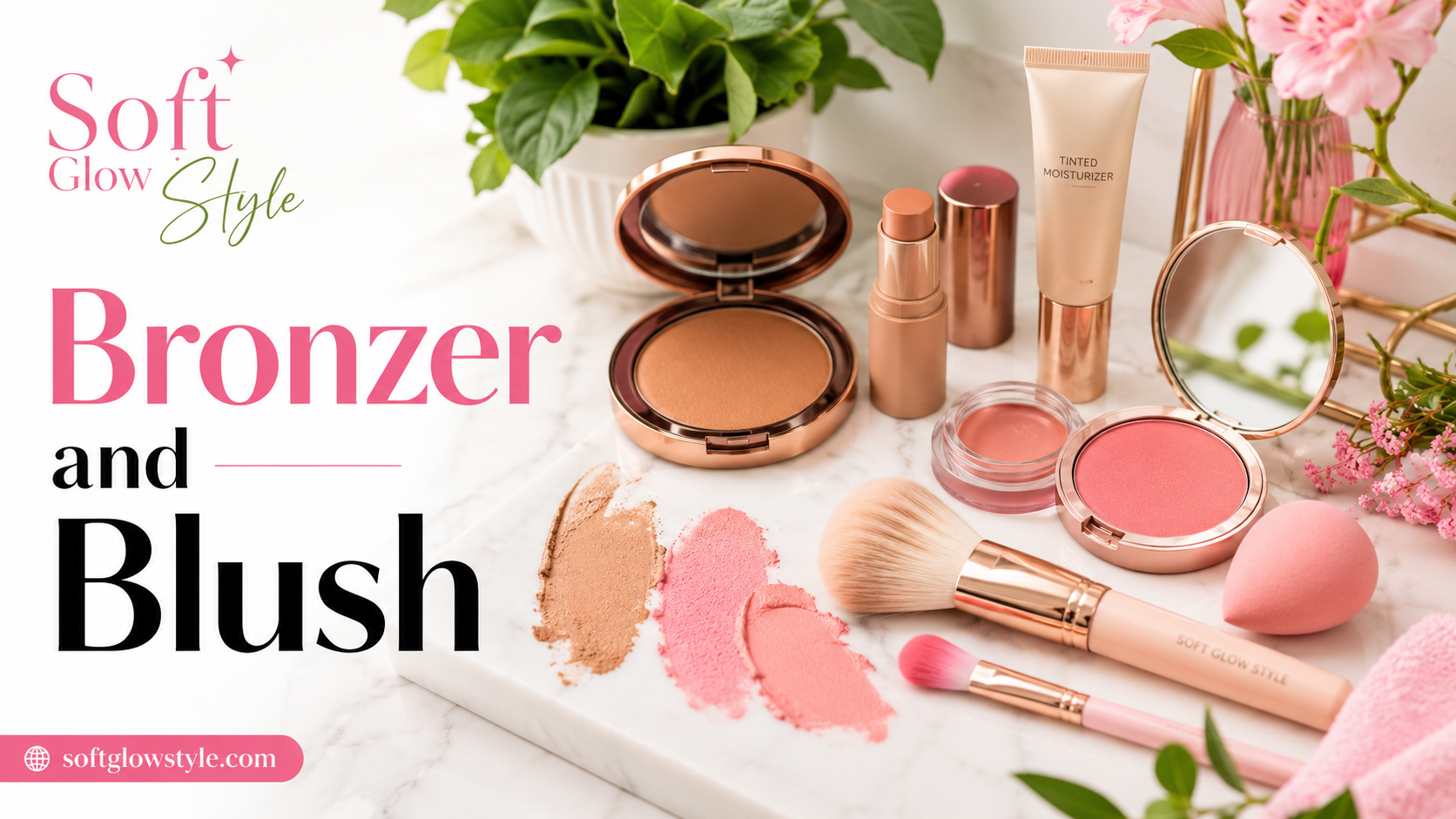
Bronzer usually comes in warm brown, golden brown, caramel, tan, terracotta or bronze shades. It can make the skin look lightly sun-kissed. Blush usually comes in pink, peach, coral, rose, berry, mauve or red tones. It mimics the natural color your cheeks get when you are warm, happy or flushed.
| Product | Main Job | Best Placement |
|---|---|---|
| Bronzer | Adds warmth and soft dimension | Temples, cheek perimeter, hairline, light jawline |
| Blush | Adds fresh cheek color | Cheeks, upper cheek area, blended upward |
| Contour | Creates shadow and sculpting | Under cheekbones, jawline, nose if desired |
| Highlighter | Adds glow and light reflection | High points of the face |
Bronzer is not the same as contour. Contour is usually cooler and used to create shadow. Bronzer is warmer and used to add life to the skin.
Do You Apply Bronzer or Blush First?
Most people get the softest result by applying bronzer first, then blush. Bronzer creates warmth and shape. Blush sits on top and adds freshness.
If you apply blush first, bronzer can sometimes muddy the cheek color or cover the fresh effect. That does not mean it is wrong, but for beginners, bronzer first is usually easier.
Easy Order
- Apply base makeup.
- Add concealer if needed.
- Apply bronzer lightly.
- Apply blush in small layers.
- Blend the edges together.
- Add highlighter only if you want glow.
- Set lightly if needed.
Where to Apply Bronzer
Bronzer should warm the face where sunlight naturally hits. You do not need to cover the entire cheek with bronzer. That is how makeup starts looking muddy.
Best Bronzer Placement
- Lightly around the temples
- Along the upper cheek perimeter
- Softly near the hairline
- Very lightly along the jawline
- A tiny touch across the bridge of the nose if you want a sun-kissed look
Keep bronzer higher than you think. If bronzer sits too low under the cheeks, it can drag the face down. Blend upward and outward for a lifted finish.
Where to Apply Blush
Blush placement changes the mood of the face. On the apples of the cheeks, blush looks soft and youthful. Higher on the cheekbones, it looks lifted and modern. Across the cheeks and nose, it can look sun-kissed.
Best Blush Placement
- On the apples of the cheeks for a soft classic look
- Higher on the cheekbones for a lifted look
- Blended toward the temples for a modern look
- Lightly across the nose for a sun-kissed look
- Only on the outer cheeks if you want less roundness
If you are unsure, smile gently, place blush slightly above the fullest part of your cheek, then blend upward. Avoid placing too much blush close to the nose unless you want a very flushed style.
Step-by-Step: How to Apply Bronzer and Blush
This routine works for beginners and for anyone who wants a soft everyday makeup look.
Step 1: Start With a Light Base
Bronzer and blush blend better over a smooth base. Use tinted moisturizer, foundation, skin tint or concealer where needed. You do not need a full coverage base unless that is your preference.
Step 2: Choose the Right Bronzer Shade
Pick a bronzer that is only a little deeper than your skin tone. It should add warmth, not look orange, gray or dirty.
Step 3: Apply Bronzer Lightly
Tap your brush into bronzer, then tap off extra product. Sweep it around the temples and upper cheek area. Use soft circular or upward motions.
Step 4: Choose the Right Blush Shade
Pick blush based on the flush you want. Pink looks fresh. Peach looks warm. Rose looks romantic. Berry looks rich. Coral looks bright and sunny.
Step 5: Apply Blush in Small Layers
Start with a small amount on the cheeks. Blend upward toward the temples. Add more only after you see how it looks in natural light.
Step 6: Blend the Meeting Point
Where bronzer and blush meet, use a clean brush, sponge or fingertips to soften the edge. The two products should look connected, not like separate stripes.
Step 7: Check the Makeup in Natural Light
Bathroom lighting can hide heavy makeup. Step near a window and check both cheeks. If one side looks stronger, blend gently or soften with a sponge.
Best Bronzer and Blush Placement by Face Shape
Face shape can help guide placement, but it should not make makeup feel strict. Use these tips as a starting point.
| Face Shape | Bronzer Tip | Blush Tip |
|---|---|---|
| Round face | Keep bronzer slightly higher and blend upward | Place blush higher on the cheeks |
| Oval face | Warm the temples and cheek perimeter | Apply blush on cheeks and blend outward |
| Square face | Soften around the temples and jawline | Use rounded blending on cheeks |
| Heart-shaped face | Warm the temples lightly | Apply blush softly on outer cheeks |
| Long face | Avoid dragging bronzer too low | Blend blush slightly outward rather than too high |
How to Choose the Right Bronzer Shade
The right bronzer should look like warmth, not a stripe. Choose a shade that matches your undertone and is not too deep for everyday wear.
Bronzer Shade Tips
- Fair skin: soft beige bronze, light honey, gentle peach-brown
- Light-medium skin: warm tan, soft caramel, golden bronze
- Medium skin: caramel, terracotta, warm bronze
- Tan skin: golden brown, deep caramel, warm amber
- Deep skin: rich bronze, red-brown, deep golden brown, warm cocoa
If bronzer looks orange, choose a softer neutral-warm shade. If it looks gray or dirty, choose something warmer or richer.
How to Choose the Right Blush Shade
Blush should look like it belongs on your face. That does not mean it has to be invisible, but it should flatter your undertone and makeup style.
| Blush Shade | Best For | Style Mood |
|---|---|---|
| Soft pink | Fresh everyday looks | Clean and youthful |
| Peach | Warm makeup looks | Soft and sunny |
| Rose | Most skin tones | Romantic and balanced |
| Coral | Summer makeup | Bright and warm |
| Berry | Medium to deep skin tones | Rich and fresh |
| Terracotta | Warm and olive undertones | Sunset and soft glam |
For more shade help, read bronzer for dark skin and bronzer vs blush.
Cream Bronzer and Cream Blush Routine
Cream products look soft and skin-like when blended well. They are a good choice if you like dewy makeup, natural makeup or no makeup makeup.
How to Apply Cream Bronzer and Blush
- Apply your base makeup first.
- Tap cream bronzer onto the temples and cheek perimeter.
- Blend with a sponge, brush or fingertips.
- Apply cream blush on the cheeks.
- Tap instead of dragging so the base does not lift.
- Set lightly with powder only where needed.
Cream products should be built slowly. A tiny amount can spread more than expected.
Powder Bronzer and Powder Blush Routine
Powder bronzer and blush are easy to control when applied with the right brush. They are especially useful for oily skin, long wear or makeup that needs to stay in place.
How to Apply Powder Bronzer and Blush
- Set your base lightly if it feels tacky.
- Tap bronzer brush into product.
- Tap off excess powder.
- Apply bronzer softly around the face.
- Use a smaller blush brush for cheeks.
- Blend edges with a clean brush.
Powder products become overdone when too much is loaded onto the brush. Always tap off extra product first.
Can You Mix Cream and Powder Products?
Yes, but the order matters. A common rule is cream before powder. Apply cream bronzer or blush first, then set lightly with powder if needed.
If you apply cream over heavy powder, it may patch, lift or look uneven. If you want extra staying power, use a light cream blush first, then a small amount of powder blush on top.
How to Apply Bronzer and Blush for a Natural Look
A natural look depends on soft edges. Bronzer should melt into the base. Blush should look like color coming from the skin, not sitting on top of it.
Natural Makeup Tips
- Use less product at first.
- Choose shades close to your natural warmth and flush.
- Blend upward instead of downward.
- Use cream formulas for a skin-like finish.
- Use a sponge to soften strong edges.
- Avoid placing blush too low on the cheeks.
- Do not cover the entire cheek with bronzer.
For a soft base, read what is tinted moisturizer and skincare infused makeup.
How to Apply Bronzer and Blush for a Lifted Look
For a lifted look, placement should move slightly upward and outward. Avoid dragging products down toward the mouth.
Lifted Placement Tips
- Apply bronzer higher on the cheek perimeter.
- Place blush on the upper cheeks, not too close to the nose.
- Blend blush toward the temples.
- Keep most color on the outer half of the face.
- Use a clean brush to soften the lower edge.
This technique works well with soft glam makeup, everyday makeup and camera-friendly looks.
How to Apply Bronzer and Blush for Round Cheeks
If you have round cheeks and want a more lifted look, keep blush slightly higher and avoid placing too much color directly in the center of the cheeks.
Apply bronzer around the outer cheek area, then blend upward. Add blush just above the fullest part of the cheek and sweep toward the temple. This keeps the makeup soft but not overly round.
How to Apply Bronzer and Blush on Mature Skin
For mature skin, softer layers usually look better than heavy powder. Cream products can look fresh if they do not settle into texture.
Tips for Mature Skin
- Use thin layers.
- Choose satin or natural finishes.
- Avoid very glittery bronzer on textured areas.
- Place blush slightly higher for a lifted effect.
- Blend with a damp sponge if makeup looks heavy.
- Use powder only where needed.
How to Apply Bronzer and Blush on Oily Skin
Oily skin can still wear cream products, but powder formulas may last longer. The trick is setting the base lightly before adding powder bronzer and blush.
Tips for Oily Skin
- Use a thin base layer.
- Set oily areas before powder products.
- Choose buildable powder bronzer.
- Use long-wear blush if makeup fades quickly.
- Avoid too much shimmer on oily zones.
- Set lightly after blending if needed.
How to Apply Bronzer and Blush on Dry Skin
Dry skin often looks better with cream or liquid bronzer and blush because they blend softly. Heavy powder can cling to dry patches.
Tips for Dry Skin
- Prep skin with moisturizer.
- Use a hydrating base.
- Choose cream bronzer and cream blush.
- Tap products instead of dragging.
- Use minimal powder.
- Add a soft setting spray if makeup looks powdery.
For skincare prep, read hydrating face mask for dry skin and serum at night.
How to Fix Too Much Bronzer
Too much bronzer can make the face look muddy or orange. Do not panic. You can soften it without washing off your full base.
Quick Fixes
- Blend with a clean fluffy brush.
- Press over the area with a damp sponge.
- Add a tiny amount of foundation or tinted moisturizer on top.
- Use translucent powder to soften shine or warmth.
- Balance the other side lightly instead of adding more everywhere.
The fastest fix is a clean brush. Use circular motions and blend upward until the color softens.
How to Fix Too Much Blush
Blush can go from fresh to too much very quickly, especially with bright or liquid formulas. The fix is to diffuse the color.
Quick Fixes
- Use a clean sponge to tap over the blush.
- Add leftover foundation from your brush or sponge.
- Apply a light layer of powder if it is a powder blush.
- Blend the edges toward the hairline.
- Avoid adding more bronzer to cover it because that can look muddy.
If blush is too strong only in one spot, tap over that spot instead of blending the color across your whole face.
Best Tools for Bronzer and Blush
You do not need many tools, but the right shape helps. Large fluffy brushes apply less color. Dense brushes apply more color. Sponges soften cream products.
| Tool | Best For | Result |
|---|---|---|
| Fluffy bronzer brush | Powder bronzer | Soft warmth |
| Angled brush | Bronzer placement | More control |
| Small blush brush | Powder blush | Controlled color |
| Damp sponge | Cream products | Soft blended finish |
| Fingertips | Cream blush | Natural skin-like blend |
Common Mistakes With Bronzer and Blush
Mistake 1: Using Bronzer Like Contour
Bronzer should add warmth. If you use it as a sharp contour under the cheekbone, it can look orange or muddy.
Mistake 2: Applying Blush Too Low
Blush placed too low can drag the face down. Keep blush on the cheeks and blend slightly upward.
Mistake 3: Using Too Much Product at Once
Bronzer and blush are easier to build than remove. Start light and add more slowly.
Mistake 4: Not Blending the Edges
Harsh edges make bronzer and blush look obvious. Use a clean brush or sponge to soften where products meet.
Mistake 5: Choosing the Wrong Undertone
Bronzer that is too orange or blush that is too cool can clash with your skin. Choose shades that match your natural warmth and flush.
Mistake 6: Using Shimmer Everywhere
Shimmer can look pretty, but too much shimmer on both bronzer and blush can emphasize texture. Use glow strategically.
Mistake 7: Ignoring Natural Light
Makeup can look softer indoors and stronger outside. Always check bronzer and blush near a window when possible.
Expert Tips from Sawera Shahid
Sawera Shahid, a beauty, fashion, skincare and lifestyle content writer with 5+ years of experience, recommends treating bronzer and blush as soft layers, not strong stripes. The most flattering result comes from building color gradually and blending the products into one natural-looking warmth.
- Apply bronzer before blush for an easier beginner routine.
- Keep bronzer higher on the face for a lifted look.
- Place blush slightly above the fullest part of the cheek.
- Use cream products if you want a soft skin-like finish.
- Use powder products if you want more control or longer wear.
- Blend bronzer and blush where they meet.
- Use a clean brush or sponge if either product looks too strong.
- Check your makeup in natural light before leaving home.
Soft Glow Style Internal Reading Map
Use these related Soft Glow Style guides to build a stronger beauty, makeup, skincare, hair care, fashion and lifestyle routine around how to apply bronzer and blush.
Makeup and Beauty Links
- Soft Glow Style beauty hub
- bronzer vs blush
- bronzer for dark skin
- what eyeshadow with brown eyes
- what is tinted moisturizer
- sweat resistant makeup
- skincare infused makeup
- heatproof makeup in hot weather
- no makeup makeup routine
- cloud skin makeup base
- cloud skin vs glass skin guide
- blurry blush trend
- blurryface makeup trend
- lip gloss layers guide
- faux freckles trending
Skincare Prep Links
- serum at night
- hydrating face mask for dry skin
- dermaplaning for sensitive skin
- foaming cleanser for oily skin
- fungal acne cleanser guide
- face wash for fungal acne
- raw honey mask for face
- ice water face dip
- benefits of ice bath for face
- does argan oil clog pores
Hair, Nail and Fashion Links
- hair styling foam for curly hair
- hairstyles for hot weather
- heat protectant for natural hair
- soft autumn hair colors
- Soft Glow Style nail art hub
- pedicure colors for spring
- vintage nail designs
- Soft Glow Style fashion hub
- shoes look good with jeans
- linen pants see through
- Soft Glow Style blog archive
Frequently Asked Questions
Do you apply bronzer or blush first?
Most people apply bronzer first, then blush. Bronzer adds warmth and soft shape, while blush adds fresh color on top.
Where do you apply bronzer and blush?
Apply bronzer around the temples, upper cheek perimeter, hairline and lightly along the jawline. Apply blush on the cheeks and blend slightly upward toward the temples.
How do you apply bronzer and blush naturally?
Use a small amount of product, build slowly, choose flattering shades and blend the edges where bronzer and blush meet.
Can you wear bronzer and blush together?
Yes. Bronzer and blush work beautifully together when bronzer adds warmth and blush adds soft cheek color without heavy layering.
How do you stop blush from looking too much?
Start with less product, tap off excess powder, use a light hand and blend with a clean brush or damp sponge if the color looks too strong.
Should bronzer and blush be powder or cream?
Both can work. Cream bronzer and blush look soft and skin-like, while powder formulas are easier to build and can last well on oily skin.
Final Thoughts
How to apply bronzer and blush without overdoing it is really about control. Start light, place bronzer where you want warmth, place blush where you want freshness and blend the two together softly.
You do not need a heavy makeup routine to make bronzer and blush look good. A small amount of bronzer around the face and a soft layer of blush on the cheeks can make your whole complexion look more alive. The best result should still look like your skin, just warmer, fresher and more balanced.
Final Recap
- Bronzer adds warmth, blush adds fresh color.
- Apply bronzer first, then blush for an easy routine.
- Keep bronzer around the temples, cheek perimeter and hairline.
- Place blush on the cheeks and blend upward.
- Start with less product and build slowly.
- Cream formulas look soft, while powder formulas offer control.
- Blend edges well so bronzer and blush do not look like stripes.