Key Takeaways
- Bronzer vs blush is simple: bronzer adds warmth, while blush adds cheek color.
- Bronzer makes the face look sun-kissed, warmer and more dimensional.
- Blush makes the face look fresher, healthier and more awake.
- Bronzer usually goes around the forehead, temples, outer cheeks and jawline.
- Blush usually goes on the cheeks and blends upward for a lifted effect.
- You can wear bronzer alone, blush alone or both together depending on your makeup style.
- For the most natural look, apply bronzer first, blush second, then softly blend the edges.
Bronzer vs blush can feel confusing when you are building a makeup routine. Both products go on the face. Both can come in cream, powder or liquid formulas. Both can add color. But they do different jobs. Bronzer adds warmth and a sun-kissed effect. Blush adds fresh cheek color, like a natural flush.
Think of bronzer as warmth and blush as life. Bronzer brings back dimension after foundation. Blush brings back freshness. When you understand the difference, your makeup starts looking more balanced, softer and more intentional.
Bronzer vs Blush: The Main Difference
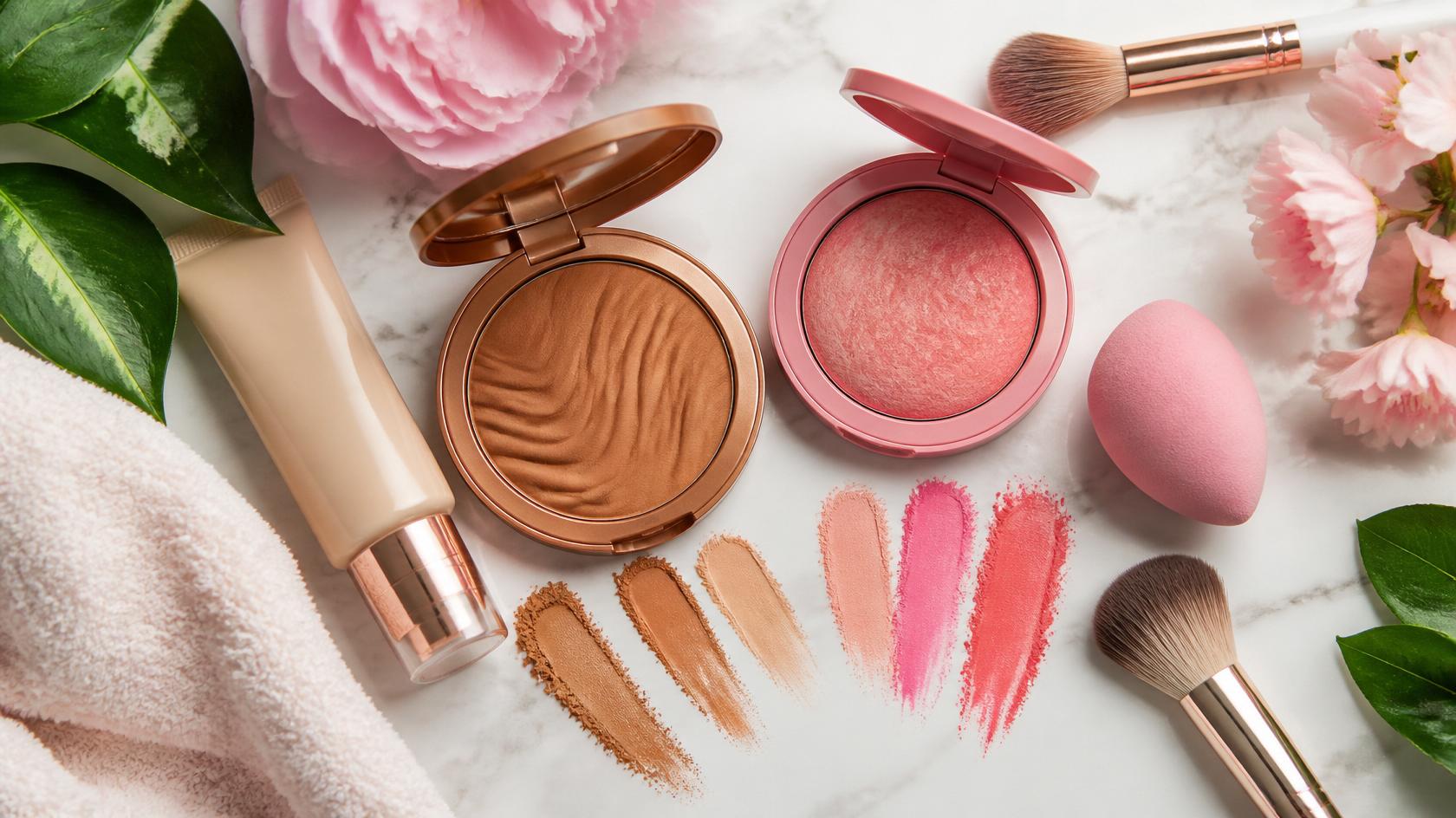
The main difference between bronzer and blush is the effect each product creates. Bronzer is used to warm up the skin and create a lightly sun-touched look. Blush is used to add color to the cheeks and make the face look brighter.
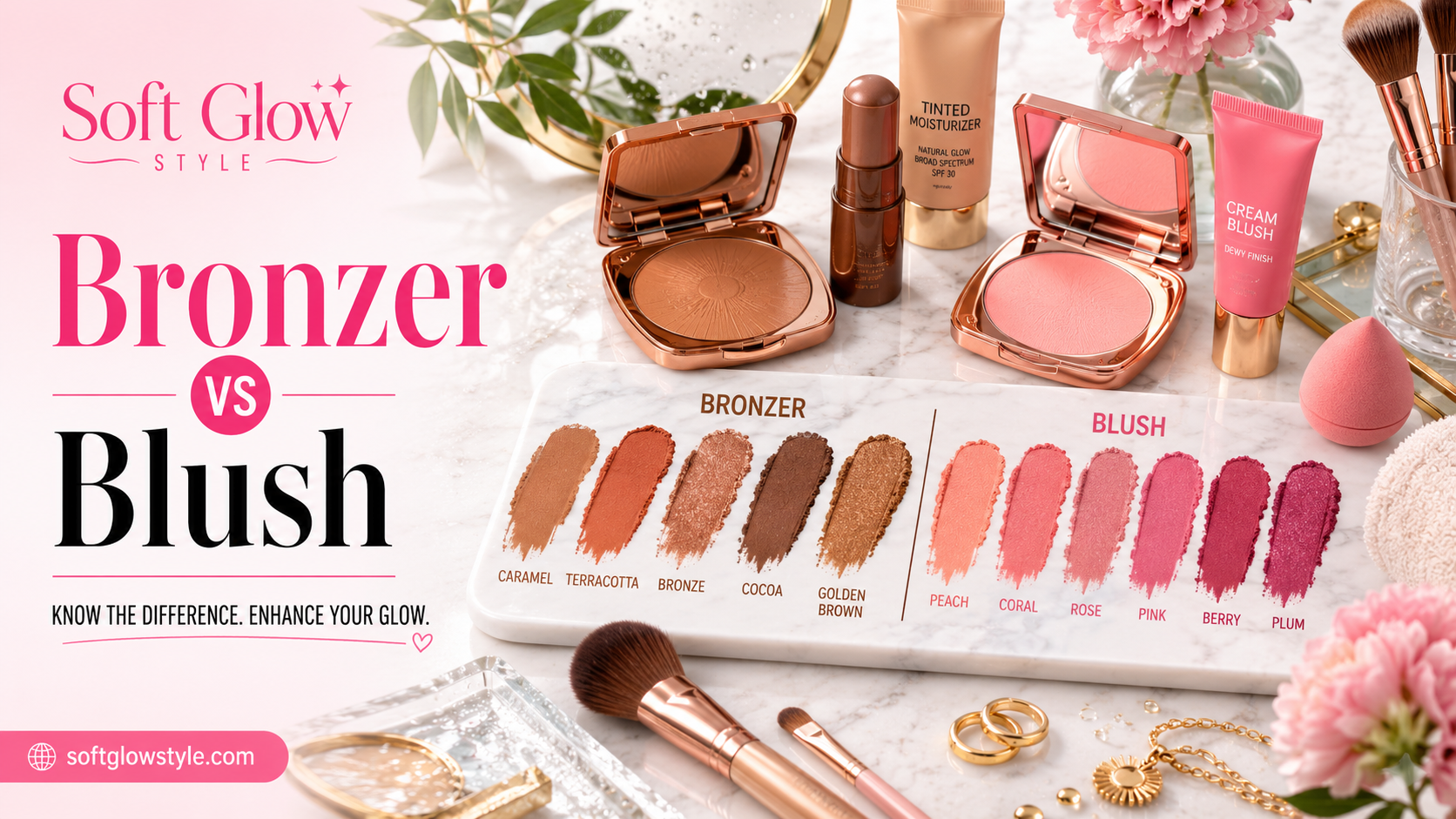
Bronzer usually comes in warm brown, caramel, terracotta, bronze, cocoa, golden or red-brown shades. Blush usually comes in pink, peach, coral, berry, rose, plum, mauve, red or orange shades.
| Product | Main Job | Common Shades | Where It Goes |
|---|---|---|---|
| Bronzer | Adds warmth and sun-kissed dimension | Brown, bronze, caramel, terracotta, cocoa | Forehead, temples, outer cheeks, jawline |
| Blush | Adds fresh cheek color | Pink, peach, coral, rose, berry, plum | Cheeks, apples of cheeks, upper cheek area |
For a full beauty routine, start with the Soft Glow Style beauty hub, our no makeup makeup routine, and our what is tinted moisturizer guide.
What Does Bronzer Actually Do?
Bronzer adds warmth to the face. When you apply foundation or skin tint, your complexion can look smooth but slightly flat. Bronzer brings back warmth around the edges of the face.
Bronzer can make your makeup look:
- Warmer
- More dimensional
- Sun-kissed
- Softer around the face
- Less flat after foundation
- More blended with the neck and chest
- More summer-ready
Bronzer is not meant to make your face look muddy or striped. It should look like soft warmth. A good bronzer melts into the base and adds a healthy glow without looking obvious.
What Does Blush Actually Do?
Blush adds color to the cheeks. It makes the face look fresher, more awake and more youthful. Even a tiny amount of blush can change the whole mood of your makeup.
Blush can make your makeup look:
- Fresh
- Healthy
- Awake
- Soft
- Romantic
- Playful
- Balanced
Blush is especially helpful if your foundation makes your face look too even or one-dimensional. A little cheek color brings the skin back to life.
For soft blush inspiration, read blurry blush soft glam trend.
Bronzer vs Blush vs Contour
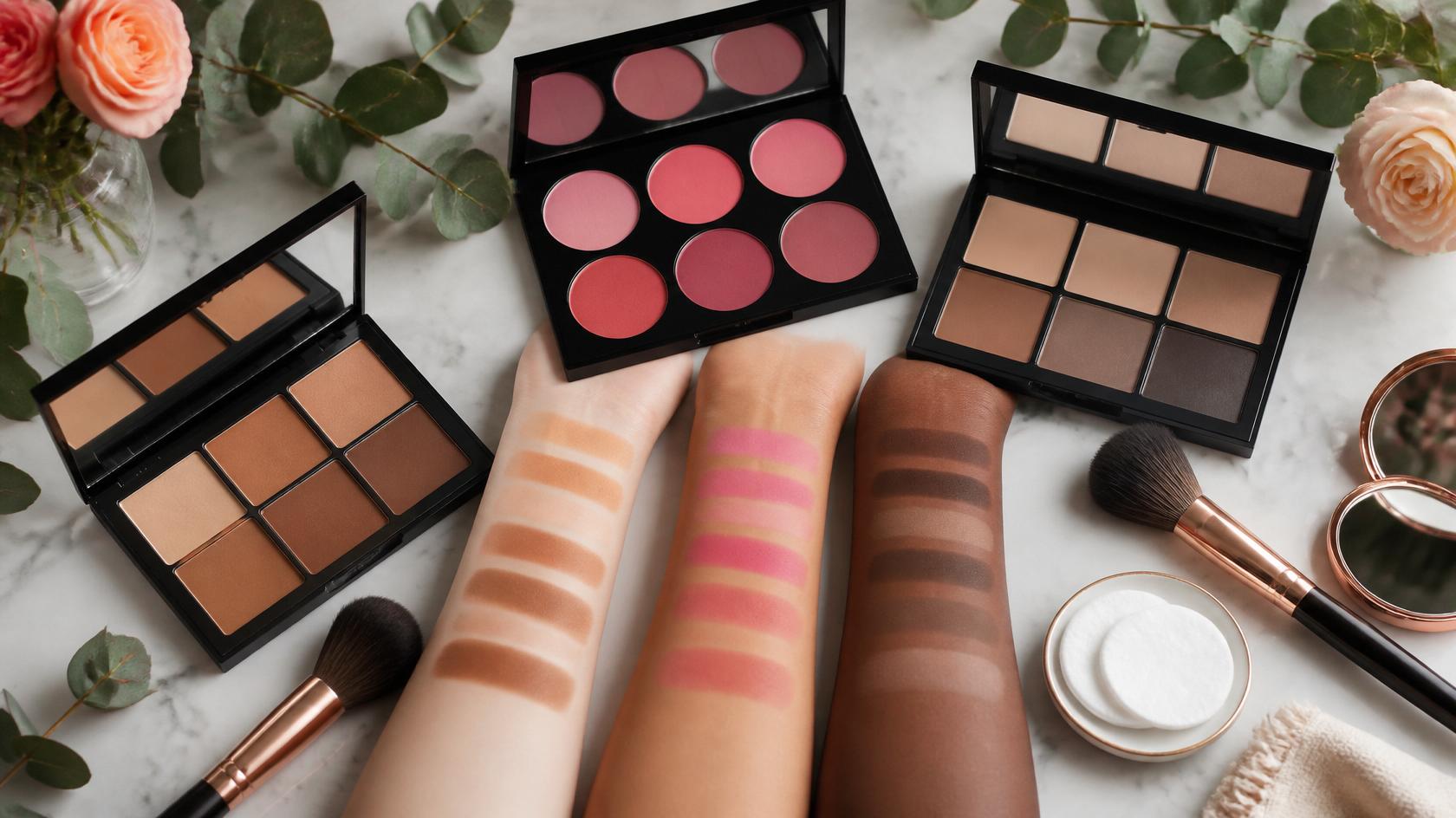
Bronzer, blush and contour often get mixed up, but they are not the same. Bronzer warms. Blush adds color. Contour creates shadow.
| Product | Purpose | Undertone | Beginner Tip |
|---|---|---|---|
| Bronzer | Warmth and sun-kissed glow | Warm brown, red-brown, golden or terracotta | Blend around the outer face |
| Blush | Fresh cheek color | Pink, peach, coral, berry, rose or plum | Apply on cheeks and blend upward |
| Contour | Shadow and structure | Neutral, cool or shadow brown | Use lightly under cheekbones or jawline |
Contour is more about sculpting. Bronzer is more about warmth. Blush is more about freshness. You do not need all three every day, but knowing the difference helps you choose what your face actually needs.
7 Key Differences Between Bronzer and Blush
1. Bronzer Adds Warmth, Blush Adds Color
This is the easiest way to remember the difference. Bronzer makes the face look warmer. Blush makes the cheeks look naturally flushed.
Use bronzer when your base looks flat or too pale around the edges. Use blush when your face needs life, softness or a healthier glow.
2. Bronzer Is Usually Brown-Based
Bronzer usually belongs to the brown family. It may be golden brown, caramel, cocoa, terracotta, red-brown, bronze or espresso. The exact shade depends on your skin tone.
For deeper complexions, bronzer needs enough richness to show. If your bronzer looks grey or invisible, it is probably too light or too cool. For shade help, read bronzer for dark skin.
3. Blush Is Usually Pink, Peach, Coral, Berry or Plum
Blush belongs to the color family. It gives the cheeks a fresh tone that foundation often removes.
Peach blush looks warm and soft. Pink blush looks fresh. Coral blush looks sunny. Berry blush looks rich. Plum blush looks elegant on deeper skin tones.
4. Bronzer Goes Around the Outer Face
Bronzer usually looks best around the areas where warmth naturally appears. This includes the forehead, temples, outer cheeks and jawline.
The goal is not to paint a stripe. It is to warm up the face softly. Blend bronzer upward and outward so it looks natural.
5. Blush Goes on the Cheeks
Blush placement changes the mood of your face. On the apples of the cheeks, blush looks sweet and youthful. Higher on the cheekbones, blush looks lifted and modern. Across the nose, blush looks sun-kissed and playful.
Blush should blend into the skin, not sit like two circles. Start with a small amount and build slowly.
6. Bronzer Can Look Natural or Glam
Bronzer can be soft and barely there, or rich and glamorous. Matte bronzer gives subtle warmth. Satin bronzer gives healthy glow. Shimmer bronzer gives summer glam.
The formula matters too. Cream bronzer looks skin-like. Powder bronzer lasts longer on oily skin. Liquid bronzer can look fresh but needs blending.
7. Blush Changes the Mood Faster
Blush can change your makeup mood instantly. A peach blush feels casual and soft. A berry blush feels dramatic. A pink blush feels fresh. A red blush feels bold and editorial.
That is why blush is often the product people notice first, even when it is applied lightly.
Do You Need Bronzer and Blush?
You do not need both bronzer and blush, but they work beautifully together. Bronzer gives warmth and shape. Blush gives color and freshness. When the two are blended well, the face looks complete.
Use Bronzer Alone If:
- You want warmth without obvious cheek color.
- You prefer a neutral makeup look.
- You are doing soft summer makeup.
- Your blush feels too bright for the outfit.
- You want a sun-kissed effect.
Use Blush Alone If:
- You want a fresh no makeup makeup look.
- You do not want warmth around the face.
- You like pink, peach or berry cheeks.
- You want a quick healthy glow.
- You are skipping foundation.
Use Both If:
- Your base looks flat.
- You want soft glam makeup.
- You are taking photos.
- You want warmth and cheek color.
- You want a balanced face makeup routine.
Does Bronzer or Blush Go First?
Bronzer usually goes first, then blush. This order works because bronzer creates warmth and soft shape around the face. Blush then adds fresh color on top or slightly above it.
A simple order looks like this:
- Apply foundation, skin tint or tinted moisturizer.
- Apply concealer where needed.
- Apply bronzer around the outer face.
- Apply blush to the cheeks.
- Blend edges softly.
- Apply highlighter if you use it.
- Set with powder or setting spray if needed.
For hot weather, use thin layers and set carefully. You can read sweat resistant makeup and heatproof makeup in hot weather for longer-wear tips.
Where to Apply Bronzer
Bronzer should look like warmth, not a contour stripe. Apply it where the sun would naturally warm the face.
Best Bronzer Placement
- Along the hairline
- Across the temples
- Outer cheek area
- Lightly under cheekbones if desired
- Jawline
- Across the bridge of the nose for a sun-kissed look
- Neck or chest only if needed for blending
Keep bronzer higher than you think. If it sits too low on the cheeks, it can make the face look heavy.
Where to Apply Blush
Blush placement depends on the look you want. There is no single perfect place for everyone, but there are easy starting points.
| Blush Placement | Effect | Best For |
|---|---|---|
| Apples of cheeks | Sweet and fresh | Soft everyday makeup |
| High on cheekbones | Lifted and modern | Soft glam makeup |
| Across cheeks and nose | Sun-kissed and playful | Summer makeup |
| Outer cheeks | Polished and sculpted | Evening makeup |
| Softly near temples | Blended editorial look | Trendy blush styles |
If blush looks too strong, blend it with your foundation sponge or a clean brush. Do not wipe it off immediately. Soft blending can fix most blush mistakes.
Cream Bronzer vs Cream Blush
Cream bronzer and cream blush are popular because they look skin-like. They are easy to blend and work well for fresh makeup.
Cream Bronzer
Cream bronzer adds warmth in a soft, natural way. It is great for skin tint, tinted moisturizer and minimal makeup. It works especially well before powder.
Cream Blush
Cream blush gives cheeks a fresh, dewy finish. It can look more natural than powder blush if you blend it lightly.
How to Use Both
Apply cream bronzer first around the face. Then apply cream blush on the cheeks. Blend the meeting point so the two colors fade into each other.
Powder Bronzer vs Powder Blush
Powder products are easy to control and can last well, especially on oily or combination skin.
Powder Bronzer
Powder bronzer is good for setting warmth and adding soft definition. Use a fluffy brush and tap off extra product before applying.
Powder Blush
Powder blush gives controlled color and works well over set foundation. It is easy to build slowly.
Powder Tip
Do not apply too much powder over wet cream or liquid products. Let the base settle first, or the powder can patch.
Bronzer vs Blush for Different Makeup Looks
| Makeup Look | Bronzer Choice | Blush Choice |
|---|---|---|
| No makeup makeup | Soft cream bronzer | Peach or rose cream blush |
| Soft glam | Warm powder bronzer | Rose, berry or coral blush |
| Summer makeup | Terracotta or golden bronzer | Coral, peach or sunburnt pink |
| Evening makeup | Deep satin bronzer | Berry, plum or warm rose blush |
| Clean girl makeup | Light cream warmth | Soft pink or nude peach blush |
For a minimal base that pairs well with bronzer and blush, read what is tinted moisturizer.
Bronzer vs Blush for Oily Skin
Oily skin can wear both bronzer and blush, but formula and setting matter.
Best Tips for Oily Skin
- Use thin skincare before makeup.
- Choose powder bronzer for longer wear.
- Use powder blush or long-wear cream blush.
- Set the T-zone lightly.
- Use setting spray if needed.
- Blot before adding more powder.
If your cheeks get oily, use less cream product or set cream blush lightly with powder blush.
Bronzer vs Blush for Dry Skin
Dry skin often looks beautiful with cream bronzer and cream blush. Powder can work too, but too much may make texture more visible.
Best Tips for Dry Skin
- Use hydrating skincare before makeup.
- Choose cream bronzer for soft warmth.
- Choose cream or satin blush.
- Powder only where needed.
- Avoid overly matte, chalky products.
- Use setting spray to soften the finish.
Bronzer vs Blush for Dark Skin
On dark skin, bronzer and blush need enough pigment and depth to show. A bronzer that is too light can look dusty. A blush that is too pale can look chalky.
Bronzer Shades for Dark Skin
- Red-brown
- Terracotta
- Mahogany
- Espresso bronze
- Cocoa
- Copper bronze
- Golden brown
Blush Shades for Dark Skin
- Berry
- Plum
- Coral
- Orange
- Brick red
- Wine
- Fuchsia
For a full shade guide, read bronzer for dark skin.
Bronzer vs Blush for Fair Skin
Fair skin usually needs softer bronzer and buildable blush. A bronzer that is too orange can look obvious. A blush that is too bright can take over the face.
Good Bronzer Choices
- Soft beige bronze
- Light neutral bronze
- Soft honey bronze
- Light rosy bronze
Good Blush Choices
- Soft pink
- Peach
- Rose
- Light coral
- Mauve pink
Apply both products lightly and build slowly.
Can Bronzer Be Used as Blush?
Bronzer can sometimes be used as blush if the shade has warmth, peach, red or terracotta tones. A terracotta bronzer can look like a warm blush on some skin tones.
However, classic bronzer is usually brown-based. It may add warmth, but it will not always give the fresh cheek color that blush gives.
Can Blush Be Used as Bronzer?
Blush can create warmth if it is peach, coral, terracotta, orange or warm rose. This can work well for sun-kissed makeup.
But blush does not fully replace bronzer when you want a bronze effect around the forehead, temples and jawline. Blush is usually brighter and more colorful.
How to Choose Bronzer and Blush Together
The easiest way to choose bronzer and blush together is to keep them in the same warmth family.
| Bronzer Shade | Best Blush Pairing | Makeup Mood |
|---|---|---|
| Golden bronzer | Peach, coral, warm pink | Fresh summer glow |
| Terracotta bronzer | Burnt peach, orange, coral | Warm sun-kissed makeup |
| Red-brown bronzer | Berry, wine, plum | Rich soft glam |
| Neutral bronzer | Rose, mauve, nude pink | Everyday polished makeup |
| Cocoa bronzer | Brick, berry, deep coral | Deep warm glam |
How to Apply Bronzer and Blush Together
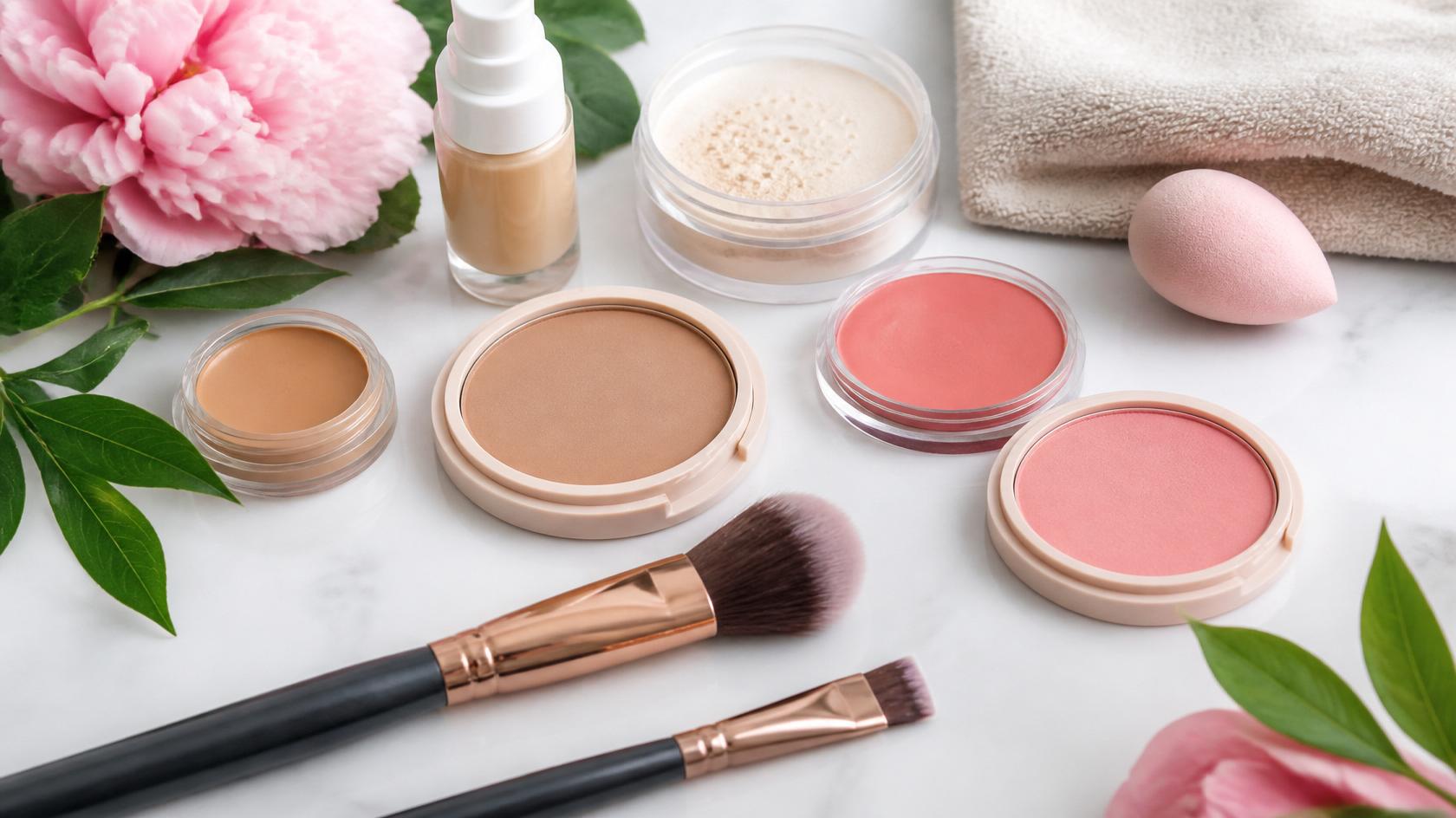
Using both products together is easy once placement makes sense.
- Apply your foundation, skin tint or concealer first.
- Add bronzer to the forehead, temples and outer cheeks.
- Blend bronzer upward and outward.
- Apply blush on the cheeks.
- Blend blush slightly over the top edge of bronzer.
- Use a clean brush or sponge to soften edges.
- Add highlighter only if you want glow.
- Set lightly if your skin needs it.
The best result happens when bronzer and blush look connected, not separated into stripes.
Common Bronzer Mistakes
Mistake 1: Choosing a Shade That Is Too Orange
Bronzer should look warm, not bright orange. Choose a shade that matches your undertone.
Mistake 2: Applying It Too Low
Bronzer placed too low can drag the face down. Keep it higher and blend toward the hairline.
Mistake 3: Using Too Much Product
Bronzer is easier to build than remove. Start small and add more only if needed.
Mistake 4: Not Blending the Hairline
A harsh line near the forehead can look obvious. Blend bronzer softly into the hairline.
Common Blush Mistakes
Mistake 1: Applying Too Much at Once
Blush can become intense quickly. Use a light hand, especially with liquid or cream blush.
Mistake 2: Using the Wrong Undertone
If blush looks strange, the undertone may not match your makeup. Try warmer, cooler or deeper shades.
Mistake 3: Placing It Too Low
Low blush can make the cheeks look heavy. Blend upward for a lifted effect.
Mistake 4: Not Blending Into Bronzer
Blush and bronzer should softly meet. If there is a hard gap, the makeup can look unfinished.
Makeup Safety Tips for Bronzer and Blush
Bronzer and blush are usually used on the face, but safe habits still matter. Do not share makeup brushes, avoid using products that smell strange or changed texture, and wash brushes regularly. If you use blush or bronzer near the eyes as eyeshadow, make sure the product is labeled safe for the eye area. The FDA notes that eye-area cosmetics need extra care because of infection risk, applicator injury and color additive restrictions. Read the FDA eye cosmetic safety guide before using face products around the eyes.
Expert Tips from Sawera Shahid
Sawera Shahid, a beauty, skincare, fashion and lifestyle writer with 5+ years of experience, recommends thinking of bronzer and blush as partners, not competitors. Bronzer gives the face warmth. Blush gives the face freshness. Together, they make base makeup look more natural and complete.
- Apply bronzer first, then blush.
- Use bronzer around the outer face.
- Use blush on the cheeks and blend upward.
- Choose bronzer based on undertone and depth.
- Choose blush based on the mood of your look.
- Use cream products for a fresh skin-like finish.
- Use powder products for longer wear and oil control.
- Blend the meeting point between bronzer and blush.
Soft Glow Style Internal Reading Map
Use these related Soft Glow Style guides to build a stronger beauty, skincare, makeup, hair care, nail and lifestyle routine around bronzer vs blush. This section includes 100+ internal links for stronger topical support.
Makeup and Beauty Links
- Soft Glow Style beauty hub
- bronzer for dark skin
- what eyeshadow with brown eyes
- sweat resistant makeup
- heatproof makeup in hot weather
- no makeup makeup routine
- what is tinted moisturizer
- cloud skin makeup base
- cloud skin vs glass skin guide
- blurry blush soft glam trend
- blurryface makeup and modern beauty flaws
- lip gloss layering for plump lips
- faux freckles trend guide
- metallic faux freckles beauty idea
- Tumblr beauty trends coming back
- American beauty standards guide
- how beauty standards affect mental health
- popular beauty blogs to follow
- Dime Beauty and Empire Beauty explainer
- American Beauty rose makeup inspiration
- vintage American Beauty rose shade
Skincare Routine Links
- best skincare products guide
- 5 step Korean skincare routine
- how to layer Korean skincare
- Korean skincare set for glowing skin
- Korean skincare sets that actually work
- best Korean skincare for acne-prone skin
- Korean acne skincare top picks
- foaming cleanser for oily skin
- fungal acne cleanser guide
- face wash for fungal acne
- does argan oil clog pores
- raw honey mask for face
- ice water face dip
- benefits of ice bath for face
- visible pores are a flex
- visible pores and skin texture guide
- Korean beauty standards explained
- American beauty standards explained
Hair Care and Shower Routine Links
- can I use shampoo as body wash
- does conditioner go bad
- professional clarifying shampoo guide
- clarifying shampoo for bleached hair
- Routine shampoo review
- Routine shampoo and conditioner guide
- hair growth guide
Nail Art and Pedicure Links
- Soft Glow Style nail art hub
- summer pedicure nail colors
- cat eye nail colors
- soap nails polish
- pastel nail colors 2026
- white nail polish ideas
- types of nails at salon
- what is hard gel nails
- multi color French tip nails
- water nails vs chrome nails comparison
- best nail polish for summer 2026
- July nail colors 2026
- ice cream nails manicure trend
- ice cream nails color ideas
- best nail polish stickers
- lifestyle nail bar guide
- lifestyle nail bars and beauty spaces
- how to match nail art with skincare
Fashion and Outfit Pairing Links
- Soft Glow Style fashion hub
- 15 piece capsule closet that feels wearable
- 15 piece capsule closet starter guide
- fashion tips to look stylish
- best fashion tips and tricks
- ethereal fashion in real life
- ethereal girl aesthetic guide
- tomato girl summer style
- tomato girl meets olive green
- underconsumption core minimalist trend
- underconsumption core when minimalism feels real
- coquette core power suits
- power suits and ballet flats
- 80s fashion comeback and power suits
- Boom Boom fashion and 80s revival
- vintage tees and boxers outfit guide
- vintage tees paired with slip skirts
- tapestry hoodie style guide
- mismatched shoes 2.0 pattern guide
- mismatched shoes trend guide
- feral girl fall trend
- Euriental fashion and luxury travel
- Oh So Jack fashion and lifestyle
- science of appearance and men’s grooming
- fashion model agency beauty theme
Lifestyle, Wellness and Routine Links
- Soft Glow Style lifestyle hub
- Sunday reset routine that feels realistic
- Sunday reset that actually works
- silent wellness trend explained
- digital detox wellness trend
- digital nostalgia is back
- digital nostalgia and MP3 culture
- wellness fridges trend guide
- wellness fridges and beauty storage
- how to start a healthy lifestyle
- importance of a healthy lifestyle
- what is sedentary lifestyle
- romanticize solo life
- lifestyle blog for women and family routines
- outdoor lifestyles for escaping screens
- outdoor lifestyles and adventure guide
- make a studio smell expensive using simple habits
- make a studio smell expensive guide
- decorate with books quiet luxury hack
- decorate with books for a softer home
- aesthetic burnout and vibe curation
- luxury family travel and lifestyle
Trending Reads and Site Hubs
- featured Soft Glow Style reads
- Soft Glow Style blog archive
- where to watch True Beauty
- Bold and Beautiful comings and goings
- Sleeping Beauty of Everest truth
- Sleeping Beauty Everest chilling story
- Sleeping Beauty Mount Everest heartbreaking story
- Andrea Chong fashion travel lifestyle blog
- about Soft Glow Style
- contact Soft Glow Style
Frequently Asked Questions
What is the difference between bronzer and blush?
Bronzer adds warmth and a sun-kissed effect, while blush adds fresh cheek color. Bronzer usually goes around the outer face, while blush usually goes on the cheeks.
Do I need bronzer and blush?
You do not need both, but using both can make makeup look more balanced. Bronzer brings warmth and dimension, while blush makes the face look fresher and more awake.
Does bronzer or blush go first?
Bronzer usually goes first. Apply bronzer to warm and shape the face, then apply blush to the cheeks for color and freshness.
Can I use bronzer as blush?
You can use bronzer as blush if it has peach, terracotta, rose or red-brown warmth. A classic brown bronzer may add warmth but may not give the same fresh cheek color as blush.
Can I use blush as bronzer?
Blush can add warmth if it is peach, coral or terracotta, but it does not fully replace bronzer when you want a sun-kissed bronze effect around the face.
Where should I apply bronzer and blush?
Apply bronzer around the forehead, temples, outer cheeks and jawline. Apply blush on the cheeks and blend slightly upward toward the temples.
Final Thoughts
Bronzer vs blush comes down to warmth and color. Bronzer warms the face and adds soft dimension. Blush adds cheek color and freshness. You can wear one or both, depending on the makeup look you want.
For the most balanced result, apply bronzer first around the outer face, then apply blush on the cheeks. Blend the edges so the warmth and color look connected. Once you understand what each product actually does, your base makeup becomes much easier to build.
Final Recap
- Bronzer adds warmth and a sun-kissed effect.
- Blush adds fresh cheek color.
- Contour creates shadow, so it is different from both.
- Bronzer usually goes first, then blush.
- Apply bronzer around the forehead, temples, cheeks and jawline.
- Apply blush on the cheeks and blend upward.
- Using both together creates a balanced, fresh makeup look.