Key Takeaways
- Heat protectant for natural hair matters because textured hair can become dry, weak or less defined when exposed to frequent or excessive heat.
- A heat protectant helps create a protective layer between natural hair and hot tools, but it does not make heat styling completely damage-proof.
- Natural hair should be clean, conditioned, detangled and sectioned before blow drying, stretching, flat ironing or silk pressing.
- Sprays, creams, serums and heat-protecting leave-ins can all work, depending on your hair density, porosity and styling goal.
- Using the lowest effective heat setting is just as important as using a heat protectant.
- Fine natural hair may prefer lightweight sprays, while thick or coily hair may prefer creams or serums with more slip.
- Signs of heat damage include limp curls, straight pieces, dryness, breakage, rough ends and curls that no longer bounce back.
Heat protectant for natural hair is one of those products people often skip until their curls start looking different. Maybe the twist-out does not bounce like before. Maybe the ends feel rough. Maybe a few pieces stay straight after wash day. Maybe your hair still looks good when pressed, but the curls are not reverting the same way anymore.
Natural hair can be beautiful in every form, curly, coily, kinky, stretched, blown out, silk pressed or braided. The issue is not heat itself. The issue is heat without enough protection, too much heat, repeated passes, poor technique or styling hair that is already dry and fragile.
A good heat protectant can help reduce the stress of blow dryers, flat irons, curling wands and hot brushes. It gives the hair a smoother surface, helps limit moisture loss and can reduce friction during styling. But it is not magic. A heat protectant works best when you also use gentle detangling, clean sections, lower temperature and fewer passes.
Heat Protectant for Natural Hair: Why It Matters
Natural hair often has bends, curves and coils along the strand. Those curves are beautiful, but they can also make sebum travel less evenly down the hair shaft. That is one reason many curly and coily textures feel dry faster than straight hair. When high heat is added on top of dryness, the hair can become more fragile.
The American Academy of Dermatology notes that excessive heat can damage hair, regardless of hair type, and recommends steps such as using lower heat settings and limiting heat tool frequency. The AAD also advises applying a moisturizing product before styling African American hair to help minimize heat damage. For broader dermatologist-backed heat styling advice, read the AAD hair styling without damage guide.
For more hair care support, read how to grow hair faster and stronger, what is a curly cut, and Irish curls hair type.
What Is Heat Protectant?
Heat protectant is a styling product designed to reduce damage caused by heat tools. It may come as a spray, cream, serum, foam, mist or leave-in product. Some products are made for damp hair before blow drying. Others are made for dry hair before flat ironing or curling.
Most heat protectants work by coating the hair surface so heat is distributed more evenly and direct contact feels less harsh. Many also add slip, smooth frizz, soften the cuticle and help the hair move through a brush or hot tool with less friction.
For natural hair, that slip matters. When curls and coils are tangled, dry or rough, heat styling becomes harder. A product that gives smoothness can reduce pulling and help the blow dryer or flat iron move more easily.
Can Heat Protectant Stop All Heat Damage?
No. This is important. Heat protectant helps reduce damage, but it does not make heat styling risk-free. If a flat iron is too hot, if you pass it over the same section many times, or if you use heat every few days, damage can still happen.
Think of heat protectant like sunscreen for styling, helpful, necessary when heat is involved, but not a permission slip to overdo it. The product helps, but the full routine matters.
| Heat Styling Factor | Why It Matters | Better Choice |
|---|---|---|
| Temperature | High heat can weaken hair faster | Use the lowest effective setting |
| Frequency | Repeated heat gives hair less recovery time | Limit heat styling when possible |
| Moisture level | Dry hair is more fragile | Condition well before styling |
| Technique | Rough brushing and repeated passes add stress | Section hair and work gently |
| Product coverage | Uneven protectant leaves areas exposed | Apply in sections |
Why Natural Hair Needs Extra Care With Heat
Natural hair is not weak by default, but it does need thoughtful handling. Coily and curly hair can be more prone to dryness, tangling and breakage when it is not moisturized or detangled gently. Heat can make those problems worse if the hair is not prepared.
Heat can affect the outer layer of the hair, making strands feel rough, dull or brittle. Over time, repeated heat can also affect curl pattern. That is why some people notice straight pieces after a silk press or blowout. Those pieces may not spring back because the structure of the hair has been stressed.
This does not mean you can never use heat on natural hair. It means heat should be treated like a styling tool, not an everyday habit without protection.
Signs Your Natural Hair Needs Heat Protection
You should use a heat protectant anytime you plan to use a blow dryer, diffuser, flat iron, curling wand, hot comb or hot brush. But some signs make heat protection even more important.
Watch for These Signs
- Your curls feel dry after blow drying.
- Your ends look frizzy after heat styling.
- Your hair breaks more when combing.
- Your silk press gets shiny but feels stiff.
- Your curls take longer to bounce back after wash day.
- You notice straight pieces that do not revert.
- Your hair feels rough even after conditioner.
- You use heat more than once a month.
Best Types of Heat Protectant for Natural Hair
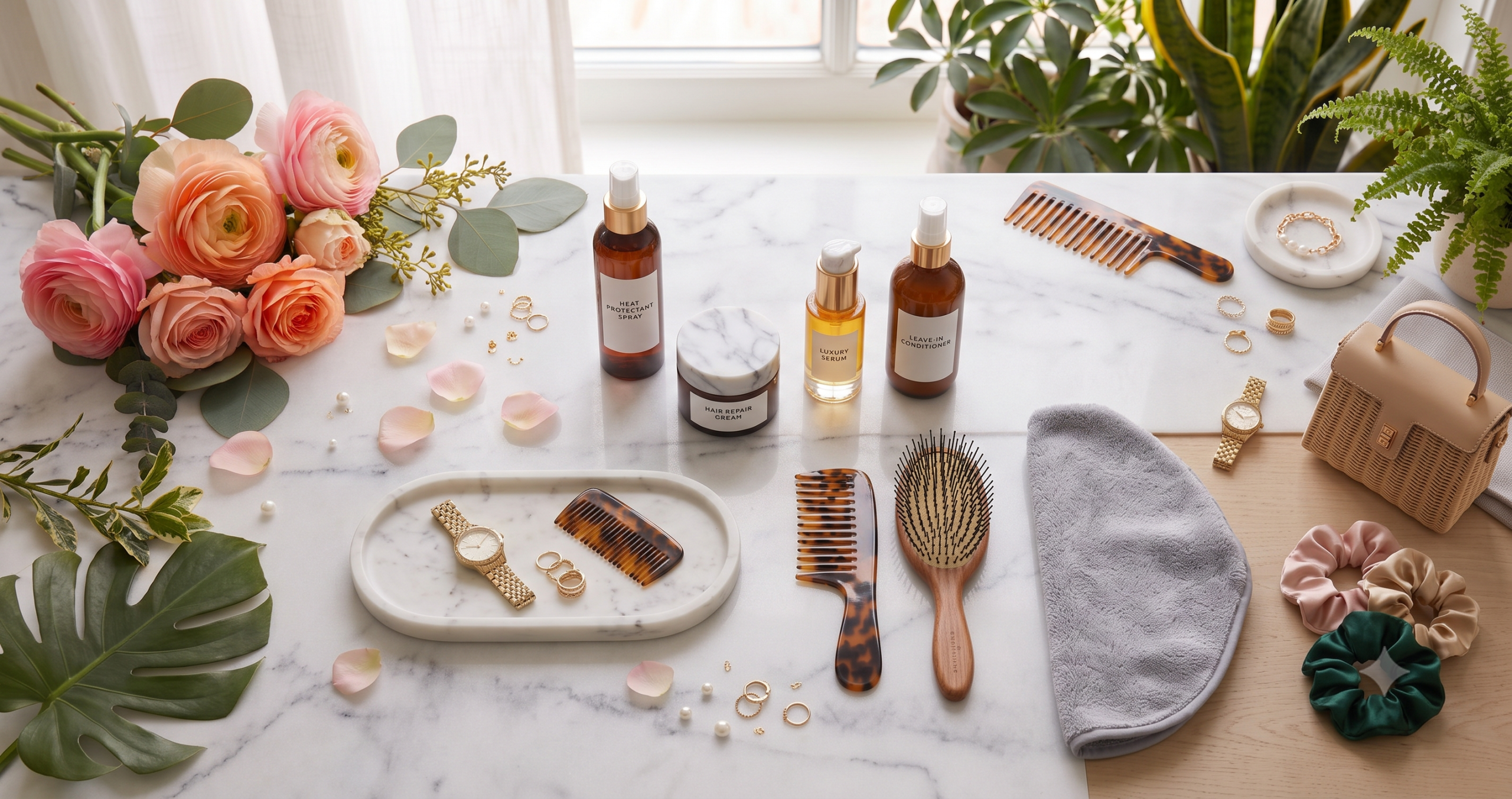
The best heat protectant for natural hair depends on your texture, density, porosity and styling method. A fine 3B curl may not like the same product as dense 4C coils. A blowout routine may need a different product than a flat iron routine.
| Heat Protectant Type | Best For | What to Watch |
|---|---|---|
| Spray | Fine hair, light blowouts, dry styling | Can miss areas if not sectioned |
| Cream | Thick, dry or coily hair | Too much can feel heavy |
| Serum | Silk press, frizz control, shine | Can look greasy if overused |
| Leave-in with heat protection | Blow drying and stretching | Check that it is actually heat-protecting |
| Foam or mousse | Lightweight stretch styles | May not be enough for high heat alone |
Heat Protectant Spray vs Cream for Natural Hair
Sprays are usually lightweight and easy to distribute. They work well for fine natural hair, loose curls, low-density hair or dry hair before a final styling pass. The downside is that sprays can be uneven if you mist quickly over the top and do not section.
Creams usually give more moisture and slip. They can work beautifully on thick, coarse, high-density or very dry natural hair. The downside is that too much cream can weigh the hair down or make a silk press less airy.
Serums are often used for shine and frizz control. A small amount can help smooth natural hair before flat ironing, but too much can make the hair oily or stiff.
How to Use Heat Protectant for Natural Hair
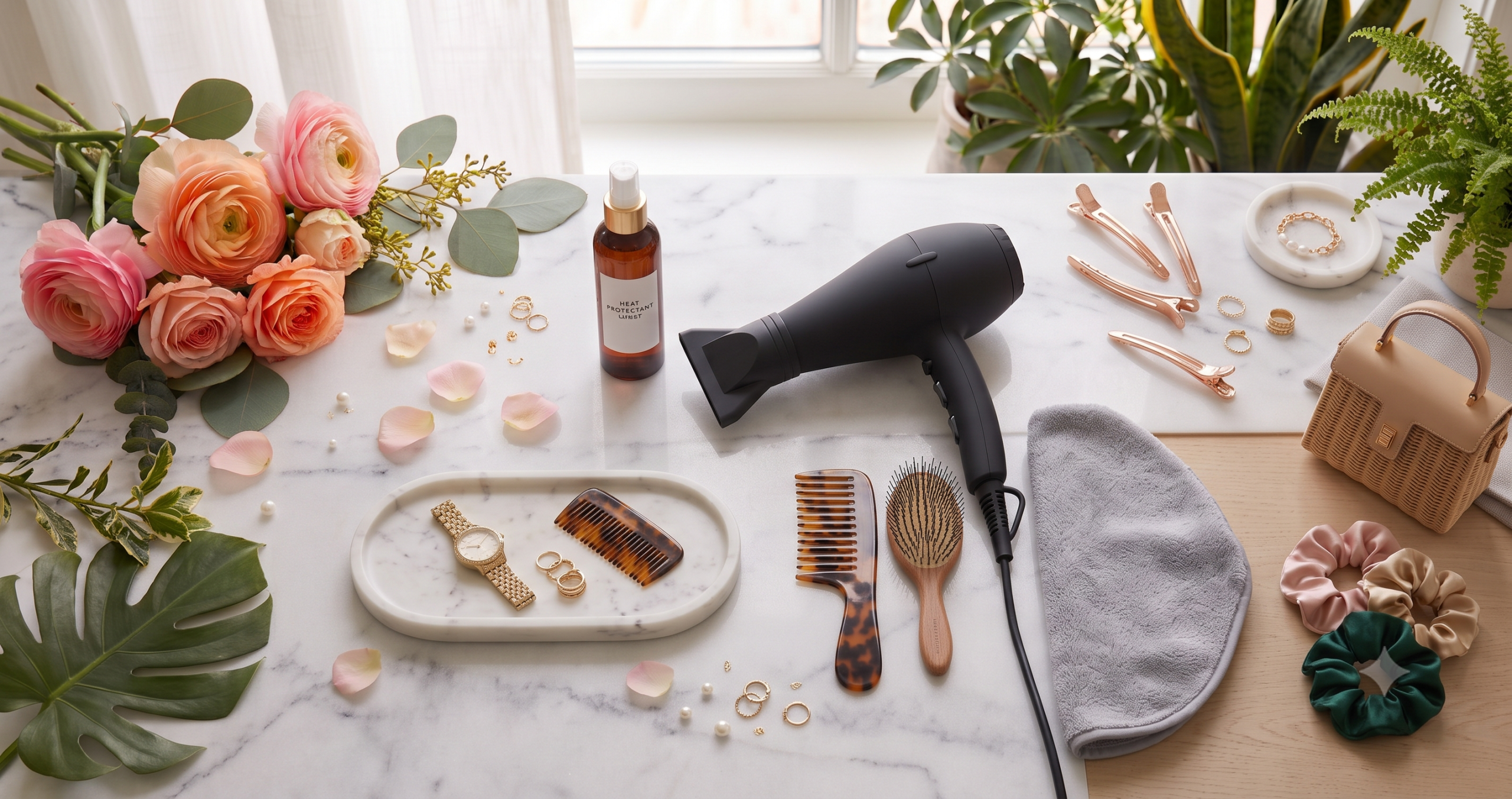
Heat protectant works better when it is applied evenly. Do not just spray the outside of your hair and hope the inside is covered. Natural hair is dense, so sectioning matters.
Step-by-Step Routine
- Start with clean, conditioned hair.
- Gently detangle with conditioner or leave-in slip.
- Divide hair into sections.
- Apply heat protectant to each section.
- Comb or brush through gently to distribute product.
- Blow dry on a controlled heat setting.
- Let hair become fully dry before flat ironing.
- Use small sections if flat ironing.
- Use fewer passes and lower heat when possible.
The biggest mistake is applying too much product in one area and none in another. Even coverage is more important than using a lot.
Should Heat Protectant Go on Wet or Dry Natural Hair?
It depends on the product. Many creams, leave-ins and blow-dry sprays are made for damp hair. These are useful before blow drying or stretching natural hair. Some sprays and serums are made for dry hair before flat ironing or curling.
Always read the product label. If a product says to use on damp hair, use it before blow drying. If it says to use before flat ironing, make sure your hair is fully dry before using the hot tool unless the product specifically says otherwise.
Do not flat iron wet natural hair. That can cause serious damage because the water inside the strand heats quickly. Hair should be dry before direct high-heat tools touch it.
Heat Protectant for Blow Drying Natural Hair
Blow drying natural hair is often the first heat step before a trim, stretch style, braid install or silk press. The goal is to dry and stretch the hair without making it brittle.
Blow Dry Tips
- Start with clean, conditioned hair.
- Use a heat-protecting leave-in or blow-dry cream.
- Detangle before adding heat.
- Work in sections.
- Use a concentrator nozzle or comb attachment carefully.
- Keep the dryer moving.
- Use medium or low heat when possible.
- Finish with cool air if your dryer has that setting.
For more wash-day support, read shampoo to clarify hair and benefits of deep hair conditioning with heat.
Heat Protectant for Silk Press Natural Hair
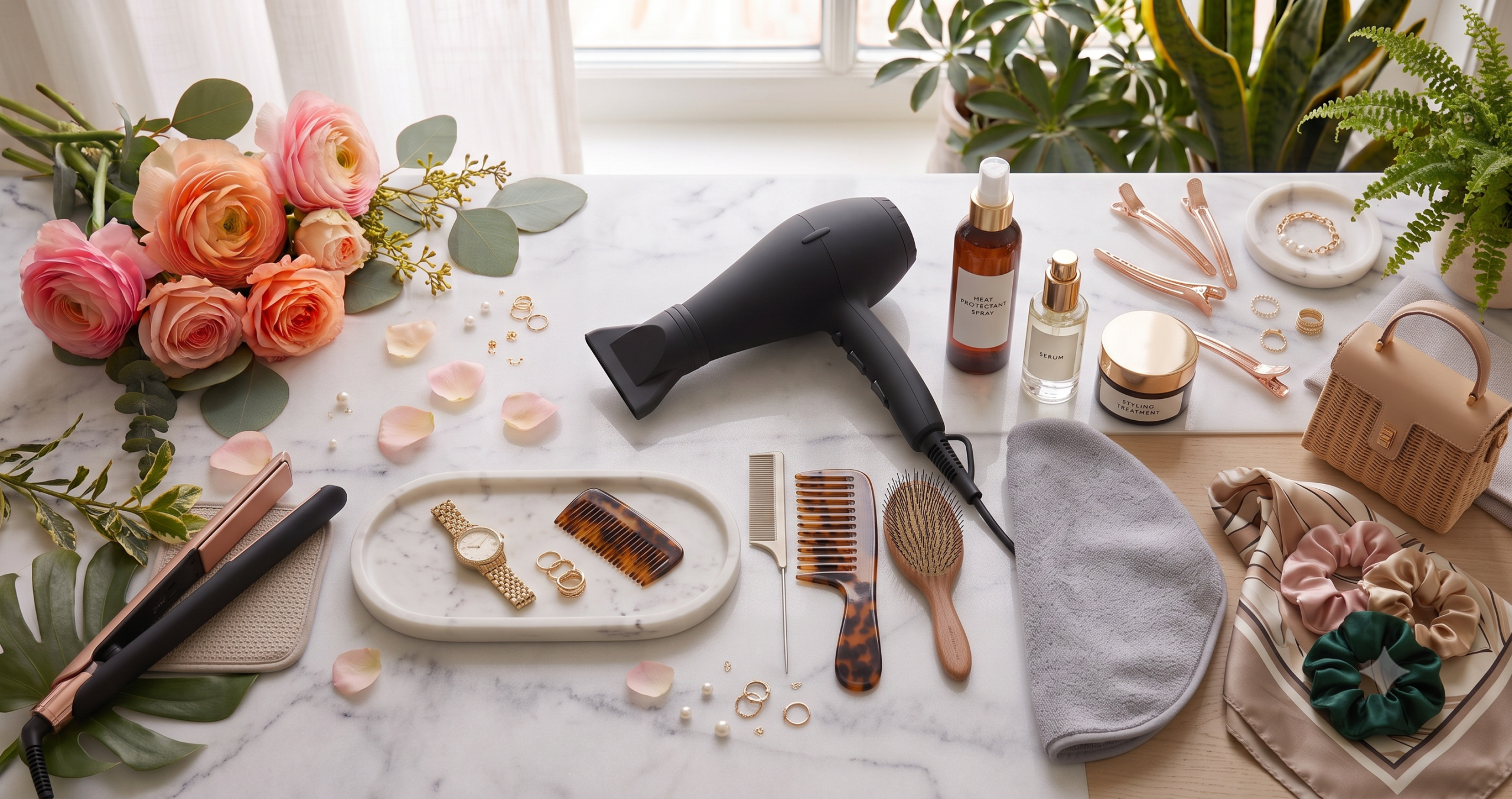
A silk press usually uses blow drying and flat ironing to create a smooth straight finish. Since it involves direct heat, protection is especially important.
Silk Press Tips
- Clarify if the hair has heavy buildup.
- Deep condition before styling.
- Use a lightweight heat protectant so the hair still moves.
- Blow dry thoroughly before flat ironing.
- Use small sections.
- Pass the flat iron slowly but only as needed.
- Avoid chasing the iron repeatedly over the same strand.
- Wrap hair at night to keep the style longer.
A silk press should feel soft and movable, not stiff or greasy. If the hair feels coated, the product may be too heavy or too much was used.
Heat Protectant for 4C Hair
4C hair often needs careful heat styling because the curl pattern is tight and shrinkage can be high. Heat protectant for 4C hair should give enough slip and protection without leaving heavy residue.
A cream or heat-protecting leave-in can work well before blow drying. A lightweight serum or spray can work before flat ironing, depending on the product directions. The key is sectioning the hair thoroughly so the product reaches every area.
4C Heat Styling Tips
- Deep condition before heat styling.
- Stretch hair gently before direct heat if possible.
- Use small sections for even drying.
- Avoid rushing the detangling step.
- Do not use high heat just because the hair is dense.
- Keep the tool moving.
- Use fewer passes.
- Trim damaged ends when needed.
Heat Protectant for Low Porosity Natural Hair
Low porosity hair can struggle with product sitting on top of the strand. If your hair is low porosity, heavy creams may make your blowout feel coated.
Choose lightweight sprays, milks or serums that do not leave a sticky layer. Apply in small amounts and distribute well. Warm water during wash day and gentle steaming during conditioning may help products absorb better before styling.
Heat Protectant for High Porosity Natural Hair
High porosity hair may absorb products quickly but lose moisture fast. It can feel dry, frizzy or rough after heat styling if it is not prepared well.
For high porosity natural hair, choose heat protectants that add smoothing, slip and moisture support. Creams, leave-ins and serums can help, but avoid layering too many heavy products before heat.
Ingredients to Look for in a Heat Protectant
You do not need to become a cosmetic chemist, but it helps to understand what types of ingredients often appear in heat protectants.
Helpful Product Features
- Heat protection claim on the label
- Instructions for blow drying or hot tools
- Slip for detangling
- Light smoothing agents
- Frizz control
- Humidity resistance if you want a silk press
- Non-sticky finish
- Formula that matches your hair density
The most important thing is that the product clearly says it protects from heat. A regular oil or leave-in conditioner is not automatically a heat protectant unless the product is designed and labeled for that purpose.
Can You Use Oil as Heat Protectant on Natural Hair?
Oil alone is not the best heat protectant unless the product is specifically formulated and labeled for heat styling. Some people apply oil before heat and assume it protects the hair, but oils can behave differently under high temperature.
A lightweight oil can sometimes be used after styling for shine, but before flat ironing it may make the hair feel greasy or heavy. Use a real heat protectant first, then use oil carefully if your style needs it.
How Often Should You Heat Style Natural Hair?
There is no single perfect schedule for everyone. Some people silk press a few times a year. Some blow dry monthly. Some use diffusers more often. Your hair’s response matters more than a strict rule.
If your hair stays soft, curls revert, ends remain healthy and breakage is low, your routine may be working. If your hair becomes dry, limp, frizzy or uneven, reduce heat and focus on recovery.
Signs to Reduce Heat
- Your curl pattern looks looser after washing.
- Your ends break easily.
- Your hair feels rough even after conditioning.
- Your twist-outs look less defined.
- Your silk press requires higher heat than before.
- Your hair tangles more than usual.
How to Tell If Natural Hair Has Heat Damage
Heat damage can show up slowly. Sometimes the hair still looks fine when straight, but the curl pattern changes after washing. Other times, the ends feel rough or break more easily.
Common Signs of Heat Damage
- Straight pieces that do not revert
- Limp curls
- Uneven curl pattern
- Rough or dry ends
- More breakage
- Split ends
- Frizz that does not improve with moisture
- Hair that feels stiff after pressing
Some damage can be managed with trims, conditioning and low-heat routines, but severely heat-damaged ends usually need to be cut gradually if they no longer match the rest of the curl pattern.
How to Protect Natural Hair Before Heat Styling
Protection starts before the hot tool turns on. A good prep routine gives better results and reduces stress on the hair.
| Prep Step | Why It Helps | Best Tip |
|---|---|---|
| Cleanse | Removes buildup that can block smooth styling | Clarify if hair feels coated |
| Condition | Adds softness and moisture | Use enough slip to detangle |
| Deep condition | Supports dry or fragile hair | Use before silk pressing |
| Detangle | Reduces pulling during blow drying | Work from ends upward |
| Section | Improves product coverage | Apply protectant section by section |
Heat Styling Mistakes to Avoid
Mistake 1: Skipping Heat Protectant
Using a flat iron or blow dryer without protection increases the risk of dryness, frizz and breakage. Always apply heat protectant for natural hair before using hot tools.
Mistake 2: Using Too Much Heat
Higher heat does not always mean better results. It can mean faster damage. Use the lowest setting that still styles your hair effectively.
Mistake 3: Flat Ironing Damp Hair
Direct high heat on damp hair can be very damaging. Hair should be fully dry before flat ironing unless a specific tool and product are designed for that use.
Mistake 4: Passing the Tool Too Many Times
Repeated passes over the same section increase heat exposure. Use small sections and slow, controlled passes instead of going over the same hair again and again.
Mistake 5: Using Heavy Product Before a Silk Press
Too much cream, oil or butter can make a silk press stiff. Choose lightweight heat protection if you want movement.
Mistake 6: Ignoring Breakage
If your ends are snapping, heat styling may make the problem worse. Take a break from heat and focus on conditioning and trims.
Mistake 7: Not Sectioning Dense Hair
Natural hair needs sections for even product coverage. Spraying the outside is not enough for thick or dense hair.
Heat-Free Alternatives for Natural Hair
You do not need heat every time you want length or shape. Heat-free stretching can help you change your style while giving your hair a break.
Heat-Free Options
- Banding
- African threading
- Twist-outs
- Braid-outs
- Roller sets
- Flexi rods
- Bantu knots
- Low-tension buns
- Heatless blowout methods
These options may not give the same sleek finish as a flat iron, but they can reduce heat exposure while still giving shape and stretch.
Expert Tips from Sawera Shahid
Sawera Shahid, a beauty, fashion, skincare and lifestyle content writer with 5+ years of experience, recommends treating heat styling as an occasional styling choice rather than a careless habit. Natural hair can handle heat better when it is clean, conditioned, protected and styled with patience.
- Use heat protectant every time heat touches your hair.
- Apply product in sections, especially on thick natural hair.
- Choose creams for dry dense hair and sprays for lighter textures.
- Let hair dry fully before flat ironing.
- Use lower heat and fewer passes whenever possible.
- Deep condition before silk pressing.
- Watch your curl pattern after wash day.
- Take a heat break if your hair feels rough, limp or fragile.
Soft Glow Style Internal Reading Map
Use these related Soft Glow Style guides to build a stronger hair care, beauty, skincare, fashion and lifestyle routine around heat protectant for natural hair.
Hair Care Links
- hair grow faster and stronger
- Irish curls hair type
- what is a curly cut
- shampoo to clarify hair
- benefits of deep hair conditioning with heat
- professional clarifying shampoo guide
- clarifying shampoo for bleached hair
- can I use shampoo as body wash
- does conditioner go bad
- Routine shampoo review
- Routine shampoo and conditioner guide
Beauty and Skincare Links
- Soft Glow Style beauty hub
- skincare infused makeup
- serum at night
- hydrating face mask for dry skin
- dermaplaning for sensitive skin
- foaming cleanser for oily skin
- raw honey mask for face
- ice water face dip
- benefits of ice bath for face
- does argan oil clog pores
Nail, Fashion and Lifestyle Links
- Soft Glow Style nail art hub
- pedicure colors for spring
- vintage nail designs
- red nail designs 2025
- Soft Glow Style fashion hub
- shoes look good with jeans
- linen pants see through
- what to wear in Miami
- 15 piece capsule closet starter guide
- Soft Glow Style lifestyle hub
- Soft Glow Style blog archive
Frequently Asked Questions
Do you need heat protectant for natural hair?
Yes. You should use heat protectant for natural hair before blow drying, flat ironing, curling or using hot brushes. It helps reduce heat stress, especially when paired with lower heat and careful technique.
Can heat protectant stop all heat damage?
No. Heat protectant can reduce damage, but it cannot make heat styling completely risk-free. Temperature, frequency, product coverage, technique and hair health all matter.
What type of heat protectant is best for natural hair?
Natural hair can work well with sprays, creams, serums or heat-protecting leave-ins. Fine hair may prefer sprays, while thick or coily hair may prefer creams or serums with more slip.
Should heat protectant go on wet or dry natural hair?
Many heat protectants go on damp hair before blow drying, while some are designed for dry hair before flat ironing. Follow the product label and make sure hair is dry before direct high heat.
How often can you use heat on natural hair?
It depends on your hair’s condition, but natural hair usually benefits from less frequent heat styling. If you notice dryness, breakage, limp curls or straight pieces, reduce heat use.
How do you know if natural hair has heat damage?
Signs of heat damage include straight pieces that do not revert, limp curls, rough ends, split ends, dryness, breakage and an uneven curl pattern after washing.
Final Thoughts
Heat protectant for natural hair matters because heat styling can change how textured hair feels, looks and behaves. A blowout or silk press can be beautiful, but natural hair needs preparation before heat touches it.
Use heat protectant every time, apply it in sections, keep the hair conditioned, choose lower heat when possible and avoid repeated passes. Heat protectant is not a guarantee against damage, but it is one of the simplest ways to make heat styling safer and more thoughtful for natural hair.
Final Recap
- Natural hair needs heat protectant before blow drying, flat ironing or curling.
- Heat protectant helps reduce damage but does not block all heat risk.
- Apply product evenly in sections for better coverage.
- Use the lowest effective heat setting.
- Do not flat iron wet hair.
- Choose sprays, creams or serums based on your texture and styling goal.
- Reduce heat if curls become limp, dry, rough or slow to revert.