Key Takeaways
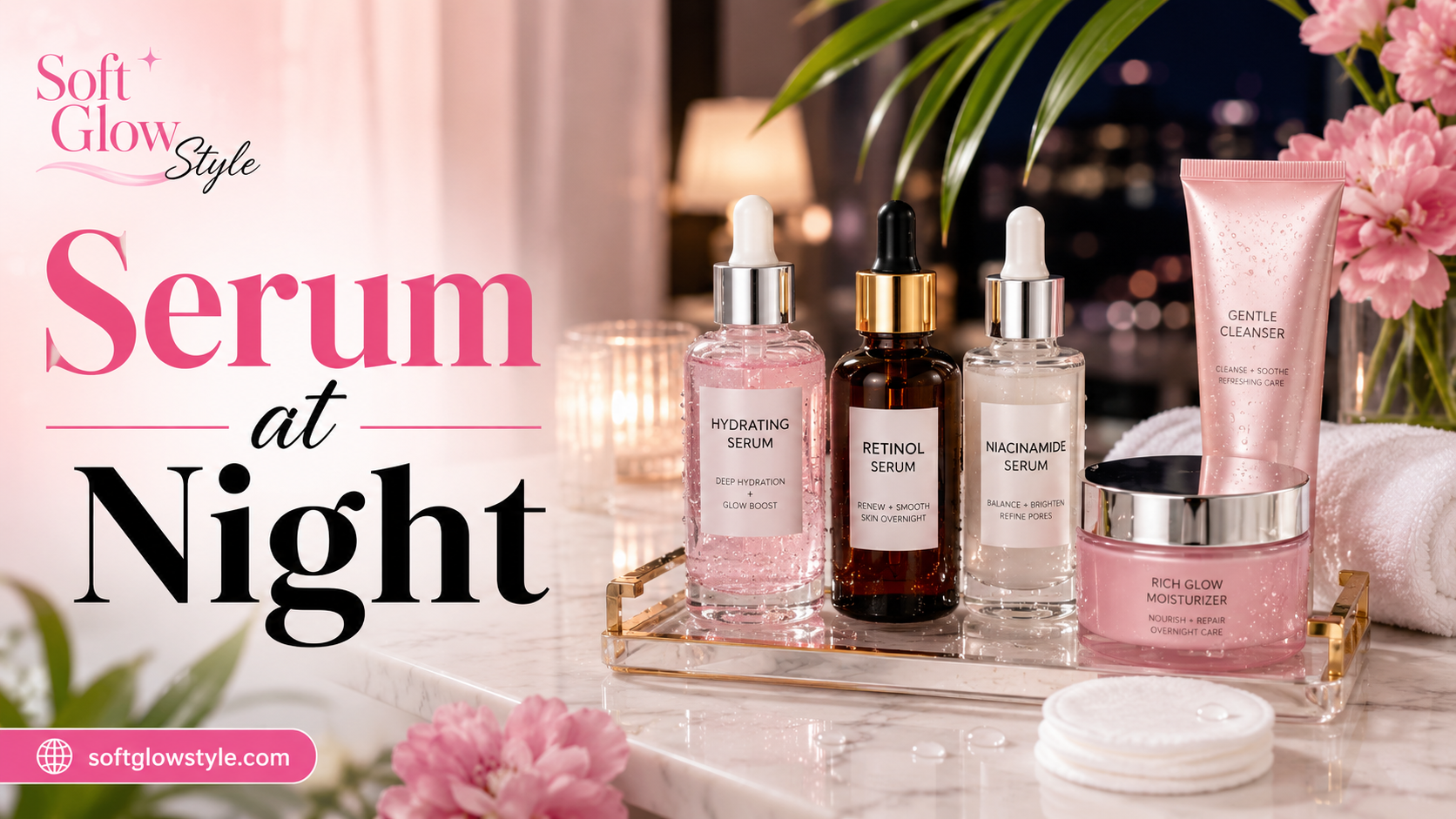
- Serum at night works best when it matches one clear skin goal.
- Night is a good time for retinol, hydrating serums, barrier-supporting serums, niacinamide and some exfoliating serums.
- Use serum after cleansing and before moisturizer.
- Beginners should avoid layering too many active serums at once.
- Retinol and exfoliating acids can cause dryness or irritation if used too often.
- Moisturizer after serum helps keep the routine gentle and comfortable.
- Morning sunscreen matters, especially if your night routine includes retinol or exfoliating ingredients.
Serum at night can be one of the most useful steps in a skincare routine, but only when you choose the right formula and avoid over-layering. A serum is usually lighter than moisturizer and designed to deliver ingredients that target a specific concern, such as dryness, dullness, uneven tone, fine lines, texture or breakouts.
The problem is that many people try to use too many serums at once. One night they use retinol, vitamin C, glycolic acid, niacinamide, hyaluronic acid and acne treatment together, then wonder why their skin feels tight or irritated. A good night routine does not need to be complicated. It needs to be consistent, gentle and matched to your skin.
Serum at Night: What to Apply and What to Avoid
A serum at night should support your skin while you sleep, not overwhelm it. The best serum depends on your skin type and your main concern. Dry skin may need hydrating or barrier-supporting serum. Oily skin may like niacinamide or lightweight exfoliating support. Acne-prone skin may need a simple routine with one active. Aging or texture concerns may benefit from retinol when used carefully.
The American Academy of Dermatology explains that retinoids and retinol may help with mild acne, pigmentation irregularities, fine lines and wrinkles, but dermatologists often advise starting with the least intense formula and building slowly. AAD also advises using retinoids at night and sun protection during the day. Read the AAD retinoid and retinol guide for more dermatologist-backed context.
For related skincare routines, start with the Soft Glow Style beauty hub, our 5 step Korean skincare routine, and our how to layer Korean skincare guide.
What Is a Night Serum?
A night serum is a lightweight skincare product used after cleansing and before moisturizer. It usually contains targeted ingredients in a thinner texture than a cream. Some serums are watery, some are gel-like, some are milky and some feel almost like light oil.
Night serums can target:
- Dryness
- Dehydration
- Dullness
- Uneven tone
- Rough texture
- Fine lines
- Breakouts
- Dark spots
- Barrier discomfort
- Visible pores
The key is choosing one main goal per night. Your skin does not need every active ingredient every evening.
Why Night Is a Good Time for Serum
Nighttime is useful for skincare because you are not layering makeup, sweating in outdoor heat or reapplying sunscreen. Your face is also usually clean and ready for treatment-focused products.
Some ingredients are better suited to evening routines because they can make skin more sensitive, feel stronger or work better when not layered under makeup. Retinol is the classic example. Exfoliating acids are also often easier to use at night because they can make skin feel more sensitive if overused.
| Serum Type | Good for Night? | Beginner Note |
|---|---|---|
| Hyaluronic acid serum | Yes | Use before moisturizer |
| Niacinamide serum | Yes | Good for many skin types |
| Retinol serum | Yes | Start slowly |
| Exfoliating acid serum | Yes, carefully | Do not overuse |
| Vitamin C serum | Can be used | Many prefer morning use |
| Barrier serum | Yes | Helpful with dry or sensitive skin |
7 Smart Tips for Using Serum at Night
1. Start With One Serum, Not Five
The biggest mistake is using too many serums together. More products do not always mean better skin. They can create irritation, pilling, breakouts or a sticky texture that makes the routine unpleasant.
Choose one main serum based on your goal. If your skin is dry, use hydration. If your skin is dull, use gentle exfoliation or brightening support. If your skin has texture or early aging concerns, retinol may be an option. If your barrier feels weak, choose soothing support.
2. Apply Serum After Cleansing
Serum usually goes on clean skin after cleansing. If you wear sunscreen or makeup during the day, remove it properly before serum. A serum cannot work well on top of leftover makeup, oil, sunscreen and pollution.
Use a gentle cleanser and avoid harsh scrubbing. Night skincare should prepare the skin, not punish it.
3. Use Moisturizer After Serum
Most serums need moisturizer after them. Moisturizer helps keep the routine comfortable and can reduce dryness from stronger ingredients. This is especially important with retinol, exfoliating acids and acne-focused serums.
Even oily skin may need a lightweight moisturizer after serum. Skipping moisturizer can make the skin feel tight, which may lead to more irritation.
4. Introduce Retinol Slowly
Retinol can be helpful, but it is not a product to rush. Beginners should usually start with a low strength and use it only a few nights a week. If the skin tolerates it, frequency can slowly increase.
Signs that you may be overusing retinol include burning, peeling, redness, tightness, stinging and unusual sensitivity. If that happens, reduce frequency and focus on moisturizer.
5. Do Not Mix Strong Actives Randomly
Some serum combinations are too much for beginners. Retinol plus exfoliating acids can be irritating. Strong vitamin C plus acids may bother sensitive skin. Acne treatments layered over exfoliating serums can feel harsh.
This does not mean these ingredients can never be used in the same routine by anyone. It means most people should build tolerance slowly and avoid using every strong product on the same night.
6. Match the Serum to Your Skin Type
The best night serum for dry skin is not always the best one for oily skin. A rich, milky serum may feel lovely on dry skin but heavy on acne-prone skin. A strong exfoliating serum may help rough texture but irritate sensitive skin.
Listen to your skin. If a serum keeps causing burning, bumps or flaky patches, it is not helping.
7. Use Sunscreen the Next Morning
Night serums do not remove the need for sunscreen. This matters even more if you use retinol, exfoliating acids or brightening ingredients. Daytime sunscreen helps protect your skin and supports the results of your nighttime routine.
Without sunscreen, your skin may look more uneven, dull or sensitive over time.
Best Serums to Apply at Night
Hyaluronic Acid Serum
Hyaluronic acid serum is a common night option for dehydrated skin. It helps skin feel plumper and more comfortable when layered correctly.
Use it on slightly damp skin, then follow with moisturizer. If you apply it and skip moisturizer, your skin may still feel tight later.
Glycerin-Based Serum
Glycerin is simple but useful. It helps attract water and supports comfort. Many hydrating serums include glycerin, even if the label does not focus on it.
A glycerin-based serum is good for dry, dehydrated or tight-feeling skin.
Niacinamide Serum
Niacinamide is popular because it works for many routines. It may support the look of pores, uneven tone, oil balance and barrier comfort.
Most people tolerate niacinamide well, but high percentages can still irritate some skin types. Start with a simple formula if your skin is sensitive.
Retinol Serum
Retinol is one of the most talked-about night serums. It is often used for fine lines, texture, uneven tone and acne-related concerns.
Retinol should be introduced slowly. Use a pea-sized amount for the whole face if the product instructions allow, avoid the immediate eye area unless the formula is made for it, and moisturize after.
Peptide Serum
Peptide serums are often used for firming, smoothing and barrier-friendly aging support. They are usually easier to tolerate than retinol, although results are often subtle and gradual.
Peptides can be a good option for people who want a gentle night serum and do not want strong actives.
Ceramide Serum
Ceramide serums are helpful when the skin feels dry, tight, over-exfoliated or weak. They support a more comfortable barrier feel and pair well with moisturizer.
This kind of serum is especially useful on rest nights between retinol or exfoliating nights.
Exfoliating Acid Serum
Exfoliating serums may contain AHAs, BHAs or PHAs. They can help rough texture, dullness, clogged pores or uneven skin feel. But they can also irritate if used too often.
Beginners should not use exfoliating acid serum every night. One to three times a week may be enough for many people, depending on the formula and skin tolerance.
Serum at Night by Skin Type
| Skin Type | Best Night Serum Direction | What to Avoid |
|---|---|---|
| Dry skin | Hyaluronic acid, glycerin, ceramides, peptides | Too many exfoliating acids |
| Oily skin | Niacinamide, lightweight hydration, BHA carefully | Heavy oily serums if they clog you |
| Combination skin | Niacinamide, hydration, targeted exfoliation | Applying strong actives everywhere |
| Sensitive skin | Barrier serum, ceramides, panthenol, low-strength formulas | Fragrance-heavy or strong active stacks |
| Acne-prone skin | Lightweight hydration, niacinamide, acne actives carefully | Rich sticky serums if they trigger bumps |
Serum at Night for Dry Skin
Dry skin usually needs comfort first. A night serum should not make the skin feel tighter. Look for hydrating and barrier-supporting ingredients.
Good Serum Options for Dry Skin
- Hyaluronic acid serum
- Glycerin serum
- Ceramide serum
- Peptide serum
- Squalane-based serum if tolerated
- Panthenol serum
Dry skin can use retinol, but it should start slowly and pair with moisturizer. On very dry nights, skip strong actives and focus on barrier support.
For extra comfort, read hydrating face mask for dry skin.
Serum at Night for Oily Skin
Oily skin does not always need drying products. In fact, harsh routines can make skin feel irritated and greasy at the same time. Lightweight serums often work best.
Good Serum Options for Oily Skin
- Niacinamide serum
- Lightweight hyaluronic acid serum
- BHA serum if tolerated
- Light gel serum
- Retinol serum used carefully
Oily skin can still benefit from moisturizer. Choose a light gel cream if rich creams feel too heavy.
Serum at Night for Sensitive Skin
Sensitive skin needs fewer experiments. A simple serum with soothing or barrier-supporting ingredients may be better than a strong active serum.
Good Serum Options for Sensitive Skin
- Ceramide serum
- Panthenol serum
- Centella-style soothing serum
- Low-percentage niacinamide serum
- Simple hydrating serum
Patch test first. If a serum burns, stings or causes swelling, stop using it. Strong tingling is not proof that a serum is working.
Serum at Night for Acne-Prone Skin
Acne-prone skin needs balance. A serum can help, but too many products can also clog or irritate the skin.
Good Serum Options for Acne-Prone Skin
- Niacinamide serum
- Lightweight hydration serum
- BHA serum used carefully
- Retinoid serum if suitable
- Barrier serum on rest nights
If you use prescription acne treatments, avoid adding multiple strong serums without asking your dermatologist. Too many actives can damage comfort and make acne routines harder to maintain.
For acne-related skincare support, read best Korean skincare for acne-prone skin, fungal acne cleanser guide, and face wash for fungal acne.
Serum at Night for Dull Skin
Dull skin may benefit from gentle exfoliation, hydration or brightening support. But do not attack dullness with too many acids at once.
Good Directions for Dull Skin
- Hydrating serum for plumpness
- Gentle exfoliating serum once or twice a week
- Niacinamide serum
- Vitamin C serum if tolerated
- Retinol slowly if texture is also a concern
Sometimes dullness is not about needing more exfoliation. It may come from dryness, lack of sunscreen, poor sleep, dehydration or a routine that is too harsh.
Serum at Night for Uneven Tone
Uneven tone needs patience. Night serum can help, but results usually take time. Brightening serums, retinol, niacinamide and exfoliating serums are common options.
The most important support step is morning sunscreen. Without sunscreen, uneven tone can keep returning or looking darker.
What to Avoid Applying at Night
Avoid Too Many Actives Together
Layering retinol, exfoliating acid, strong vitamin C and acne treatment in one routine can irritate the skin. Beginners should choose one active serum per night.
Avoid Harsh Scrubs Before Active Serums
Scrubbing before retinol or acid serum can make the skin more sensitive. Use gentle cleansing instead.
Avoid Strong Fragrance if You Are Sensitive
Fragrance-heavy serums can bother sensitive or dry skin. Choose fragrance-free if your skin reacts easily.
Avoid Applying Serum Over Dirty Skin
Serum works best on clean skin. Do not apply it over makeup, sunscreen or sweat from the day.
Avoid Using Expired Serums
If a serum changes smell, color, texture or separates strangely, do not keep using it. Old products can become irritating or less effective.
Avoid Retinol Around the Eyes Unless It Is Made for That Area
The eye area is delicate. Use only products meant for that zone and avoid getting serum too close to the lash line.
Avoid Skipping Moisturizer When Using Strong Serums
Moisturizer helps reduce dryness and keeps the routine more comfortable. This matters especially with retinol and exfoliating acids.
Serum Ingredients You Can Use at Night
| Ingredient | Best For | Night Routine Tip |
|---|---|---|
| Hyaluronic acid | Dehydrated skin | Apply before moisturizer |
| Glycerin | Dry or tight skin | Works well in simple routines |
| Niacinamide | Oil balance, tone, barrier feel | Choose a gentle percentage |
| Retinol | Texture, fine lines, acne-related concerns | Start slowly at night |
| AHA | Dullness and rough texture | Use carefully, not nightly for beginners |
| BHA | Clogged pores and oily skin | Avoid overuse |
| Ceramides | Dry or barrier-stressed skin | Good on rest nights |
| Peptides | Gentle aging support | Pairs well with moisturizer |
Can You Use Vitamin C Serum at Night?
Yes, vitamin C serum can be used at night. However, many people prefer vitamin C in the morning because it pairs well with daytime antioxidant support and sunscreen. Night use is still an option if your skin tolerates it better then.
Be careful if your vitamin C serum is strong or acidic. If you also use retinol or exfoliating acids, alternate nights instead of stacking everything together.
Can You Use Retinol Serum at Night?
Yes, retinol is usually used at night. It can support smoother-looking texture, fine lines and some acne-related concerns. The important part is starting slowly.
Beginner Retinol Routine
- Cleanse gently.
- Let skin dry fully if your retinol irritates on damp skin.
- Apply a small amount of retinol serum.
- Avoid corners of nose, lips and immediate eye area if sensitive.
- Apply moisturizer.
- Use sunscreen the next morning.
If your skin feels dry, use the sandwich method: moisturizer, retinol, then moisturizer again. This can reduce irritation for many beginners.
Can You Use Hyaluronic Acid Serum at Night?
Yes, hyaluronic acid serum is easy to use at night. It is a good choice for tight, dehydrated or tired-looking skin.
Apply it to slightly damp skin, then seal with moisturizer. If your room is dry or your skin is very dry, moisturizer afterward is especially important.
Can You Use Niacinamide Serum at Night?
Yes, niacinamide serum can be used at night. It is often used for the appearance of pores, oiliness, uneven tone and barrier comfort.
Some people can use niacinamide daily, while others prefer it a few nights per week. If a high-percentage formula causes flushing or tiny bumps, switch to a gentler one.
Can You Use Exfoliating Serum at Night?
Yes, exfoliating serum is often used at night, but it needs respect. AHAs and BHAs can be helpful for dullness, roughness or clogged pores, but they can irritate if overused.
Exfoliating Serum Tips
- Start once a week if you are new.
- Do not use on the same night as retinol at first.
- Moisturize after.
- Do not apply to broken or irritated skin.
- Use sunscreen during the day.
Simple Night Serum Routine for Beginners
A beginner night serum routine should be simple enough to repeat. You do not need a complicated shelf full of products.
Basic Routine
- Cleanser
- One serum
- Moisturizer
That is enough for many people. Once your skin is comfortable, you can add more targeted products if needed.
Weekly Serum Schedule Example
| Night | Serum Choice | Goal |
|---|---|---|
| Monday | Hydrating serum | Comfort and moisture support |
| Tuesday | Retinol serum | Texture and aging support |
| Wednesday | Barrier serum | Recovery |
| Thursday | Hydrating serum | Dehydration support |
| Friday | Gentle exfoliating serum | Dullness and roughness |
| Saturday | Barrier serum | Comfort |
| Sunday | Hydrating serum | Simple reset |
This is only an example. Sensitive skin may need fewer active nights. Oily or acne-prone skin may need a different plan.
What Serum Should Go First at Night?
If you use more than one serum, apply from thinnest to thickest texture. But beginners should avoid using many serums in one routine.
A simple rule is:
- Watery hydrating serum
- Treatment serum
- Milky or richer serum
- Moisturizer
If your treatment serum is strong, such as retinol or exfoliating acid, keep the routine simple around it.
Serum Before or After Moisturizer?
Serum usually goes before moisturizer. The serum is lighter and more targeted. Moisturizer is richer and helps seal comfort into the skin.
There are exceptions. Some people apply moisturizer before retinol to buffer irritation. This is still acceptable, especially for sensitive or dry skin.
Night Serum Routine Mistakes
Mistake 1: Changing Products Too Often
Your skin needs time. Switching serums every few nights can make it hard to know what is helping or irritating your skin.
Mistake 2: Using Retinol Every Night Too Soon
Retinol can irritate when introduced too quickly. Start slowly and increase only if your skin stays comfortable.
Mistake 3: Using Acid Serum on Irritated Skin
Exfoliating acids can make irritation worse. Skip acids if your skin is burning, peeling, cracked or very sensitive.
Mistake 4: Skipping Sunscreen
Night skincare still depends on daytime protection. Sunscreen helps maintain results and protect skin.
Mistake 5: Applying Too Much Serum
More product does not always work better. A few drops or a thin layer is usually enough.
Mistake 6: Forgetting the Neck
If your serum is gentle, you may apply it to the neck too. Be careful with strong actives because the neck can be more sensitive.
Mistake 7: Ignoring Your Skin Barrier
If your face feels raw or tight, pause strong serums and focus on moisturizer, hydration and gentle cleansing.
Expert Tips from Sawera Shahid
Sawera Shahid, a beauty, skincare, fashion and lifestyle writer with 5+ years of experience, recommends keeping your serum at night routine focused. One good serum used consistently is usually better than five active products layered randomly.
- Choose serum based on your main skin concern.
- Use hydrating serum on dry or tight nights.
- Use retinol slowly and carefully.
- Do not use strong acids and retinol together when starting.
- Apply moisturizer after serum.
- Use sunscreen every morning.
- Take rest nights if your skin feels irritated.
- Keep the routine boring if your skin barrier feels weak.
Soft Glow Style Internal Reading Map
Use these related Soft Glow Style guides to build a stronger skincare, beauty, makeup, hair care, nail, fashion and lifestyle routine around serum at night. This section includes 100+ internal links for stronger topical support.
Skincare Routine Links
- hydrating face mask for dry skin
- skincare infused makeup
- best skincare products guide
- 5 step Korean skincare routine
- how to layer Korean skincare
- Korean skincare set for glowing skin
- Korean skincare sets that actually work
- best Korean skincare for acne-prone skin
- Korean acne skincare top picks
- foaming cleanser for oily skin
- fungal acne cleanser guide
- face wash for fungal acne
- does argan oil clog pores
- raw honey mask for face
- ice water face dip
- benefits of ice bath for face
- visible pores are a flex
- visible pores and skin texture guide
- Korean beauty standards explained
- American beauty standards explained
Beauty and Makeup Links
- Soft Glow Style beauty hub
- what is tinted moisturizer
- sweat resistant makeup
- bronzer vs blush
- bronzer for dark skin
- what eyeshadow with brown eyes
- heatproof makeup in hot weather
- no makeup makeup routine
- cloud skin makeup base
- cloud skin vs glass skin guide
- blurry blush soft glam trend
- blurryface makeup and modern beauty flaws
- lip gloss layering for plump lips
- faux freckles trend guide
- metallic faux freckles beauty idea
- Tumblr beauty trends coming back
- how beauty standards affect mental health
- popular beauty blogs to follow
- Dime Beauty and Empire Beauty explainer
- American Beauty rose makeup inspiration
- vintage American Beauty rose shade
Hair Care and Shower Routine Links
- can I use shampoo as body wash
- does conditioner go bad
- professional clarifying shampoo guide
- clarifying shampoo for bleached hair
- Routine shampoo review
- Routine shampoo and conditioner guide
- hair growth guide
Nail Art and Pedicure Links
- Soft Glow Style nail art hub
- summer pedicure nail colors
- cat eye nail colors
- soap nails polish
- pastel nail colors 2026
- white nail polish ideas
- types of nails at salon
- what is hard gel nails
- multi color French tip nails
- water nails vs chrome nails comparison
- best nail polish for summer 2026
- July nail colors 2026
- ice cream nails manicure trend
- ice cream nails color ideas
- best nail polish stickers
- lifestyle nail bar guide
- lifestyle nail bars and beauty spaces
- how to match nail art with skincare
Fashion and Outfit Links
- Soft Glow Style fashion hub
- what to wear in Miami
- what to wear to a Broadway show
- fashion tips to look stylish
- best fashion tips and tricks
- 15 piece capsule closet that feels wearable
- 15 piece capsule closet starter guide
- ethereal fashion in real life
- ethereal girl aesthetic guide
- coquette core power suits
- power suits and ballet flats
- tomato girl summer style
- tomato girl meets olive green
- underconsumption core minimalist trend
- underconsumption core when minimalism feels real
- vintage tees and boxers outfit guide
- vintage tees paired with slip skirts
- mismatched shoes 2.0 pattern guide
- mismatched shoes trend guide
- feral girl fall trend
- tapestry hoodie style guide
- Euriental fashion and luxury travel
- Oh So Jack fashion and lifestyle
- science of appearance and men’s grooming
Lifestyle and Wellness Links
- Soft Glow Style lifestyle hub
- luxury family travel and lifestyle
- Sunday reset routine that feels realistic
- Sunday reset that actually works
- silent wellness trend explained
- digital detox wellness trend
- digital nostalgia is back
- digital nostalgia and MP3 culture
- wellness fridges trend guide
- wellness fridges and beauty storage
- how to start a healthy lifestyle
- importance of a healthy lifestyle
- what is sedentary lifestyle
- romanticize solo life
- lifestyle blog for women and family routines
- outdoor lifestyles for escaping screens
- outdoor lifestyles and adventure guide
- make a studio smell expensive using simple habits
- make a studio smell expensive guide
- decorate with books quiet luxury hack
- decorate with books for a softer home
- aesthetic burnout and vibe curation
Trending Reads and Site Hubs
- featured Soft Glow Style reads
- Soft Glow Style blog archive
- where to watch True Beauty
- Bold and Beautiful comings and goings
- Sleeping Beauty of Everest truth
- Sleeping Beauty Everest chilling story
- Sleeping Beauty Mount Everest heartbreaking story
- Andrea Chong fashion travel lifestyle blog
- about Soft Glow Style
- contact Soft Glow Style
Frequently Asked Questions
What serum should I use at night?
The best serum at night depends on your skin goal. Choose hydrating serum for dryness, niacinamide for balance, retinol for texture and aging concerns, exfoliating serum for dullness, or barrier serum for sensitive skin.
Should serum be applied before moisturizer at night?
Yes. Serum usually goes after cleansing and before moisturizer. Moisturizer helps seal comfort into the skin and can reduce dryness from active serums.
Can I use retinol serum every night?
Beginners should not rush into nightly retinol. Start a few nights per week, then increase only if your skin stays comfortable and does not become dry, flaky or irritated.
Can I use vitamin C serum at night?
Yes, vitamin C serum can be used at night, although many people prefer it in the morning under sunscreen. Avoid layering it with too many strong actives if your skin is sensitive.
What serums should not be mixed at night?
Be careful mixing retinol with exfoliating acids, strong vitamin C or harsh acne treatments. Beginners should use one active serum per night to reduce irritation risk.
Do I need serum at night?
You do not need serum at night, but it can help if you want to target dryness, dullness, texture, uneven tone, breakouts or early aging signs. A basic cleanser and moisturizer routine is still enough for some people.
Final Thoughts
Serum at night can be a powerful step, but it should stay simple. Choose one serum for one main goal. Apply it after cleansing, follow with moisturizer and protect your skin with sunscreen the next morning.
Hydrating serums can help dry or tight skin feel better. Niacinamide can support a balanced routine. Retinol can be useful for texture and aging concerns when introduced slowly. Exfoliating serums can help dullness, but they should not be overused. The best nighttime serum routine is not the strongest one. It is the one your skin can tolerate consistently.
Final Recap
- Serum at night should match one clear skin goal.
- Apply serum after cleanser and before moisturizer.
- Use hydrating serum for dry or dehydrated skin.
- Use retinol slowly and mostly at night.
- Do not mix too many strong active serums at once.
- Use moisturizer after serum to support comfort.
- Use sunscreen the next morning, especially after retinol or exfoliating serums.