Key Takeaways
- Irish curls hair type is a popular term for hair that has mixed textures, often straighter or looser on top and curlier underneath.
- Irish curls are not usually an official curl type like 2A, 2B, 3A or 3B. The term describes an uneven curl pattern.
- You do not have to be Irish to have Irish curls. Anyone can have mixed wave and curl patterns.
- This hair type can look confusing because the top layer may fall flat while the underlayer forms stronger waves or curls.
- Lightweight products, section styling, scrunching and gentle drying usually work better than heavy creams.
- A curly cut or soft layered haircut can help balance the different textures.
- The goal is not to force every section to match perfectly. The goal is to style the pattern so it looks intentional.
Irish curls hair type has become a popular way to describe hair that feels like two different textures on one head. Maybe the top layer looks almost straight or loosely wavy, while the underneath layer curls into stronger waves, ringlets or spirals. Maybe the front pieces fall flat, but the back and nape curl beautifully. Maybe your hair looks straight when brushed, then suddenly dries into hidden curls underneath.
This can feel confusing because most curl charts make hair look simple. They show neat types like 2A, 2B, 2C, 3A and 3B. Real hair is often not that neat. Many people have more than one pattern at the same time, and Irish curls are one way people describe that mixed-texture look.
Irish Curls Hair Type: What Does It Mean?
Irish curls hair type usually means hair with an uneven curl pattern. The most common version is hair that looks straighter, flatter or looser on the top layer, while the underneath layer is noticeably wavier or curlier.
Some people call this “Irish curls,” “Irish waves,” “Irish hair,” or “half straight, half curly hair.” It is not a formal scientific hair category. It is more of a descriptive beauty term that became popular online because so many people recognized the same confusing pattern in their own hair.
Allure describes Irish hair as a TikTok-popular term for a common curl pattern where people may have looser or straighter sections mixed with curlier sections. Read the Allure Irish waves guide for more context on the trend.
For related hair care reading, start with what is a curly cut, shampoo to clarify hair, and benefits of deep hair conditioning with heat.
Are Irish Curls an Official Curl Type?
No, Irish curls are not usually considered an official curl type in the same way as 2A, 2B, 2C, 3A, 3B, 3C or 4A curl categories. The phrase is more casual. It describes how the hair behaves, not a fixed category on a curl chart.
This is important because you should not feel stuck trying to label your entire head with one number. Your top layer might act like 2A waves. Your underlayer might act like 2C or 3A curls. Your front pieces may be looser because of brushing, heat styling or sun exposure. That does not mean your hair is “wrong.” It means your texture is mixed.
| Term | What It Means | How to Use It |
|---|---|---|
| Irish curls | Mixed texture hair, often straighter on top and curlier underneath | Use as a descriptive styling term |
| 2A to 2C | Wavy hair types | Useful for product and styling ideas |
| 3A to 3C | Curly hair types | Useful for curl definition and care routines |
| Mixed curl pattern | More than one texture on the same head | Often the most accurate description |
What Irish Curls Usually Look Like
Irish curls can show up in different ways. Some people have straight roots and curly ends. Some have straight top layers with curly underneath layers. Some have waves around the face and curls at the nape. Some have a soft top layer that hides stronger curls underneath.
Common Signs of Irish Curls
- Top layer looks straighter than the underneath layer.
- Hair near the nape curls more strongly.
- Front pieces fall flatter than the back.
- Hair looks wavy one day and curly another day.
- Brushing makes the hair look puffy or shapeless.
- The underlayer forms ringlets while the outer layer stays loose.
- Heavy products make the top layer flat.
- The curl pattern looks uneven after regular haircuts.
- Diffusing brings out hidden waves or curls.
- Air-drying without product makes the pattern look messy.
If this sounds familiar, you may have mixed texture hair that fits the Irish curls description.
Why Hair Can Be Curly Underneath and Straighter on Top
Hair texture can vary across the scalp. Different sections can have different curl patterns, density, porosity, damage levels and exposure to the environment. This is why one section may curl easily while another section refuses.
Possible Reasons
- Genetics
- Different curl patterns on different parts of the head
- Top layer damage from sun exposure
- Heat styling on visible front pieces
- Brushing or tying hair tightly
- Heavy products flattening the top layer
- Long hair weighing down waves
- Product buildup
- Different porosity between outer and inner layers
- Haircut shape that does not support curls
The top layer is more exposed to sun, heat tools, brushing, friction, dry air and styling. The underneath layer may be more protected, so it sometimes keeps a stronger curl pattern.
Irish Curls vs Wavy Hair
Irish curls can include wavy hair, but the difference is usually the mixed pattern. Wavy hair may be fairly consistent across the head, while Irish curls often have a stronger contrast between sections.
| Feature | Wavy Hair | Irish Curls Hair Type |
|---|---|---|
| Pattern | Loose S-shaped waves | Mixed waves, curls or straighter sections |
| Top layer | May wave evenly | Often flatter or straighter |
| Underlayer | May be similar to top | Often curlier or more defined |
| Styling need | Light hold and volume | Section styling and balancing textures |
| Haircut need | Soft layers | Shape that helps mixed textures blend |
Irish Curls vs Curly Hair
Curly hair usually has a more obvious curl pattern all over. Irish curls may look curly in some areas but much looser in others. This can make styling feel frustrating because one product may work for the underneath curls but weigh down the top layer.
The solution is not always stronger curl cream. Often, Irish curls need lighter products, better sectioning, more water during styling and a haircut that supports the weaker sections.
7 Styling Tips for Irish Curls Hair Type
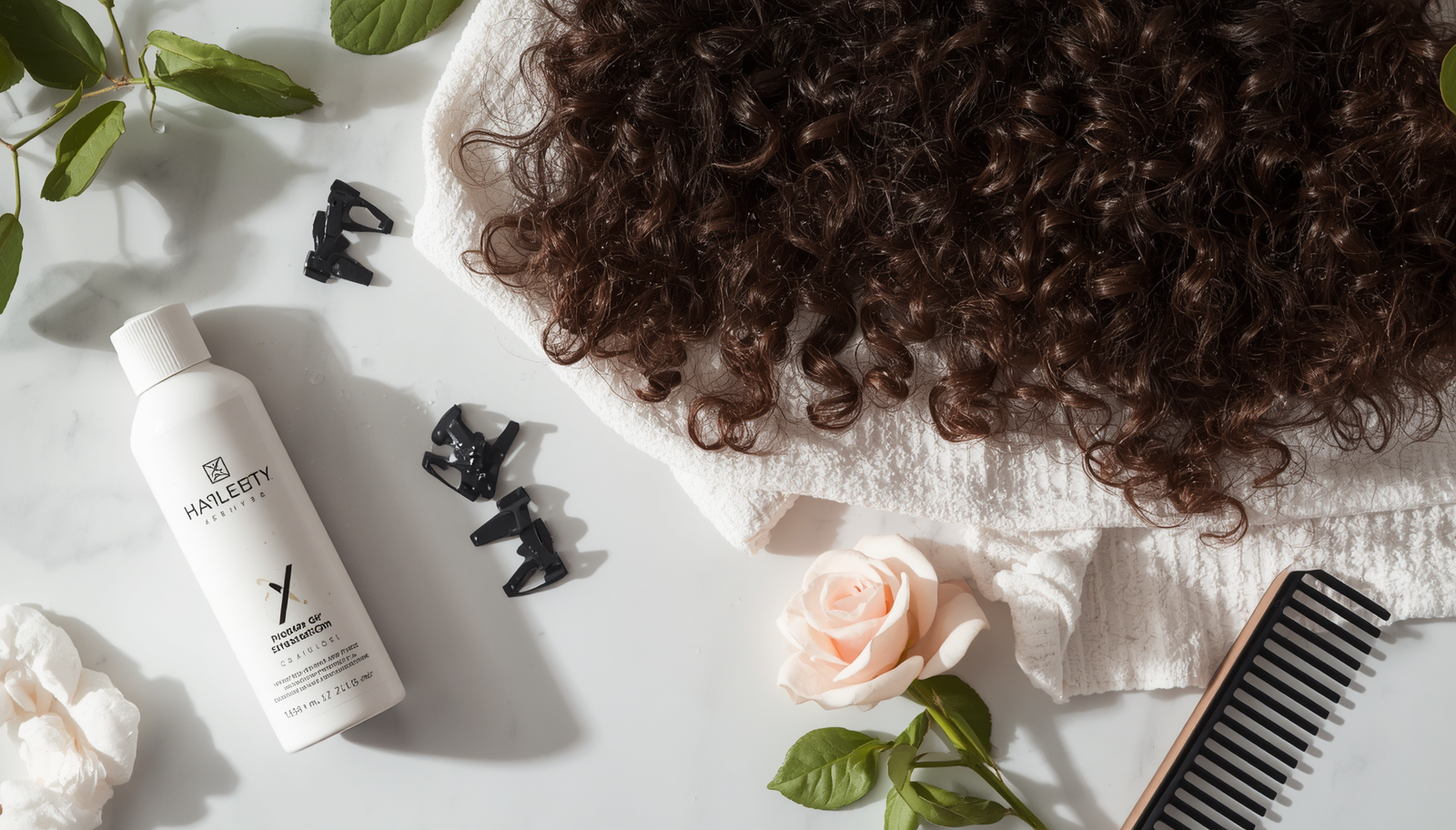
1. Stop Brushing the Pattern Out After Washing
Brushing dry Irish curls can turn the pattern into puffiness. The curlier underneath layer may expand, while the top layer may look frizzy or shapeless.
Detangle in the shower with conditioner, then style while the hair is wet or damp. After styling, avoid brushing through the hair unless you are intentionally wearing it straight or blown out.
2. Use Lightweight Products First
Irish curls often get weighed down easily, especially on the straighter top layer. Heavy butters and thick curl creams can make the top look flat while the underneath stays curly.
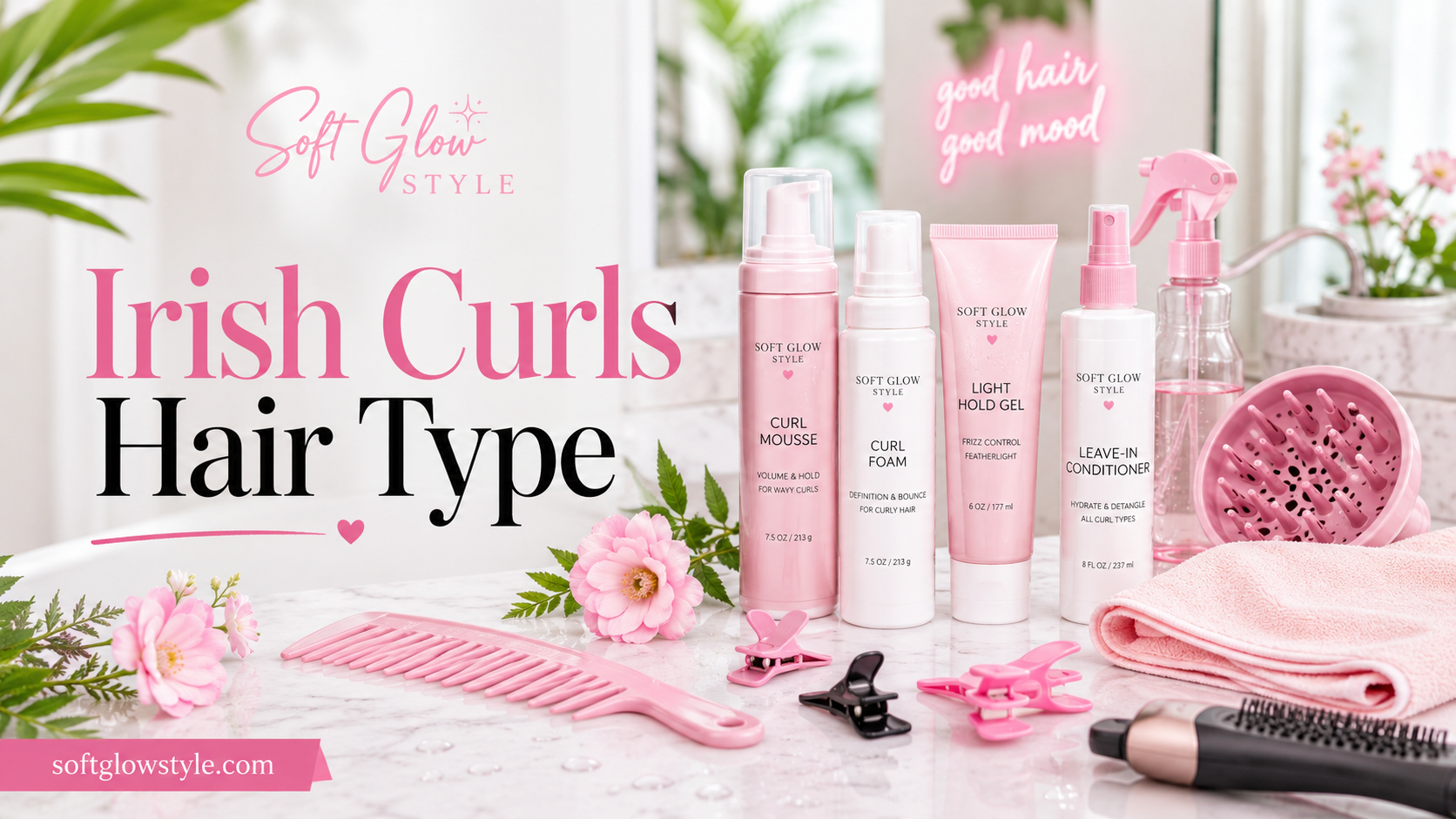
Start with lightweight products such as mousse, curl foam, light gel, leave-in spray or a small amount of curl cream. Add more moisture only if your hair truly needs it.
3. Style in Sections
Section styling matters because the top and underneath layers may need different attention. If you only smooth product over the outside, the underneath curls may get missed or the top layer may get overloaded.
Separate hair into two to four sections. Apply product evenly, then scrunch each section upward. This helps the curl pattern look more balanced.
4. Scrunch More Than You Smooth
Smoothing can stretch out waves and curls. Scrunching encourages shape. For Irish curls, scrunching can help the straighter top layer remember that it has texture.
Use wet hands, apply product, then scrunch upward toward the scalp. You can also micro-plop with a soft cotton shirt or microfiber towel to remove extra water without roughing up the pattern.
5. Finger-Coil the Straighter Pieces
Some sections may need extra help. If the top layer or front pieces always fall straight, try finger-coiling a few visible pieces while damp.
You do not need to finger-coil the whole head. Focus on the areas that look disconnected from the rest of your hair.
6. Diffuse on Low Heat or Air-Dry Carefully
Air-drying is gentle, but it can stretch out weak waves if your hair is heavy and wet for hours. Diffusing on low heat and low airflow can help encourage shape.
Do not blast the hair around aggressively. Cup curls gently in the diffuser and let the pattern set.
7. Get a Haircut That Supports Mixed Texture
A regular haircut can make Irish curls look more uneven if the stylist does not consider shrinkage and mixed texture. A curly cut or texture-aware layered cut can help.
For more haircut help, read what is a curly cut.
Best Products for Irish Curls Hair Type
The best products for Irish curls are usually lightweight, flexible and buildable. You want enough hold to support waves and curls, but not so much weight that the top layer collapses.
| Product Type | Best For | Tip |
|---|---|---|
| Light leave-in conditioner | Dry ends and frizz | Use a small amount on lengths only |
| Curl mousse | Volume and soft hold | Great for flatter top layers |
| Curl foam | Lightweight definition | Good for wavy-curly patterns |
| Light gel | Hold and frizz control | Scrunch out the cast when dry |
| Curl cream | Dry or coarse areas | Use sparingly so hair does not flatten |
| Clarifying shampoo | Product buildup | Use only when hair feels coated |
Simple Irish Curls Routine
A simple routine is better than a complicated one, especially when you are still learning your pattern.
Wash Day Routine
- Cleanse your scalp with gentle shampoo.
- Clarify only when buildup makes the hair feel heavy.
- Apply conditioner to mid-lengths and ends.
- Detangle gently in the shower.
- Rinse, leaving hair very damp for styling.
- Apply lightweight leave-in if needed.
- Add mousse or foam for volume.
- Add light gel for hold if your curls fall quickly.
- Scrunch upward.
- Air-dry or diffuse on low.
For buildup reset days, read shampoo to clarify hair.
How to Style the Straighter Top Layer
The top layer is usually the hardest part of Irish curls. It may look flat, stretched, frizzy or less curly than the underneath layer.
Try These Tips
- Use less conditioner near the roots.
- Apply mousse at the top layer for lift.
- Scrunch the top layer while very damp.
- Clip roots while drying if the crown falls flat.
- Finger-coil only the front pieces that need help.
- Avoid heavy oils on the top layer.
- Diffuse the top gently instead of letting it stretch flat.
If the top layer is damaged from heat or color, it may need time, trims and gentler styling before it curls better.
How to Style the Curlier Underlayer
The underneath layer often curls more easily, but it can also get frizzy, tangled or hidden under the flatter top layer.
Underlayer Tips
- Apply product underneath, not just on the outside.
- Use conditioner where curls tangle most.
- Scrunch from the ends upward.
- Use gel if the curls lose shape quickly.
- Do not over-brush after styling.
- Protect the underneath layer from rough scarves and collars.
Best Haircut for Irish Curls
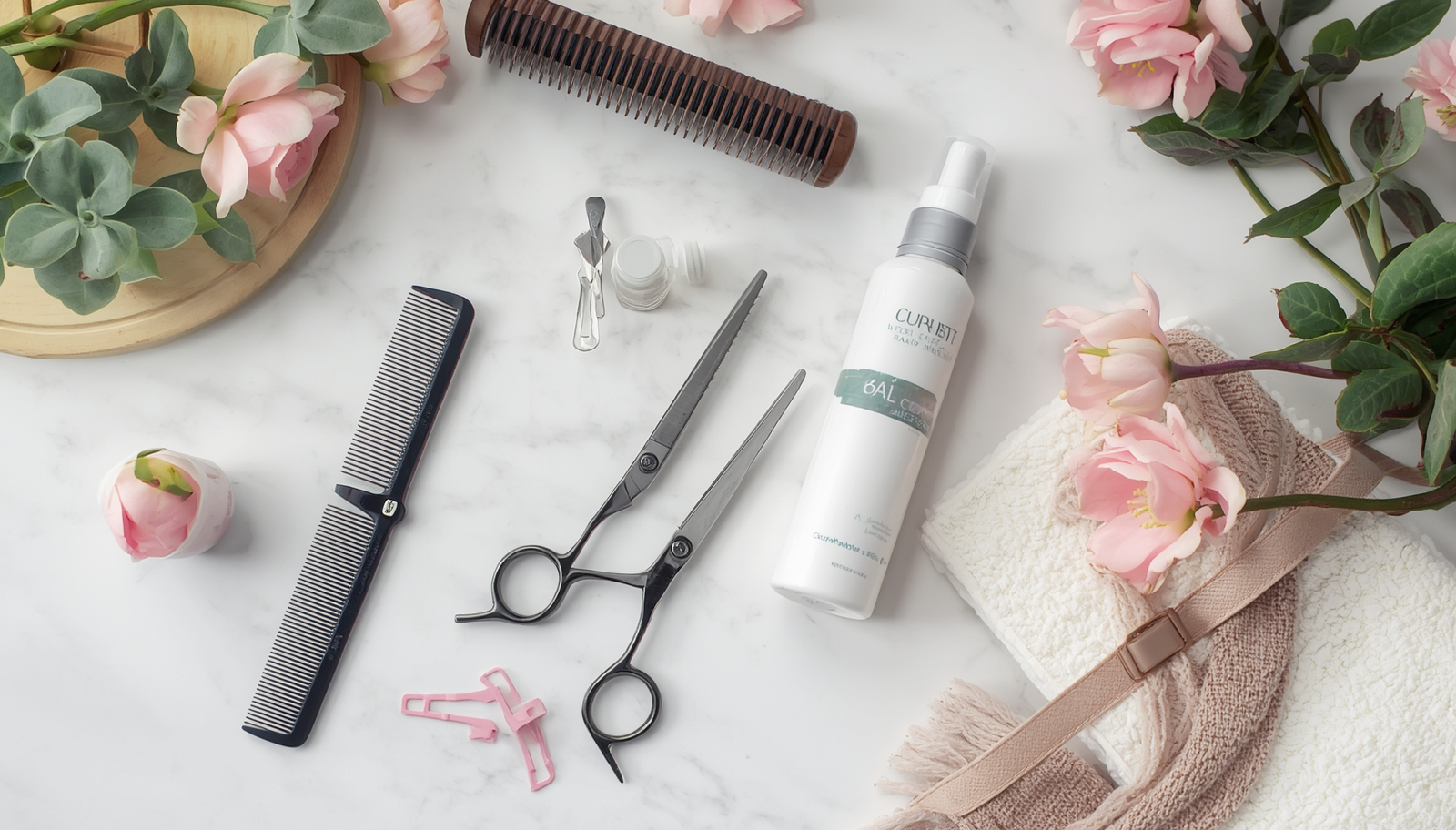
The best haircut for Irish curls usually adds shape without removing too much weight. A curly cut, soft long layers, face-framing layers or a rounded cut may help blend the looser top layer with the curlier underneath layer.
Good Haircut Options
- Curly cut
- Soft long layers
- Rounded wavy-curly cut
- Face-framing layers
- Curly shag if you want volume
- Layered bob for stronger shape
Ask your stylist whether your hair should be cut dry, wet or with a combination method. The goal is a shape that works when your hair is worn naturally.
Irish Curls and Product Buildup
Product buildup can make Irish curls look worse because it weighs down the weaker sections first. The top layer may become flat, greasy or stringy, while the underneath layer becomes frizzy or coated.
Signs Buildup Is Affecting Your Pattern
- Hair feels waxy after washing.
- Curls do not bounce back.
- Roots look greasy quickly.
- Products stop working.
- Top layer looks limp.
- Underneath curls feel sticky or tangled.
Use clarifying shampoo occasionally when buildup is obvious. After clarifying, follow with conditioner or a hair mask so the hair does not feel dry. For a full reset, read professional clarifying shampoo guide.
Irish Curls and Deep Conditioning
Irish curls may need moisture, but too much conditioning can also flatten the top layer. The trick is applying deep conditioner where it is needed most, usually the mid-lengths and ends.
If your hair is dry, color-treated, bleached or frizzy, deep conditioning can help. If your hair is fine and easily weighed down, choose lightweight masks and avoid the roots.
For more detail, read benefits of deep hair conditioning with heat.
Irish Curls for Fine Hair
Fine Irish curls need lightness. Heavy products can make the top layer look straight and oily. The underlayer may still curl, but the overall shape can look unbalanced.
Fine Hair Tips
- Use mousse instead of heavy curl cream.
- Apply conditioner only to the lengths.
- Use a small amount of gel for hold.
- Diffuse upside down or sideways for lift.
- Avoid heavy oils and butters.
- Clarify when roots look flat or coated.
Irish Curls for Thick Hair
Thick Irish curls may need more sectioning and more water during styling. If you apply product only to the outside, the underlayers may not get enough control.
Thick Hair Tips
- Style in sections.
- Use enough water to help product spread.
- Apply gel or cream evenly through layers.
- Use clips to lift the top layer if it dries flat.
- Get layers that reduce bulk without causing frizz.
- Deep condition when ends feel rough.
Irish Curls for Heat-Damaged Hair
Heat damage can make Irish curls look more uneven. The most exposed pieces, often around the front and top, may become straighter than the protected underneath curls.
Heat-Damage Tips
- Reduce flat ironing and curling iron use.
- Use low heat when diffusing.
- Apply heat protectant when heat styling.
- Trim damaged ends slowly if you do not want a big cut.
- Use deep conditioner for softness.
- Be patient while the pattern recovers.
Some heat-damaged pieces may not fully curl again until they grow out. A curly cut can help blend the shape during the transition.
Common Irish Curls Mistakes
Mistake 1: Using Products That Are Too Heavy
Heavy creams and oils can flatten the top layer and hide natural waves. Start light, then add more only if needed.
Mistake 2: Brushing Hair Dry
Dry brushing can break up curls and create puffiness. Detangle with conditioner instead.
Mistake 3: Ignoring the Underlayer
The curlier underneath layer needs product too. Apply styling products in sections so every layer gets support.
Mistake 4: Expecting Every Section to Match
Mixed texture hair may never look perfectly even. Styling can blend the pattern, but it does not need to erase natural variation.
Mistake 5: Skipping Clarifying
Product buildup can make Irish curls look limp and messy. Clarify occasionally when your hair feels coated.
Mistake 6: Getting the Wrong Haircut
A blunt or straight-hair cut can make mixed texture look heavier. A curly cut or texture-aware layers may work better.
Mistake 7: Using Too Much Heat
High heat can loosen curls over time. Use heat carefully and protect your hair.
Expert Tips from Sawera Shahid
Sawera Shahid, a beauty, skincare, fashion and lifestyle writer with 5+ years of experience, recommends treating Irish curls hair type as mixed texture hair rather than trying to force it into one curl chart label. The best routine is light, flexible and section-based.
- Use lightweight curl products first.
- Style hair while it is wet or very damp.
- Scrunch instead of brushing after styling.
- Finger-coil only the pieces that need extra help.
- Clarify when buildup makes the top layer flat.
- Deep condition the lengths, not oily roots.
- Consider a curly cut for better shape.
- Accept that mixed texture can still look beautiful without matching perfectly.
Soft Glow Style Internal Reading Map
Use these related Soft Glow Style guides to build a stronger hair care, beauty, skincare, makeup, nail, fashion and lifestyle routine around Irish curls hair type. This section includes 100+ internal links for stronger topical support.
Hair Care and Shower Routine Links
- what is a curly cut
- shampoo to clarify hair
- benefits of deep hair conditioning with heat
- professional clarifying shampoo guide
- clarifying shampoo for bleached hair
- can I use shampoo as body wash
- does conditioner go bad
- Routine shampoo review
- Routine shampoo and conditioner guide
- hair growth guide
Skincare Routine Links
- dermaplaning for sensitive skin
- serum at night
- hydrating face mask for dry skin
- skincare infused makeup
- best skincare products guide
- 5 step Korean skincare routine
- how to layer Korean skincare
- Korean skincare set for glowing skin
- Korean skincare sets that actually work
- best Korean skincare for acne-prone skin
- Korean acne skincare top picks
- foaming cleanser for oily skin
- fungal acne cleanser guide
- face wash for fungal acne
- does argan oil clog pores
- raw honey mask for face
- ice water face dip
- benefits of ice bath for face
- visible pores are a flex
- visible pores and skin texture guide
- Korean beauty standards explained
- American beauty standards explained
Beauty and Makeup Links
- Soft Glow Style beauty hub
- what is tinted moisturizer
- sweat resistant makeup
- bronzer vs blush
- bronzer for dark skin
- what eyeshadow with brown eyes
- heatproof makeup in hot weather
- no makeup makeup routine
- cloud skin makeup base
- cloud skin vs glass skin guide
- blurry blush soft glam trend
- blurryface makeup and modern beauty flaws
- lip gloss layering for plump lips
- faux freckles trend guide
- metallic faux freckles beauty idea
- Tumblr beauty trends coming back
- how beauty standards affect mental health
- popular beauty blogs to follow
- Dime Beauty and Empire Beauty explainer
- American Beauty rose makeup inspiration
- vintage American Beauty rose shade
Nail Art and Pedicure Links
- Soft Glow Style nail art hub
- summer pedicure nail colors
- cat eye nail colors
- soap nails polish
- pastel nail colors 2026
- white nail polish ideas
- types of nails at salon
- what is hard gel nails
- multi color French tip nails
- water nails vs chrome nails comparison
- best nail polish for summer 2026
- July nail colors 2026
- ice cream nails manicure trend
- ice cream nails color ideas
- best nail polish stickers
- lifestyle nail bar guide
- lifestyle nail bars and beauty spaces
- how to match nail art with skincare
Fashion and Outfit Links
- Soft Glow Style fashion hub
- what to wear in Miami
- what to wear to a Broadway show
- fashion tips to look stylish
- best fashion tips and tricks
- 15 piece capsule closet that feels wearable
- 15 piece capsule closet starter guide
- ethereal fashion in real life
- ethereal girl aesthetic guide
- coquette core power suits
- power suits and ballet flats
- tomato girl summer style
- tomato girl meets olive green
- underconsumption core minimalist trend
- underconsumption core when minimalism feels real
- vintage tees and boxers outfit guide
- vintage tees paired with slip skirts
- mismatched shoes 2.0 pattern guide
- mismatched shoes trend guide
- feral girl fall trend
- tapestry hoodie style guide
- Euriental fashion and luxury travel
- Oh So Jack fashion and lifestyle
- science of appearance and men’s grooming
Lifestyle and Wellness Links
- Soft Glow Style lifestyle hub
- luxury family travel and lifestyle
- Sunday reset routine that feels realistic
- Sunday reset that actually works
- silent wellness trend explained
- digital detox wellness trend
- digital nostalgia is back
- digital nostalgia and MP3 culture
- wellness fridges trend guide
- wellness fridges and beauty storage
- how to start a healthy lifestyle
- importance of a healthy lifestyle
- what is sedentary lifestyle
- romanticize solo life
- lifestyle blog for women and family routines
- outdoor lifestyles for escaping screens
- outdoor lifestyles and adventure guide
- make a studio smell expensive using simple habits
- make a studio smell expensive guide
- decorate with books quiet luxury hack
- decorate with books for a softer home
- aesthetic burnout and vibe curation
Trending Reads and Site Hubs
- featured Soft Glow Style reads
- Soft Glow Style blog archive
- where to watch True Beauty
- Bold and Beautiful comings and goings
- Sleeping Beauty of Everest truth
- Sleeping Beauty Everest chilling story
- Sleeping Beauty Mount Everest heartbreaking story
- Andrea Chong fashion travel lifestyle blog
- about Soft Glow Style
- contact Soft Glow Style
Frequently Asked Questions
What is Irish curls hair type?
Irish curls hair type is a popular term for mixed texture hair, often straighter or looser on top and curlier or wavier underneath.
Do you have to be Irish to have Irish curls?
No. Anyone can have this mixed curl pattern. The term became popular online, but it is not limited to people with Irish ancestry.
Are Irish curls an official hair type?
No. Irish curls are not usually an official curl chart category. It is a descriptive term for uneven curl patterns or half straight, half curly hair.
Why is my hair curly underneath but straight on top?
This can happen because of genetics, mixed curl patterns, heat damage, sun exposure, product buildup, hair weight, brushing, or different porosity in different sections.
How do you style Irish curls?
Use lightweight products, apply them in sections, scrunch while damp, finger-coil straighter pieces if needed, and air-dry or diffuse gently.
What haircut is best for Irish curls?
A curly cut, soft long layers, rounded cut, curly shag or texture-aware layered haircut can help Irish curls look more balanced.
Final Thoughts
Irish curls hair type is best understood as mixed texture hair. It is not about having one perfect curl category. It is about noticing that your hair may be straighter on top, curlier underneath, wavier in some places and tighter in others.
The right routine should support that mix instead of fighting it. Use lightweight products, style in sections, scrunch carefully, clarify when buildup flattens the top layer and consider a curly cut if your shape feels uneven. Irish curls can look soft, natural and beautiful when you stop forcing every section to behave the same way.
Final Recap
- Irish curls describe mixed texture hair.
- The top layer is often straighter or looser than the underlayer.
- Irish curls are not an official curl chart type.
- Anyone can have this pattern, not only Irish people.
- Lightweight products usually work better than heavy creams.
- Section styling helps different curl patterns look more balanced.
- A curly cut can help Irish curls sit better naturally.