Key Takeaways
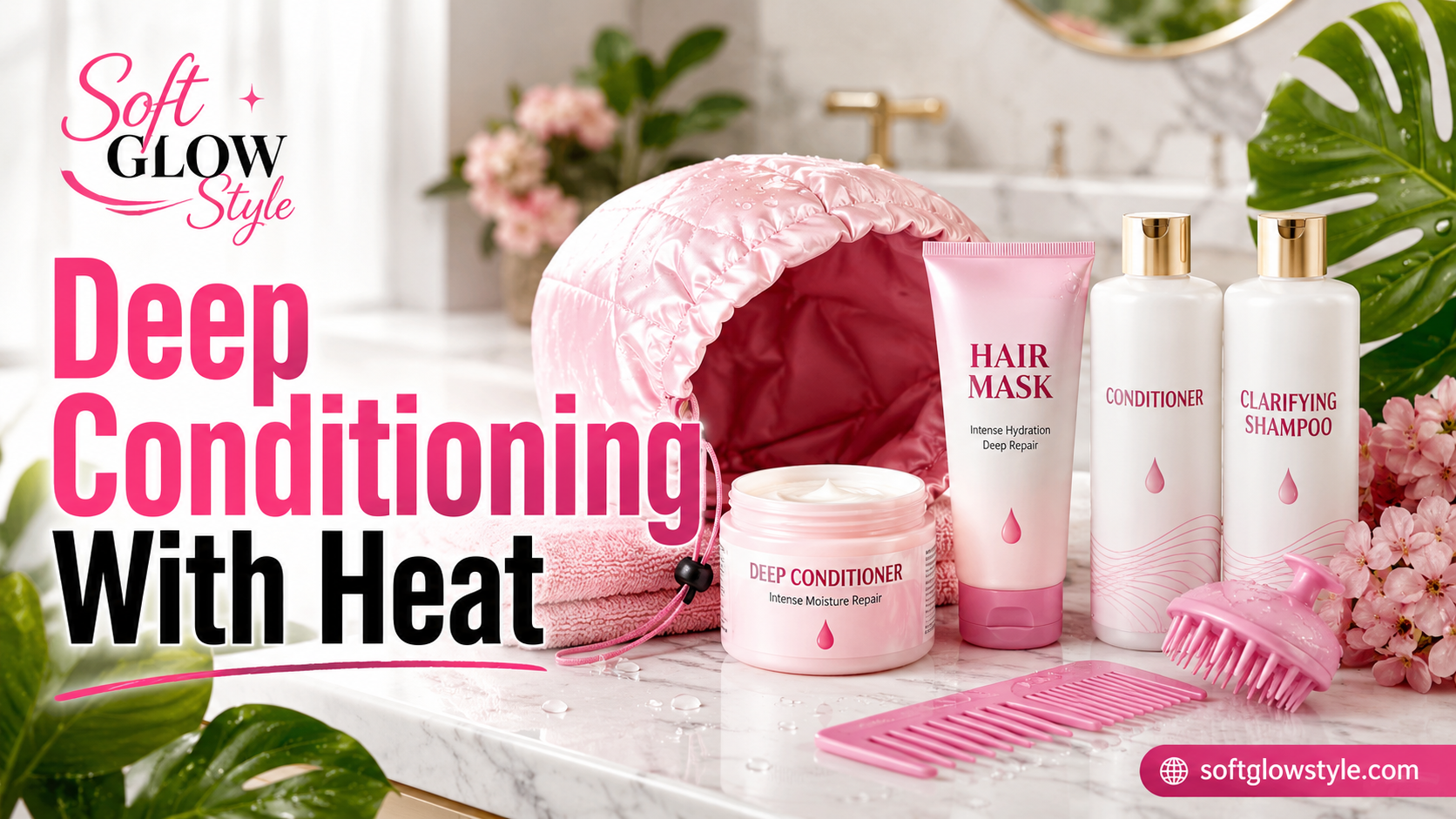
- Benefits of deep hair conditioning with heat may include softer hair, better slip, easier detangling, smoother-looking strands and improved comfort for dry hair.
- Gentle heat can help a deep conditioner spread better and feel more effective, especially on thick, curly, coarse or low-porosity hair.
- Deep conditioning with heat should be warm, not hot. Intense heat can make fragile hair feel worse.
- Always follow the product instructions. Leaving a mask on longer is not always better.
- Deep conditioning is especially helpful after clarifying shampoo, swimming, dry weather, heat styling or chemical treatments.
- Fine or oily hair may need less product and less frequent deep conditioning.
- Deep conditioning can support softness, but it cannot fully repair split ends or severe chemical damage.
Benefits of deep hair conditioning with heat sound almost too good at first: softer hair, more shine, smoother ends, better curl definition and less roughness after wash day. For many people, gentle warmth really can make deep conditioning feel more effective. It can help the product spread evenly, soften the hair’s feel and make detangling easier.
But there is a difference between gentle heat and damaging heat. A warm towel or conditioning cap is not the same as blasting fragile hair with a flat iron. Deep conditioning with heat should feel comfortable, controlled and temporary. The goal is to help your conditioner work better, not to cook your hair or irritate your scalp.
Deep Hair Conditioning With Heat: What Does It Mean?
Deep hair conditioning with heat means applying a deep conditioner, hair mask or intensive treatment, then using gentle warmth while the product sits on your hair. The warmth may come from a warm towel, shower steam, a heat cap, a hooded dryer on a low setting or a microwavable conditioning cap.
The method is popular because many people feel that their hair becomes softer and easier to manage afterward. It is especially common in curly hair routines, natural hair routines, bleached hair care, dry hair care and wash day reset routines.
The American Academy of Dermatology advises using conditioner after shampooing and warns that excessive heat can damage hair. That is why deep conditioning with heat should use gentle warmth, not high styling heat. Read the AAD healthy hair tips for dermatologist-backed hair care guidance.
For related hair care reading, start with shampoo to clarify hair, professional clarifying shampoo guide, and clarifying shampoo for bleached hair.
How Heat Changes a Deep Conditioning Routine
Heat does not turn a conditioner into magic. But gentle warmth can change the experience of the treatment. It may soften the product, help it spread more evenly and make the hair feel more flexible during the conditioning step.
Warmth can also make the routine feel more spa-like, which encourages people to slow down and leave the conditioner on for the proper time. That alone can make a difference compared with rinsing conditioner out too quickly.
| Without Heat | With Gentle Heat | Important Reminder |
|---|---|---|
| Works well for many regular routines | May feel more softening for dry or coarse hair | Use warmth, not high heat |
| Good for quick wash days | Good for reset wash days | Follow product time limits |
| May be enough for fine hair | May help low-porosity hair feel more conditioned | Too much can weigh hair down |
| Less setup needed | More intentional treatment feel | Do not use on irritated scalp |
7 Benefits of Deep Hair Conditioning With Heat
1. Hair May Feel Softer After Rinsing
One of the biggest benefits of deep hair conditioning with heat is softness. Warmth can help the conditioner feel more spreadable and comforting on the hair. After rinsing, dry or rough strands may feel smoother to the touch.
This can be especially noticeable if your hair has been exposed to sun, chlorine, dry air, frequent styling, hard water or clarifying shampoo. A deep conditioner can make the hair feel less stripped after a reset wash.
2. It Can Improve Slip for Detangling
Slip means how easily your fingers, comb or brush glide through the hair. Deep conditioners are often used to improve slip, and gentle heat may make the conditioner feel more flexible and easy to distribute.
This matters for curly, textured, thick or tangle-prone hair because rough detangling can cause breakage. If your hair knots easily, deep conditioning with heat before detangling may make wash day feel less stressful.
3. It Can Help Dry Hair Feel More Comfortable
Dry hair often feels stiff, rough or straw-like. A deep conditioner with emollients and moisturizing ingredients can help soften that feeling. Heat may make the treatment feel more intensive.
This does not mean it permanently repairs every damaged strand. But it can improve how the hair feels and behaves temporarily, which is still useful for everyday styling.
4. It Can Support Better-Looking Curls and Waves
Curls and waves often look better when the hair is conditioned well. Dry curls can look frizzy, undefined or stretched out. Deep conditioning with heat may help curls feel softer and more flexible.
After rinsing, curls may clump better and need less styling product. This can make the overall routine lighter and more natural-looking.
5. It Can Help After Clarifying Shampoo
Clarifying shampoo is useful for removing buildup, but it can leave some hair types feeling dry. Deep conditioning after clarifying is a smart reset step.
A good routine is simple: clarify the scalp, rinse well, apply deep conditioner to the lengths, add gentle heat if needed, rinse again and style lightly. For the full reset process, read shampoo to clarify hair.
6. It Can Make Hair Look Smoother Before Styling
When hair is dry, rough or frizzy, styling products may not sit evenly. Deep conditioning can help smooth the feel of the hair before blow-drying, air-drying, braiding or wearing curls natural.
That said, avoid aggressive heat styling immediately after deep conditioning if your hair already feels fragile. Gentle drying and low heat are better options.
7. It Can Turn Wash Day Into a More Consistent Routine
Sometimes the benefit is not only the heat. It is the routine. Deep conditioning with heat encourages you to slow down and take care of your hair intentionally.
When done regularly, this can help you notice what your hair actually needs: more moisture, less product buildup, less heat styling, gentler detangling or better conditioner placement.
Who Benefits Most From Deep Conditioning With Heat?
Not every hair type needs heat every time. Some people see a big difference, while others only need regular conditioner. The best candidates are usually people whose hair feels dry, coarse, curly, low-porosity, bleached, chemically treated or easily tangled.
| Hair Type or Concern | May Benefit From Heat? | Best Tip |
|---|---|---|
| Dry hair | Yes | Use rich conditioner and gentle warmth |
| Curly hair | Often | Focus on slip and curl softness |
| Fine hair | Sometimes | Use less product and avoid roots |
| Bleached hair | Yes, carefully | Avoid high heat and over-processing |
| Oily scalp | Only on lengths | Keep mask away from roots |
| Low-porosity hair | Often | Gentle warmth may help product feel better |
Deep Conditioning With Heat for Dry Hair
Dry hair is one of the most common reasons people try deep conditioning with heat. If your hair feels rough, dull, frizzy or stiff, a deep conditioner can help improve softness.
Apply the conditioner mostly from mid-lengths to ends. These areas are usually older and drier than the roots. Add gentle warmth for the recommended time, then rinse well.
Dry hair may benefit from ingredients such as:
- Fatty alcohols
- Plant oils
- Shea butter
- Panthenol
- Glycerin
- Aloe
- Ceramides
- Proteins if hair is damaged and tolerates them
Deep Conditioning With Heat for Curly Hair
Curly hair often needs more conditioning because natural oils can have a harder time traveling down bends and coils. Deep conditioning with heat may help curls feel more flexible and manageable.
Curly Hair Tips
- Apply deep conditioner in sections.
- Use enough product to coat the curls, but not so much that it feels sticky.
- Detangle gently while conditioner is in the hair if your curl routine allows.
- Use a shower cap or heat cap for even warmth.
- Rinse well so curls do not feel coated.
- Style with lighter product after deep conditioning.
If your curls feel limp after deep conditioning, the product may be too heavy or you may be using it too often.
Deep Conditioning With Heat for Bleached Hair
Bleached hair can feel dry, rough or fragile because lightening changes the hair structure. Deep conditioning with heat may help it feel softer, but it should be done carefully.
Use warm, gentle heat only. Avoid very hot caps, hot dryers or long sessions. Bleached hair can become fragile, and too much heat can make dryness feel worse.
For more bleached hair care support, read clarifying shampoo for bleached hair.
Deep Conditioning With Heat for Low-Porosity Hair
Low-porosity hair often feels like products sit on top instead of soaking in. Gentle heat can help the treatment feel more workable and less like a coating.
Low-Porosity Tips
- Use lightweight deep conditioners first.
- Avoid heavy butter overload if hair gets waxy.
- Apply on clean, damp hair.
- Use a warm towel or gentle heat cap.
- Rinse very well.
- Use less leave-in afterward if hair feels coated.
Deep Conditioning With Heat for Fine Hair
Fine hair can benefit from deep conditioning, but it can also get weighed down quickly. The key is using less product and avoiding the scalp.
Fine Hair Tips
- Apply only to mid-lengths and ends.
- Use a lightweight deep conditioner.
- Skip heavy oils and butters if they flatten your hair.
- Use heat for a shorter time.
- Rinse thoroughly.
- Deep condition less often if hair becomes limp.
If your fine hair feels flat after every deep conditioning session, your formula may be too rich.
How to Deep Condition Hair With Heat Safely
The safest routine is simple and controlled. You do not need extreme heat to get a good result.
- Shampoo your hair first.
- Use clarifying shampoo only if buildup is present.
- Squeeze out extra water.
- Apply deep conditioner from mid-lengths to ends.
- Use a wide-tooth comb or fingers to distribute gently.
- Cover with a shower cap.
- Add gentle warmth with a warm towel, heat cap or low hooded dryer.
- Leave on for the product’s recommended time.
- Rinse thoroughly.
- Style gently and avoid rough towel drying.
Best Heat Methods for Deep Conditioning
| Heat Method | Best For | Safety Tip |
|---|---|---|
| Warm towel | Beginners and gentle routines | Make sure it is warm, not hot |
| Shower steam | Quick wash days | Keep conditioner covered with a cap |
| Microwavable heat cap | Curly or thick hair routines | Test temperature before wearing |
| Hooded dryer on low | Salon-style routines | Use low or warm setting only |
| Electric conditioning cap | Consistent warmth | Follow device instructions carefully |
How Long Should You Deep Condition With Heat?
Follow the instructions on your product first. Many deep conditioners are designed for about 10 to 30 minutes, but formulas vary.
Leaving a treatment on for hours is not always better. Some masks can make hair feel coated, limp, mushy or overly soft if overused. Protein treatments especially should be used carefully and according to directions.
Simple Timing Guide
- Quick moisture mask: 5 to 10 minutes if label allows
- Standard deep conditioner: often 10 to 30 minutes
- Protein treatment: follow label exactly
- Fine hair: shorter sessions may be better
- Dry curly hair: longer label-approved sessions may help
How Often Should You Deep Condition With Heat?
The right schedule depends on your hair’s needs. Some people deep condition weekly. Some do it every two weeks. Some only do it after clarifying or coloring.
| Hair Situation | Possible Schedule | Note |
|---|---|---|
| Very dry hair | Weekly or biweekly | Use gentle warmth and moisturizing formulas |
| Curly or coily hair | Weekly, biweekly or as needed | Adjust based on curl feel |
| Fine hair | Biweekly or monthly | Avoid weighing down roots |
| Bleached hair | Weekly or as needed | Use careful heat and strengthening support |
| Healthy low-maintenance hair | Monthly or occasional | May not need frequent deep conditioning |
Deep Conditioning After Clarifying Shampoo
Deep conditioning after clarifying shampoo is one of the best times to use heat. Clarifying removes buildup, so the hair may feel cleaner but also slightly drier. A deep conditioner helps restore softness and slip.
Best Reset Order
- Use clarifying shampoo on the scalp and roots.
- Rinse thoroughly.
- Apply deep conditioner to lengths and ends.
- Use gentle heat for the recommended time.
- Rinse well.
- Apply leave-in conditioner only if needed.
For full reset details, read shampoo to clarify hair.
Moisture vs Protein Deep Conditioner
Not every deep conditioner does the same thing. Some focus on moisture and softness. Others contain protein or bond-supporting ingredients for damaged-feeling hair.
| Type | Best For | Warning |
|---|---|---|
| Moisture deep conditioner | Dry, rough, frizzy hair | Too much can make fine hair limp |
| Protein deep conditioner | Weak, damaged or overly soft hair | Too much can make hair feel stiff |
| Balanced mask | Most wash day routines | Still follow label directions |
| Bond-supporting mask | Bleached or chemically treated hair | Not a full repair for severe damage |
What to Avoid When Deep Conditioning With Heat
Avoid Heat That Feels Hot on the Scalp
Your heat source should feel warm and comfortable. If it feels hot, remove it. Scalp irritation is not worth softer hair.
Avoid Leaving Treatments on Too Long
Longer is not always better. Follow the label, especially with protein or strengthening treatments.
Avoid Applying Heavy Mask to Oily Roots
If your scalp gets oily, keep deep conditioner away from roots. Apply it to the mid-lengths and ends instead.
Avoid Using Heat on Irritated Scalp
Do not use a heat cap if your scalp is itchy, sore, inflamed, sunburned or reacting to products.
Avoid Deep Conditioning Over Heavy Buildup
If your hair is coated with dry shampoo, oil or styling product, the mask may not work well. Clarify first if needed.
Avoid High Heat Styling Right After
After a conditioning session, treat hair gently. If your hair feels fragile, skip flat ironing or intense blow-drying that day.
Can Deep Conditioning With Heat Repair Damaged Hair?
Deep conditioning can improve the feel and look of damaged hair, but it cannot permanently glue split ends back together. It may reduce roughness, improve manageability and help hair feel softer.
If hair is severely damaged from bleach, relaxers, heat tools or chemical services, deep conditioning is supportive but not a full repair. You may also need trims, lower heat styling, gentler detangling and professional guidance.
Does Deep Conditioning With Heat Help Hair Growth?
Deep conditioning with heat does not directly make hair grow faster from the scalp. Hair growth depends on many factors, including genetics, health, hormones and scalp condition.
However, deep conditioning may help reduce breakage if it makes hair easier to detangle and manage. Less breakage can make hair appear to retain length better over time.
For related reading, visit hair growth guide.
Deep Conditioning With Heat Before Styling
Deep conditioning before styling can help hair feel smoother and more manageable. This is useful before twist-outs, braid-outs, silk presses, blowouts or defined curls.
But be careful with heat stacking. If you use heat to deep condition, then blow-dry, then flat iron, your hair may be exposed to too much heat in one routine. Keep styling heat low and use protection if heat styling is part of your plan.
Common Deep Conditioning Mistakes
Mistake 1: Using Too Much Product
More conditioner does not always mean better results. If hair feels coated after rinsing, use less product next time.
Mistake 2: Applying It to Dirty, Coated Hair
Deep conditioner works better on clean hair. If buildup is heavy, clarify first.
Mistake 3: Using Heat That Is Too Strong
Deep conditioning heat should be gentle. Strong heat can make fragile hair feel worse.
Mistake 4: Skipping the Ends
Your ends are usually the driest and oldest part of your hair. Focus conditioner there.
Mistake 5: Overusing Protein Masks
Protein can help some damaged hair, but too much can make hair stiff. Alternate with moisture if needed.
Mistake 6: Not Rinsing Well
Leftover mask can make hair feel sticky, limp or dull. Rinse thoroughly.
Mistake 7: Expecting One Treatment to Fix Everything
Deep conditioning helps, but consistent gentle hair care matters more than one dramatic wash day.
Expert Tips from Sawera Shahid
Sawera Shahid, a beauty, skincare, fashion and lifestyle writer with 5+ years of experience, recommends using deep hair conditioning with heat as a supportive wash day step, not a shortcut for damaged hair. Gentle warmth can help dry hair feel softer, but the routine should stay safe and realistic.
- Use gentle warmth, never uncomfortable heat.
- Apply deep conditioner mainly to mid-lengths and ends.
- Clarify first if product buildup is blocking your routine.
- Use less product on fine hair.
- Use richer masks on dry, curly or coarse hair.
- Be careful with heat on bleached or fragile hair.
- Follow the product’s recommended time.
- Do not expect deep conditioner to permanently repair split ends.
Soft Glow Style Internal Reading Map
Use these related Soft Glow Style guides to build a stronger hair care, beauty, skincare, makeup, nail, fashion and lifestyle routine around benefits of deep hair conditioning with heat. This section includes 100+ internal links for stronger topical support.
Hair Care and Shower Routine Links
- shampoo to clarify hair
- professional clarifying shampoo guide
- clarifying shampoo for bleached hair
- can I use shampoo as body wash
- does conditioner go bad
- Routine shampoo review
- Routine shampoo and conditioner guide
- hair growth guide
Skincare Routine Links
- dermaplaning for sensitive skin
- serum at night
- hydrating face mask for dry skin
- skincare infused makeup
- best skincare products guide
- 5 step Korean skincare routine
- how to layer Korean skincare
- Korean skincare set for glowing skin
- Korean skincare sets that actually work
- best Korean skincare for acne-prone skin
- Korean acne skincare top picks
- foaming cleanser for oily skin
- fungal acne cleanser guide
- face wash for fungal acne
- does argan oil clog pores
- raw honey mask for face
- ice water face dip
- benefits of ice bath for face
- visible pores are a flex
- visible pores and skin texture guide
- Korean beauty standards explained
- American beauty standards explained
Beauty and Makeup Links
- Soft Glow Style beauty hub
- what is tinted moisturizer
- sweat resistant makeup
- bronzer vs blush
- bronzer for dark skin
- what eyeshadow with brown eyes
- heatproof makeup in hot weather
- no makeup makeup routine
- cloud skin makeup base
- cloud skin vs glass skin guide
- blurry blush soft glam trend
- blurryface makeup and modern beauty flaws
- lip gloss layering for plump lips
- faux freckles trend guide
- metallic faux freckles beauty idea
- Tumblr beauty trends coming back
- how beauty standards affect mental health
- popular beauty blogs to follow
- Dime Beauty and Empire Beauty explainer
- American Beauty rose makeup inspiration
- vintage American Beauty rose shade
Nail Art and Pedicure Links
- Soft Glow Style nail art hub
- summer pedicure nail colors
- cat eye nail colors
- soap nails polish
- pastel nail colors 2026
- white nail polish ideas
- types of nails at salon
- what is hard gel nails
- multi color French tip nails
- water nails vs chrome nails comparison
- best nail polish for summer 2026
- July nail colors 2026
- ice cream nails manicure trend
- ice cream nails color ideas
- best nail polish stickers
- lifestyle nail bar guide
- lifestyle nail bars and beauty spaces
- how to match nail art with skincare
Fashion and Outfit Links
- Soft Glow Style fashion hub
- what to wear in Miami
- what to wear to a Broadway show
- fashion tips to look stylish
- best fashion tips and tricks
- 15 piece capsule closet that feels wearable
- 15 piece capsule closet starter guide
- ethereal fashion in real life
- ethereal girl aesthetic guide
- coquette core power suits
- power suits and ballet flats
- tomato girl summer style
- tomato girl meets olive green
- underconsumption core minimalist trend
- underconsumption core when minimalism feels real
- vintage tees and boxers outfit guide
- vintage tees paired with slip skirts
- mismatched shoes 2.0 pattern guide
- mismatched shoes trend guide
- feral girl fall trend
- tapestry hoodie style guide
- Euriental fashion and luxury travel
- Oh So Jack fashion and lifestyle
- science of appearance and men’s grooming
Lifestyle and Wellness Links
- Soft Glow Style lifestyle hub
- luxury family travel and lifestyle
- Sunday reset routine that feels realistic
- Sunday reset that actually works
- silent wellness trend explained
- digital detox wellness trend
- digital nostalgia is back
- digital nostalgia and MP3 culture
- wellness fridges trend guide
- wellness fridges and beauty storage
- how to start a healthy lifestyle
- importance of a healthy lifestyle
- what is sedentary lifestyle
- romanticize solo life
- lifestyle blog for women and family routines
- outdoor lifestyles for escaping screens
- outdoor lifestyles and adventure guide
- make a studio smell expensive using simple habits
- make a studio smell expensive guide
- decorate with books quiet luxury hack
- decorate with books for a softer home
- aesthetic burnout and vibe curation
Trending Reads and Site Hubs
- featured Soft Glow Style reads
- Soft Glow Style blog archive
- where to watch True Beauty
- Bold and Beautiful comings and goings
- Sleeping Beauty of Everest truth
- Sleeping Beauty Everest chilling story
- Sleeping Beauty Mount Everest heartbreaking story
- Andrea Chong fashion travel lifestyle blog
- about Soft Glow Style
- contact Soft Glow Style
Frequently Asked Questions
What are the benefits of deep hair conditioning with heat?
The benefits of deep hair conditioning with heat may include softer hair, better slip, easier detangling, smoother-looking strands, less roughness, improved curl feel and better comfort after clarifying or chemical treatments.
Is heat necessary for deep conditioning hair?
Heat is not always necessary. Some deep conditioners work well without heat. Gentle warmth may help some hair types, especially dry, curly, coarse or low-porosity hair, feel more conditioned.
How long should I deep condition with heat?
Follow the product label. Many deep conditioners are used for about 10 to 30 minutes, but each formula is different. Longer is not always better.
Can deep conditioning with heat damage hair?
Gentle warmth is usually different from high heat styling, but too much heat, too much time or hot tools on fragile hair can make dryness and damage worse.
Should I deep condition after clarifying shampoo?
Yes. Deep conditioning after clarifying shampoo can help restore softness and slip because clarifying shampoo can leave some hair types feeling dry or rough.
How often should I deep condition with heat?
Many people deep condition with heat weekly, biweekly or monthly depending on hair dryness, thickness, curl pattern, chemical treatments and styling habits.
Final Thoughts
Benefits of deep hair conditioning with heat are most noticeable when your hair is dry, rough, curly, bleached, thick, low-porosity or recently clarified. Gentle warmth can help the conditioner feel more effective and make hair softer, smoother and easier to detangle.
Still, heat should stay gentle. Use a warm towel, steam, heat cap or low hooded dryer, not uncomfortable heat. Follow the product’s time limit, rinse well and adjust the routine to your hair type. Deep conditioning is not a cure for severe damage, but it can be a helpful wash day step when used safely.
Final Recap
- Deep conditioning with heat may help soften dry or rough hair.
- Gentle warmth can improve product spread and slip.
- Curly, coarse, dry, bleached and low-porosity hair may benefit most.
- Fine hair should use less product and avoid heavy roots.
- Deep conditioning after clarifying shampoo is a smart reset step.
- Use warm, comfortable heat only.
- Follow the product label and avoid overdoing protein or heat.